
About Lili Massaferro
Lived 1926 – 2001 (aged 74). Lili Massaferro was an Argentine writer and actor.
Lidia Ángela "Lili" Massaferro (23 November 1926 – 26 April 2001) was an Argentine actress and Montonero militant.
Biography In the mid-1940s, Lili Massaferro studied Philosophy and Literature. She married very young to free herself from her father. However, for almost 50 years she lived in her second paternal home, at 400 Conesa Street. She had four children, two with Manuel Belloni – Manuel and Liliana – and two with Marcelo Laferrere (son of the playwright and politician Gregorio de Laferrère). She worked in public relations, responsible for getting advertisers for Gente magazine.
Under the pseudonym Lili Gacel, she was the protagonist of advertisements for Arizona cigarettes, and acted in several films in the late 1950s (such as The House of the Angel, based on a novel by Beatriz Guido, who was one of her acquaintances at the time). She came to hate that experience in the world of entertainment.
She formed a trio of inseparable friends with and Pirí Lugones, the latter of whom would be assassinated in 1978.
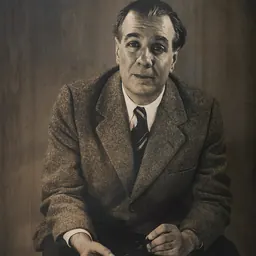
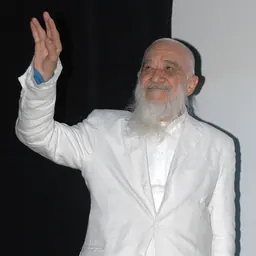
Personal life Among her circle of male friends and "suitors" were Bobby Aizemberg, Hector Álvarez Murena, Fernando Birri, Adolfo Bioy Casares, Jorge Luis Borges,
Son's killing In the late 1960s, Massaferro's son became a soldier in the Peronist Armed Forces (FAP). recalls that moment because of the great discussion he had with Manolo when he was going to Europe in 1969, who told him, "you will not see me anymore because I am going to go underground," to which Lernoud replied, "you are crazy; you do not know whom you are going to kill, for whom you are going to die."
On 8 March 1971, the Tigre police killed Manolo (age 23), his last words reportedly being the cry "Viva Perón!" He left behind his wife Valentina Nina Onetto (born 1947) with a daughter, María (born 1969), and pregnant with her daughter Victoria (born 1971), who is currently an actress. and, after a brief political career, became a political leader at age 44. Known as "La Pepa",
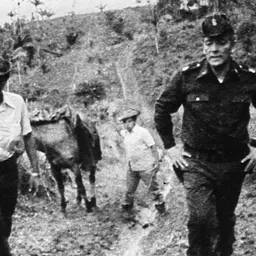
That same year (1973) she was the organizer of the Agrupación Evita of the women's branch of the Montoneros. In 1974 she was invited by General Omar Torrijos to visit Panama and learn about the Panamanian revolutionary process.
Exile
After the paramilitary organization Triple A appeared in 1975, Massaferro was told by Guillermo Julio Vailati a peronist lawyer and Dean of the Buenos Aires Law University at the time and friend of her second husband Marcelo de Laferrere that she had to leave the country as she was in great danger, she traveled to Rome – now in a partnership with Juan Gelman – and went to work with Argentina's Delia Ana Fanego on a committee to reveal Triple A's actions and the repression in Argentina in the Roman newspapers.
In the late dictatorship When the National Reorganization Process began on 24 March 1976, Lili Massaferro continued to fight against the bloody dictatorship of Videla from her position as a member of the women's branch of the MPM.
In 1977 she participated in the publication of the book Argentina: Proceso al Genocidio, together with Eduardo Luis Duhalde, , and Gustavo Roca.
She toured Europe from top to bottom several times, visiting Amsterdam, Stockholm, Geneva, London, Madrid, Paris, and Rome. She alerted governments, discussed with diplomats, made and accompanied complaints about thousands of the disappeared, gave shelter, and protected the relatives' organizations (who made their first trips from Argentina). In the late 1980s, to support herself, she sold jewelry on Goya Street in Madrid.
Return In early 1984 Lili Massaferro again saw her children, who traveled to Spain. She returned to Argentina in 1989. She reconciled with her second husband Marcelo Lafferrere, and bought a farm in Marcos Paz – 50 km from the center of Buenos Aires – where she received her grandchildren and cared for animals and plants.
She was one of those interviewed in 's documentary Montoneros. Cazadores de utopías.
Illness and death For many years she suffered from badly healed hepatitis (which developed into cirrhosis), and from persistent thrombophlebitis that left her hospitalized at the end of her life. She was attended by the doctor Juan Pablo Argumedo, son of the Rosario politician Alcira Argumedo.
Lili Massaferro died on 26 April 2001, at age 74, in Buenos Aires.
Filmography 1956: Beyond Oblivion, as Herminia the maid 1957: The House of the Angel, as Julieta 1958: Rosaura at 10 O'Clock, as Elsa 1959: News in Hell 1968: Ufa con el sexo (not released in Argentina until 2007)
Don’t just read it —
keep it.
Full-length biographies made to live with: read them, listen on the way to work, watch them tonight.
- E-book
- Audio
- Video
Instant download · yours to keep · every purchase keeps this site free
Important facts
People in Lili Massaferro's life
Named in this biography and alive at the same time




Related people
Same field, nearest in time



Contemporaries
People whose lives overlapped Lili Massaferro's


Frequently asked questions
Who was Lili Massaferro?
Argentinian writer and actor (1926-2001)
When was Lili Massaferro born?
Lili Massaferro was born on 23 November 1926 in Buenos Aires.
When did Lili Massaferro die?
Lili Massaferro died on 26 April 2001 in Buenos Aires.
What was Lili Massaferro's occupation?
Lili Massaferro was a writer and actor.
What nationality was Lili Massaferro?
Lili Massaferro was Argentine.
Sources & further reading
Cite this page
APA: Biography.guide. (2026). Lili Massaferro. https://biography.guide/lili-massaferro/
MLA: "Lili Massaferro." Biography.guide, https://biography.guide/lili-massaferro/.
Chicago: "Lili Massaferro." Biography.guide. https://biography.guide/lili-massaferro/.
Data last updated: 2026-09-22 · Spot an error? Report a correction.
Page generated 2026-09-27 05:12 UTC