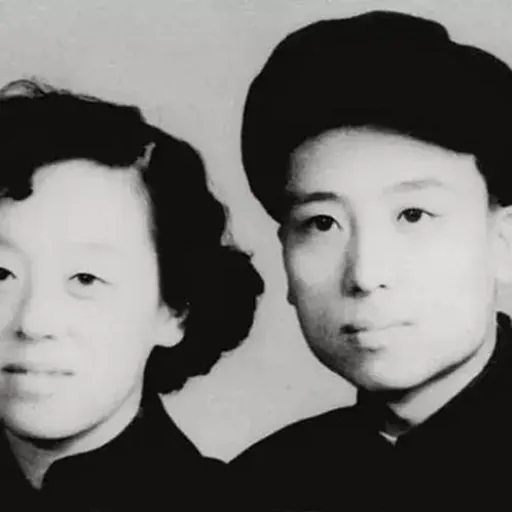
Li Xueqin
Chinese historian, archaeologist, and palaeographer
About Li Xueqin
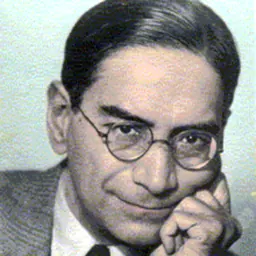
Lived 1933 – 2019 (aged 85). Li Xueqin was a Chinese archaeologist, historian, university teacher, palaeographer and researcher.
Li Xueqin (, 28 March 1933 – 24 February 2019) was a Chinese historian, archaeologist, and palaeographer. He served as Director of the Institute of History of the Chinese Academy of Social Sciences, Professor of the Institute of Sinology of Tsinghua University, Chairman of the Pre-Qin History Association of China, and led the Xia–Shang–Zhou Chronology Project. After finishing middle school in 1948, he tested number one in the entrance examination of the electrical engineering department of the National Beiping High School of Industry. However, he was unable to attend the school because a medical examination misdiagnosed him with tuberculosis. After graduating from high school, he was admitted to Tsinghua University in 1951, where he studied philosophy and logic under professor Jin Yuelin. At the same time, scholar Guo Ruoyu was writing a book on the oracle bones. Chen Mengjia, the oracle bones expert, thought the book needed more work, and recommended Li to assist Guo in his work. He wrote many books, several of which have been translated into English, including Eastern Zhou and Qin Civilizations (translated by Kwang-chih Chang), The Wonder of Chinese Bronzes, Chinese Bronzes: a General Introduction, and The Glorious Traditions of Chinese Bronzes.
In 1993, Li made a speech in which he called for historians to "leave the 'Doubting Antiquity' period" and join the "Believing Antiquity" movement, in contrast to the Doubting Antiquity School that had been highly influential since the 1920s. Scholars of this viewpoint argue that archaeological discoveries of recent decades have generally substantiated Chinese traditional accounts rather than contradicted them. Li himself favoured a third historiographical approach, which he termed "Interpreting Antiquity."
Controversies Li was involved in several controversies, including writing a smear piece on his own mentor Chen Mengjia. Later, Li deeply regretted slandering Chen and said he tried to restrain himself from writing too harshly.
Chen Mengjia When the Anti-Rightist Campaign began in 1957, the eminent scholar Chen Mengjia was labeled a Rightist and an enemy of the Communist Party for his outspoken opposition to the simplification of Chinese characters. Li, then a research assistant to Chen, published a review that criticized Chen's scholarship and attacked him as "arrogant" and having "an extreme tendency to boast".
Don’t just read it —
keep it.
Full-length biographies made to live with: read them, listen on the way to work, watch them tonight.
- E-book
- Audio
- Video
Instant download · yours to keep · every purchase keeps this site free
Important facts
People in Li Xueqin's life
Named in this biography and alive at the same time

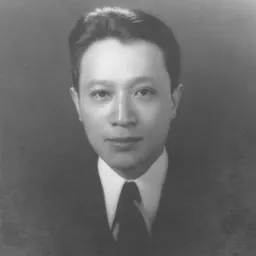
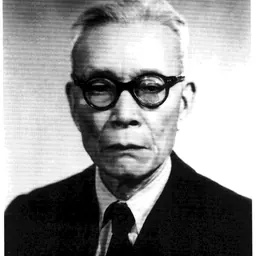

Related people
Same field, nearest in time


Contemporaries
People whose lives overlapped Li Xueqin's




Frequently asked questions
Who was Li Xueqin?
Chinese historian, archaeologist, and palaeographer (1933–2019)
When was Li Xueqin born?
Li Xueqin was born on 28 March 1933 in Beijing.
When did Li Xueqin die?
Li Xueqin died on 24 February 2019 in Beijing.
What was Li Xueqin's occupation?
Li Xueqin was an archaeologist, historian, university teacher, palaeographer and researcher.
What nationality was Li Xueqin?
Li Xueqin was Chinese.
Sources & further reading
· DBpedia: Li Xueqin (historian)
Cite this page
APA: Biography.guide. (2026). Li Xueqin. https://biography.guide/li-xueqin-archaeologist/
MLA: "Li Xueqin." Biography.guide, https://biography.guide/li-xueqin-archaeologist/.
Chicago: "Li Xueqin." Biography.guide. https://biography.guide/li-xueqin-archaeologist/.
Data last updated: 2026-09-21 · Spot an error? Report a correction.
Portrait: Wikimedia Commons · author & licence
Page generated 2026-09-27 04:59 UTC