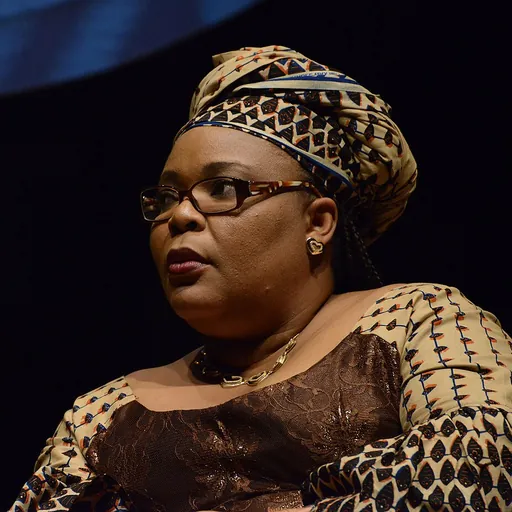
About Leymah Gbowee
Born 1972. Leymah Gbowee is a Liberian politician, businessperson, economist, peace activist, activist and civil rights advocate, known for Pray the Devil Back to Hell and Women of Liberia Mass Action for Peace.
Leymah Roberta Gbowee (born 1 February 1972) is a Liberian peace activist responsible for leading a women's non-violent peace movement, Women of Liberia Mass Action for Peace that helped bring an end to the Second Liberian Civil War in 2003. Her efforts to end the war, along with her collaborator Ellen Johnson Sirleaf, helped usher in a period of peace and enabled a free election in 2005 that Sirleaf won. Gbowee and Sirleaf, along with Tawakkul Karman, were awarded the 2011 Nobel Peace Prize "for their non-violent struggle for the safety of women and for women's rights to full participation in peace-building work."
Early life Leymah Gbowee was born in central Liberia on 1 February 1972. At the age of 17, she was living with her parents and two of her three sisters in Monrovia while planning on continuing her education, when the First Liberian Civil War erupted in 1989, throwing the country into chaos until 1996. She did a three-month training, which led her to be aware of her own abuse at the hands of the father of her two young children, son Joshua "Nuku" and daughter Amber. Surrounded by the images of war, she realized that "if any changes were to be made in society it had to be by the mothers". Gbowee gave birth to a second daughter Nicole "Pudu", making her the mother of four, as she engaged in the next chapter of her life's journey – rallying the women of Liberia to stop the violence that was destroying their children.
Education and training Gbowee obtained an Associate of Arts degree in social work (2001) from Mother Patern College of Health Sciences in Monrovia, Liberia, and subsequently graduated with a Master of Arts in Conflict Transformation (2007) from Eastern Mennonite University in Harrisonburg, Virginia. She also received a certificate in Conflict Prevention and Peacebuilding Training from the United Nations Institute for Training, the Healing Victims of War Trauma Center in Cameroon, and Non-Violent Peace Education in Liberia.
Career Gbowee is the founder and president of Gbowee Peace Foundation Africa, founded in 2012 and based in Monrovia, which provides educational and leadership opportunities to girls, women and the youth in Liberia.
In addition, Gbowee is the former executive director of the Women Peace and Security Network Africa, based in Accra, Ghana, which builds relationships across the West African sub-region in support of women's capacity to prevent, avert, and end conflicts. She is a founding member and former coordinator of the Women in Peacebuilding Program/West African Network for Peacebuilding (WIPNET/WANEP).
From 2012 to 2014, Gbowee served on the High-Level Task Force for the International Conference on Population and Development, co-chaired by Joaquim Chissano and Tarja Halonen. In 2013, she became an Oxfam Global Ambassador.
Gbowee speaks internationally to advance women's rights, and peace and security. In 2016, Gbowee spoke at a protest march organized by Women Wage Peace, a political grassroots group working to advance a peace agreement between Israel and Palestine.
Gbowee is also an outspoken supporter of fellow Liberian Ebenezer Norman's non-profit organization A New Dimension of Hope, a foundation which builds schools in Liberia. In May 2015, she wrote personal letters to the contributors of NDhope's crowd-funding campaign on Indiegogo and has spoken at their events.
As of April 2017, Gbowee is also Executive Director of the Women of Peace and Security Program at AC4, Earth Institute, Columbia University.
Gbowee is also a contributor at The Daily Beast.
Involvement in trauma healing In the spring of 1999, after Gbowee had been at the Trauma Healing project for a year, Doe was the executive director of Africa's first regional peace organization, the West Africa Network for Peacebuilding (WANEP), which he had co-founded in 1998 in Ghana. Encouraged by the Lutheran reverend she calls "BB", Gbowee began reading widely in the field of peacebuilding, notably reading The Politics of Jesus by Mennonite theologian John Howard Yoder, and works by "Martin Luther King Jr. and Gandhi and the Kenyan author and conflict and reconciliation expert Hizkias Assefa."
Leading a mass women's movement In the spring of 2002, Gbowee was spending her days employed in trauma-healing work and her evenings as the unpaid leader of WIPNET in Liberia. Her children, now including an adopted daughter named Lucia "Malou" (bringing the number of children to five), were living in Ghana under her sister's care.
Following a WIPNET training session in Liberia, Women would also oppose the war by fasting and going to government buildings to picket. and another newer rebel group, MODEL. At first the women sat in a daily demonstration outside the posh hotels where the negotiators met, pressuring for progress in the talks. "But what we [women] did marked the beginning of the end."
Consolidating the peace Recognizable in their white WIPNET T-shirts, Gbowee and the other Liberian women activists were treated as national heroines by Liberians in the streets for weeks following the signing of the Accra Comprehensive Peace Agreement.
Amid the destruction and unending needs, Gbowee was appalled by the arrogance, ignorance and overall cultural insensitivity of the United Nations agencies dispatched to help disarm the country, keep the peace, establish procedures for democratic governance, and initiate rebuilding efforts. "People who have lived through a terrible conflict may be hungry and desperate, but they're not stupid (Gbowee's emphasis). They often have very good ideas about how peace can evolve, and they need to be asked." who did not agree that the three women owned the WIPNET branch of WANEP and thus would not let it spin off. Abigail Disney stepped up to help Gbowee raise funds for launching WIPSEN among philanthropists in New York, enabling her to secure $50,000 in seed money. In response to this second wave of deadly conflict, Gbowee formed an inter-religious peace building coalition of Christian and Muslim women, which lead to the uproar of the Liberia Mass Action for Peace Movement.
Gbowee's faith had a major impact on her personal and professional life. Prayer is a recurrent theme in her memoir and talks. Although her memoir depicts instances of loss, pain, grief, and disappointment that made her question her faith, she indicates that prayer has been an intrinsic part of her journey in peace building. She writes, "God is ever faithful, ever loving; he listens to our prayers."
Religion and the bible enabled Gbowee to convey her vision to Liberian women with different creeds. In order to build stronger communities for peace-building and promoting activism included the containment of other religious groups, which is a big part of the Women's movement's success. However, for Gbowee, building a stronger community amongst women that will put them at the forefront of such a major movement for the end of wars and not limiting her beliefs to just Christianity, is a tactic she encouraged. In the Harvard interview, she states, "The second thing we did was to bring the Muslim women together and go through the same process, but with the Qur'an...We would talk and read some of the descriptions that talk about how to treat women better and live a nonviolent life..." Being a religious person in these settings, for Gbowee, revenge is not the way to go. She recounts reading the bible and searching for different accounts that encourage peace and not an "eye for an eye." Working with angered people who had dealt with social and political trauma, forgiveness became a part of the healing process and education for her intended audiences. To Gbowee, forgiveness does not have a specific religious practice attached to it, but multiple. She mentions at a peace conference that, "In my life's journey, it hasn't been just Christians who have reached out to me. It hasn't been just Muslims. It has been people of different faiths." She used women who are also strong in faith and who have struggles with close contact with acts of violence although all were in a larger sense. Many of the women that were active with Gbowee, faced violence such as sexual, physical, emotional, mental, and physical forces. Traditional religious songs and dances were used in the non-violent, healing, and peace. These dances and songs are used as a form of storytelling.
Gbowee expresses devotion to her Christian faith. She opened the acknowledgment section of her memoir with these words: "All praise, glory and honor to God for His unfailing love and favor toward me."
Documentary film Gbowee is the narrator and central character in the 2008 documentary film Pray the Devil Back to Hell, which consists of scores of film and audio clips from the war period. It took Best Documentary Feature in the 2008 Tribeca Film Festival in New York. It has been broadcast across the United States as part of the "Women, War & Peace" series, which aired over five successive Tuesdays in October and early November 2011 on public television stations. Pray has been used as an advocacy tool in conflict and post-conflict zones, such as Bosnia, Afghanistan, Iraq, South Africa, Rwanda, Mexico, Kenya, Cambodia, Russia, Sudan, the Democratic Republic of the Congo, and the West Bank: "The reaction was remarkably similar: no matter how different the country and the society, women recognized themselves and started talking about how they could unite to solve their own problems."
Awards and recognitions From left to right:Tawakkul Karman, Leymah Gbowee, and Ellen Johnson Sirleaf display their awards during the presentation of the Nobel Peace Prize, 10 December 2011.
Gbowee's exposure to the New York philanthropic social set, facilitated by Disney (who had become a close friend), (Gbowee's eldest son, Joshua "Nuku" Mensah, entered EMU as a freshman in 2010, overlapping by one year with Sam Gbaydee Doe's eldest daughter, Samfee Doe, then a senior.) 2016 – Community of Christ International Peace Award 2014 – Oxfam America Right the Wrong Award 2013 – The New York Women's Foundation Century Award 2013 – Barnard College Medal of Distinction 2012 – Olympic flag bearer in the 2012 Summer Olympics opening ceremony 2012 - James Parks Morton Interfaith Award 2011 – Nobel Peace Prize laureate 2011 – University of Massachusetts Lowell Greeley Scholar for Peace Studies 2011 – Villanova Peace Award from Villanova University 2011 – Alumna of the Year, Eastern Mennonite University 2010 – Living Legends Award for Service to Humanity 2010 – John Jay Medal for Justice from the John Jay College of Criminal Justice 2010 – Joli Humanitarian Award from Riverdale Country School 2009 – Gruber Prize for Women's Rights 2009 – John F. Kennedy Profile in Courage Award. 2009 – "Honor Award for Courageous Commitment for Human Rights of Women" by the Filmfestival Women's Worlds, TERRE DES FEMMES, Germany. 2008 – Women's eNews Leaders for the 21st Century Award 2007 – Blue Ribbon for Peace from the John F. Kennedy School of Government at Harvard University
Honorary degrees 2024 – Honorary Doctorate, delivery of the Oliver Tambo lecture, Georgetown University 2018 – Honorary Doctorate of International Affairs from American University 2012 – Honorary Doctorate by Rhodes University
Other activities Carnegie Corporation of New York, Member of the Board of Trustees (since 2020) Calouste Gulbenkian Prize for Human Rights, Member of the Jury (since 2018) Ara Pacis Initiative, Member of the Council Aurora Prize, Member of the Selection Committee (since 2015) High Level Taskforce for the International Conference on Population and Development, Member Nobel Women's Initiative, Member of the Board PeaceJam Foundation, Member of the Board World Refugee & Migration Council (WRMC), Member of the Council
Works
Don’t just read it —
keep it.
Full-length biographies made to live with: read them, listen on the way to work, watch them tonight.
- E-book
- Audio
- Video
Instant download · yours to keep · every purchase keeps this site free
Important facts
People in Leymah Gbowee's life
Named in this biography and alive at the same time


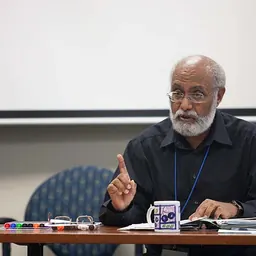
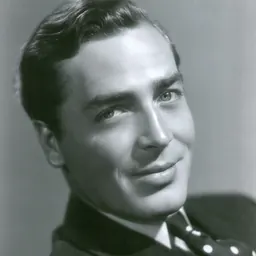
Related people
Same field, nearest in time
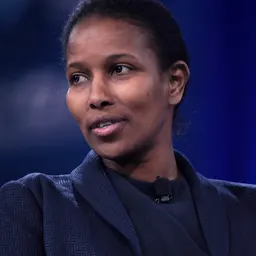


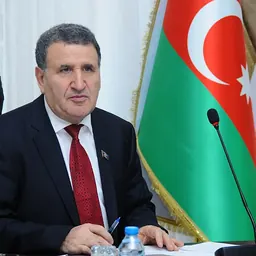


Contemporaries
People whose lives overlapped Leymah Gbowee's

Frequently asked questions
Who is Leymah Gbowee?
Liberian peace activist (born 1972)
When was Leymah Gbowee born?
Leymah Gbowee was born on 1 February 1972 in Monrovia.
What is Leymah Gbowee's occupation?
Leymah Gbowee is a politician, businessperson, economist, peace activist, activist and civil rights advocate.
What is Leymah Gbowee known for?
Leymah Gbowee is known for Pray the Devil Back to Hell and Women of Liberia Mass Action for Peace.
What nationality is Leymah Gbowee?
Leymah Gbowee is Liberian.
Sources & further reading
Cite this page
APA: Biography.guide. (2026). Leymah Gbowee. https://biography.guide/leymah-gbowee/
MLA: "Leymah Gbowee." Biography.guide, https://biography.guide/leymah-gbowee/.
Chicago: "Leymah Gbowee." Biography.guide. https://biography.guide/leymah-gbowee/.
Data last updated: 2026-09-20 · Spot an error? Report a correction.
Page generated 2026-09-27 05:10 UTC