
About Lewis Wolpert
Lived 1929 – 2021 (aged 91). Lewis Wolpert was a South African and British biologist, university teacher, engineer, cell biologist and embryologist, known for French flag model.
Lewis Wolpert (19 October 1929 – 28 January 2021) was a South African-born British developmental biologist, author, and broadcaster. Wolpert popularized his French flag model of embryonic development, using the colours of the French flag as a visual aid to explain how embryonic cells interpret genetic code for expressing characteristics of living organisms and explaining how signalling between cells early in morphogenesis could inform cells with the same genetic regulatory network of their position and role.
He wrote several science books, including: Triumph of the Embryo (1991), Malignant Sadness (1999), Six Impossible Things Before Breakfast: the Evolutionary Origins of Belief (2006), and How We Live And Why We Die: The Secret Lives of Cells (2009).
Early life Wolpert was born on 19 October 1929, in Johannesburg to Sarah (née Suzman) and William Wolpert in a South African Jewish family of Lithuanian Jewish origin. His father was a bookshop manager and newsagent. His aunt, Helen Suzman, was a South African anti-apartheid activist and politician. Wolpert was elected to the American Philosophical Society in 2002.
French flag model Wolpert was best known for the French flag model of embryonic development, which he put forward in a 1969 paper titled Positional Information and the Spatial Pattern of Cellular Differentiation in the Journal of Theoretical Biology. The model uses the French tricolor flag to visually depict how embryonic cells interpret genetic code to create the same patterns, even when some pieces of the embryo are removed. The model further explains how signalling between cells early in morphogenesis could be used to inform cells with the same genetic regulatory network of their position and role.
Biologists recognise Wolpert for elaborating and championing the ideas of positional information and positional value: molecular signals and internal cellular responses to them that enable cells to do the right thing in the right place during embryonic development. The essence of these concepts is that there is a dedicated set of molecules for spatial co-ordination of cells, identical across many species and across different developmental stages and tissues. The discovery of Hox gene codes in flies and vertebrates has largely vindicated Wolpert's positional-value concept, while identification of growth-factor morphogens in many species has supported the concept of positional information.
Ideas In a 2005 article entitled "Spiked", The Guardian asked a series of scientists "What is the one thing everyone should learn about science?" Wolpert responded:
I would teach the world that science is the best way to understand the world, and that for any set of observations, there is only one correct explanation. Also, science is value-free, as it explains the world as it is. Ethical issues arise only when science is applied to technology – from medicine to industry.
Of his book How We Live & Why We Die: The Secret Lives of Cells, Wolpert said the intended audience of his book was the general public. He said he thought the general public needed to understand that people are a society of cells, particularly if they wanted to understand humans. Wolpert also believed that one very important, and so far unsolved, question in cellular research is the origins and evolution of the first cell, as well as the question of cell behaviour, which in his opinion would be useful for the study of illnesses such as cancer or Alzheimer's disease. Christian astrophysicist Hugh Ross on whether there is a case for a creator, and William Dembski on the topic of intelligent design. In a lecture entitled "Is Science Dangerous?" he expanded on this, saying: "I regard it as ethically unacceptable and impractical to censor any aspect of trying to understand the nature of our world."
On 25 May 1994, Wolpert conducted an hour-long interview with Francis Crick called "How the Brain 'sees'" for The Times Dillon Science Forum; Just Results Video Productions produced a video of the interview for The Times. On 15 January 2004, Wolpert and biologist/parapsychologist Rupert Sheldrake engaged in a live debate on the evidence for telepathy, held at the Royal Society of Arts in London. Wolpert disagreed with Sheldrake on the possibility of simulating a cell or an embryo on a computer, which Wolpert believed would be attainable within 20 years. He stated that he believed doing so would predict in detail how the cell will behave, although he also admitted to the difficulty of this task due to the complex networks of proteins, protein-to-protein interactions, and the vast amount of molecules in the cell. in 1980 and awarded the CBE in 1990. He became a Fellow of the Royal Society of Literature in 1999 and one of the first Fellows of the Academy of Medical Sciences in 1998. He served as a vice-president of Humanists UK. In 1986 Wolpert was invited to deliver the Royal Institution Christmas Lecture on Frankenstein's Quest: Development of Life. In 2015, Wolpert was awarded The Waddington Medal by the British Society for Developmental Biology for his major contributions to developmental biology . In 2018 he received the Royal Medal. Wolpert was chair of the Committee on the Public Understanding of Science between 1994 and 1998. He was the recipient of the Michael Faraday Medal and Prize for science communication from the Royal Society in 2000.
Books and media
In the early 1980s, he began broadcasting on BBC Radio 3 and Radio 4 as a science commentator, with his broadcast conversations with scientists published as A Passion for Science (1988). His book Malignant Sadness (1999) explored his own experiences with clinical depression at the age of 65. Publication of Wolpert's upcoming book, Why Can't a Woman Be More Like a Man?, was also delayed after passages of that book were found to be copied without attribution. Wolpert apologised and took responsibility for the errors with the explanation "totally inadvertent and due to carelessness".
Publications
Paperback First published 1992 by Faber & Faber, London.
Other Flora McDonnell, ed., Threads of Hope: Learning to Live with Depression (Short Books, 2003, ), with contributions by Lewis Wolpert, Margaret Drabble, Wendy Cope, Andrew Solomon, Virginia Ironside, Alastair Campbell, and Kay Redfield Jamison.
Don’t just read it —
keep it.
Full-length biographies made to live with: read them, listen on the way to work, watch them tonight.
- E-book
- Audio
- Video
Instant download · yours to keep · every purchase keeps this site free
Important facts
Family & relationships
People in Lewis Wolpert's life
Named in this biography and alive at the same time

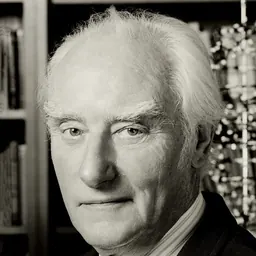
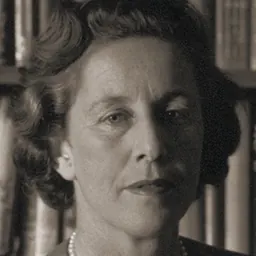




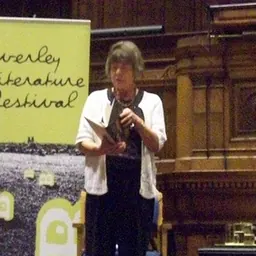
Related people
Same field, nearest in time
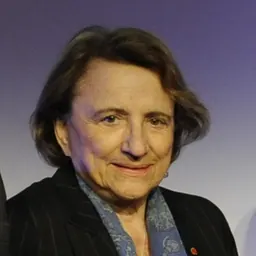


Contemporaries
People whose lives overlapped Lewis Wolpert's




Frequently asked questions
Who was Lewis Wolpert?
British biologist (1929–2021)
When was Lewis Wolpert born?
Lewis Wolpert was born on 19 October 1929 in Johannesburg.
When did Lewis Wolpert die?
Lewis Wolpert died on 28 January 2021.
What was Lewis Wolpert's occupation?
Lewis Wolpert was a biologist, university teacher, engineer, cell biologist and embryologist.
What was Lewis Wolpert known for?
Lewis Wolpert was known for French flag model.
What nationality was Lewis Wolpert?
Lewis Wolpert was South African and British.
Sources & further reading
Cite this page
APA: Biography.guide. (2026). Lewis Wolpert. https://biography.guide/lewis-wolpert/
MLA: "Lewis Wolpert." Biography.guide, https://biography.guide/lewis-wolpert/.
Chicago: "Lewis Wolpert." Biography.guide. https://biography.guide/lewis-wolpert/.
Data last updated: 2026-09-27 · Spot an error? Report a correction.
Page generated 2026-09-27 05:16 UTC