
Lewis Foreman Day
British artist and writer in the Arts & Crafts movement
About Lewis Foreman Day
Lived 1845 – 1910 (aged 64–65). Lewis Foreman Day was a designer and visual artist.
Aesthetic Movement clock by Day for Howell James & Co., c. 1878, Cherry case, ceramic and aluminum. LACMA Lewis Foreman Day (29 January 1845 – 18 April 1910) was a British decorative artist and industrial designer and an important figure in the Arts and Crafts movement.
Biography
Day was born at Peckham Rye, south London, on 29 January 1845. His father, Samuel, was a wine merchant. His mother was Mary Ann Lewis. He was educated in France, at Merchant Taylors' School, Northwood and subsequently in Germany.
He was first employed as a clerk, then, at the age to twenty he worked for the glass painters and designers Lavers, Barraud and Westlake. He moved to the stained glass makers of Clayton and Bell, where he designed the cartoons. In 1870 he worked for Heaton, Butler and Bayne on the decoration of Eaton Hall, Cheshire.
He started his own business in London in 1870, and a member of the Council of the Royal Society of Arts (RSA) for much of the period between 1877 and his death. He was an influential educator and wrote widely on design and pattern. His Cantor Lectures on Ornamental Design for the RSA Stained Glass (1903), Alphabets Old and New (1898) and Lettering in Ornament (1902).
He was an examiner for the Department of Science and Art and later the Board of Education. He lectured at the Royal College of Art (RCA). In 1910 he wrote a dissenting report to the government Committee of Inquiry into the RCA, in which he argued for greater emphasis on principles of design against the growing Arts and Crafts orthodoxy of teaching design by direct working in materials; in this he shared the Committee of Inquiry's reservations about the methods of the RCA's professor of design, W. R. Lethaby.
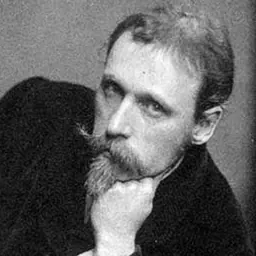
He also made a critique of what he saw as un-businesslike Arts and Crafts attitudes in Moot Points, a dialogue with his friend Walter Crane.
He served on the consultative committee of the Victoria and Albert Museum when it transferred to its new building in Cromwell Road in 1909, and influenced the arrangement its collections there. His own work is well represented in the museum's collection.
His professional association with William Morris and other key figures of the Arts and Crafts movement, such as Crane and W. A. S. Benson, placed him at the centre of contemporary applied arts in Britain, yet, according to his biographer, Joan Maria Hanson, he became neglected in histories of the period.
He married Ruth Emma Morrish In 1873. They had one child, Ruth. The family are buried together on the eastern side of Highgate Cemetery.
Don’t just read it —
keep it.
Full-length biographies made to live with: read them, listen on the way to work, watch them tonight.
- E-book
- Audio
- Video
Instant download · yours to keep · every purchase keeps this site free
Important facts
People in Lewis Foreman Day's life
Named in this biography and alive at the same time


Related people
Same field, nearest in time



Contemporaries
People whose lives overlapped Lewis Foreman Day's

Frequently asked questions
Who was Lewis Foreman Day?
British artist and writer in the Arts & Crafts movement
When was Lewis Foreman Day born?
Lewis Foreman Day was born in 1845.
When did Lewis Foreman Day die?
Lewis Foreman Day died in 1910.
What was Lewis Foreman Day's occupation?
Lewis Foreman Day was a designer and visual artist.
Sources & further reading
· Wikipedia: Lewis Foreman Day
Cite this page
APA: Biography.guide. (2026). Lewis Foreman Day. https://biography.guide/lewis-foreman-day/
MLA: "Lewis Foreman Day." Biography.guide, https://biography.guide/lewis-foreman-day/.
Chicago: "Lewis Foreman Day." Biography.guide. https://biography.guide/lewis-foreman-day/.
Data last updated: 2026-09-20 · Spot an error? Report a correction.
Page generated 2026-09-27 05:22 UTC