
About Lew Bloom
Lived 1859 – 1929 (aged 70). Lew Bloom was an American circus performer, actor, stage actor, art collector, jockey and horse trainer.
Lew Bloom (born Ludwig Pflum; August 8, 1859 – December 12, 1929) was an American vaudeville performer and stage actor who popularized the comical tramp character. After retiring from the stage in the 1910s, he became a prolific art collector and dealer and also painted his own original works.
Decades after his death, art conservators discovered that Bloom was the perpetrator of an art forgery involving an oil portrait that he claimed depicted First Lady Mary Todd Lincoln.
Early life Bloom was born Ludwig Pflum in Philadelphia, Pennsylvania, to Ludwig and Louisa (née Moyer) Pflum. His parents, who immigrated from Germany, had six other children: Susannah, Susan Deborah, Louisa, Charles, Edward and Adolph (who died as a child). Bloom's father worked as a cooper. The family eventually moved to Reading, Pennsylvania, where Bloom attended Poplar Street School. Around 1871, the family moved to Williamsburg where Bloom began working as a jockey. In 1873, he joined the Potter Hart Colossus Circus where he performed a "bounding jockey act" in which he rode horses and performed acrobatics. During his time at the circus, "Ludwig Pflum" changed his name to "Lew Bloom" and would use that name for the remainder of his performing career.
Career
Early years Bloom spent several years touring in variety shows with his jockey act before relocating to Dover, Delaware, where he competed in horse match races. He then returned to Reading where he and a friend opened the Drovers' Hotel. The establishment was the first to introduce cabaret to Reading. Bloom performed song and dance acts at the hotel and also began competing as a lightweight boxer.
Bloom's "Society Tramp" character was a philosophical, shabbily dressed homeless man who drank frequently and was generally treated poorly by other characters. Despite his lowly status, the tramp would make light of his predicament and maintained a positive and comicial outlook. Typically, tramp characters like Bloom's included slapstick comedy routines as well as dancing or pantomime.
Bloom's tramp character became a big hit with audiences and was quickly copied by hundreds of other performers of the era including Nat M. Wills and Charles R. Sweet. Bloom would later insist he originated the character and that he was "the first stage tramp in the business".
By 1909, Bloom's tramp persona had run its course and his career began to wane. At least one critic during that time said that Bloom had become "the worst act on the bill" of vaudeville shows.
Later years After retiring from performing in the late 1910s, Bloom lived in Mount Penn, Pennsylvania, where he spent his time painting in his studio and collecting and dealing art. He began purchasing artwork during his stage career. In April 1907, Bloom exhibited seven pieces of his original works at the Reinhard Rieger Gallery in Mount Penn. The exhibition also included a copy of The Brooklet In the Meadow, by Herman Rheudesela that Bloom painted (the original painting was also exhibited).
Mary Todd Lincoln hoax In early 1929, Bloom made news when he announced that he had acquired a previously unknown oil portrait of former First Lady Mary Todd Lincoln, the widow of slain president Abraham Lincoln. Bloom claimed shortly before President Lincoln was assassinated on April 14, 1865, Mary Lincoln commissioned painter Francis Bicknell Carpenter (who had lived at the White House for six months during Lincoln's presidency and had previously painted First Reading of the Emancipation Proclamation of President Lincoln) to paint a portrait of her as gift to her husband. After the President's death, Bloom claimed that Mary Lincoln was unable to pay Carpenter for the painting and asked him to destroy it. According to Bloom, Carpenter kept the painting and eventually sold it to a wealthy Philadelphia shipbuilder named Jacob G. Neafie who was a great fan of President Lincoln's. After Neafie died, Bloom said that Neafie's daughter inherited the portrait who then gave it to Bloom's sister Susan as gift for taking care of her mother, Anna "Annie" Neafie, who died in 1860. Upon Susan's death in 1910, Bloom inherited her art collection which he said included the portrait of Mary Lincoln. The lack of resemblance to the woman in the portrait to the real Mary Lincoln was rationalized as "artistic idealization". For the next 32 years, the portrait hung at the Illinois Executive Mansion in Springfield, Illinois. Bauman also discovered that a brooch bearing the face of Abraham Lincoln worn by the subject covered a floral brooch. Bauman also inspected the signature of Francis Bicknell Carpenter and the date, both of which were added on top of the varnish layer. After comparing the signature to Carpenter's other paintings, the signature was deemed a forgery.
After the portrait was completely restored, Bauman determined that while it had been painted in the 1860s (likely around 1864), the woman in the portrait was not Mary Todd Lincoln and the painting was not the work of Francis Bicknell Carpenter. The real subject of the portrait and the artist remain unknown. Bauman also determined that Bloom, who also painted his own works, had likely altered the original portrait himself. Bauman also believed Bloom painted over the original portrait, forged Carpenter's name and created the fake affidavit. Bloom's claim that the portrait was given to his sister Susan by Jacob G. Neafie's daughter in appreciation of her care for the ailing Anna Neafie was proven to be false. Susan Bloom was born in 1855 and was only five years old when Anna Neafie died in 1860. James M. Cornelius, the curator of the Abraham Lincoln Presidential Library and Museum, believes that Bloom was able to pull off the hoax because all the participants in his story were unable to refute his story as they were dead. Cornelius also believes that Bloom sought out the Lincolns not only make money from the sale of the portrait but to legitimatize its authenticity. Bloom was likely aware that the surviving Lincolns were eager to portray Mary and her son Robert Todd Lincoln in a positive and sympathetic light after the family had received a great deal of negative publicity after Robert had his mother forcibly institutionalized in 1875.
Don’t just read it —
keep it.
Full-length biographies made to live with: read them, listen on the way to work, watch them tonight.
- E-book
- Audio
- Video
Instant download · yours to keep · every purchase keeps this site free
Important facts
People in Lew Bloom's life
Named in this biography and alive at the same time


Related people
Same field, nearest in time


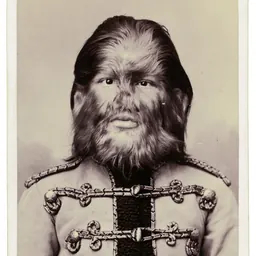

Contemporaries
People whose lives overlapped Lew Bloom's
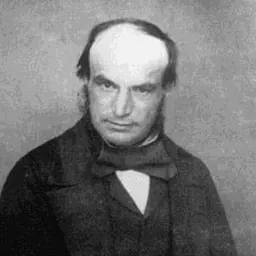
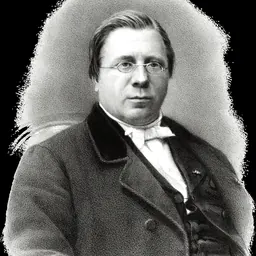
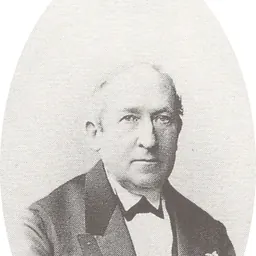


Frequently asked questions
Who was Lew Bloom?
American actor and art collector (1859-1929)
When was Lew Bloom born?
Lew Bloom was born on 8 August 1859 in Philadelphia.
When did Lew Bloom die?
Lew Bloom died on 12 December 1929 in New York City.
What was Lew Bloom's occupation?
Lew Bloom was a circus performer, actor, stage actor, art collector, jockey and horse trainer.
What nationality was Lew Bloom?
Lew Bloom was American.
Sources & further reading
Cite this page
APA: Biography.guide. (2026). Lew Bloom. https://biography.guide/lew-bloom/
MLA: "Lew Bloom." Biography.guide, https://biography.guide/lew-bloom/.
Chicago: "Lew Bloom." Biography.guide. https://biography.guide/lew-bloom/.
Data last updated: 2026-09-26 · Spot an error? Report a correction.
Page generated 2026-09-27 05:13 UTC