
Lev Zetlin
Israeli-American civil and structural engineer
About Lev Zetlin
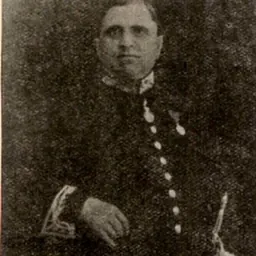
Lived 1918 – 1992 (aged 74). Lev Zetlin was an Israeli and American structural engineer and civil engineer.
Lev Zetlin (; July 14, 1918 – December 4, 1992) was an Israeli-American civil and structural engineer. Founder of the engineering consulting firm Lev Zetlin & Associates, he developed several innovations in structural engineering including the double layer bicycle wheel roof system which he first employed at the Utica Memorial Auditorium and later patented. Zetlin was the structural engineer on 14 pavilions at the 1964–65 New York World's Fair including the New York State Pavilion which utilized his double layer cable suspended roof design.
Born in Russia, Zetlin began his career in Israel and moved in 1950 to New York to earn his master's and doctorate from Cornell University. After starting Lev Zetlin & Associates in 1956, he designed a number of structures that attracted the attention of architects such as Philip Johnson with whom he had a collaborative career. At various times during his career, Zetlin was a professor at Manhattan College, Pratt Institute, and the University of Virginia. Later in his career, he founded Zetlin-Argo Structural Investigations and consulted on several notable structural failure investigations.
Early life, education and military service Lev Zetlin was born in Namangan, Russia, on July 14, 1918. His family intended to move to Palestine in 1921 due to the Russian Civil War by way of Iran, where Zetlin received his early education at the American College in Tehran, Iran. He attended high school and university in Palestine. In 1939, he graduated with a diploma in civil engineering from the High Technical Institute overseeing the construction of transmission towers and other war-related structures.
In 1950, Zetlin moved to the United States to attend Cornell University and graduated in 1951 with a master's in civil engineering. He earned his Ph.D. in structural engineering, applied mechanics and soil mechanics from Cornell in 1953. and served on the advisory panel of the National Academy of Sciences. and served on the New York State Council on the Arts.
In October 1971, he sold LZA to Gable Industries, owned by J. B. Fuqua, but remained active in the firm. By 1973, the firm was employing around 40 associates and was responsible for the structural design of airport terminals, bridges, high-rise apartments, hospitals, office buildings, offshore facilities, museums, schools and sports arenas. Zetlin's firm also investigated the L'Ambiance Plaza collapse in Bridgeport, Connecticut, in 1987. To accomplish this, he designed the structure with a roof suspended on two layers of cables. Zetlin obtained a patent on this self-damping cable system and used it on other buildings such as the Salt Lake County Civic Auditorium.
The design of the Utica Memorial Auditorium attracted the attention of architect Philip Johnson.
Zetlin and Johnson worked together on several other projects including the Niagara Falls Convention Center which used eight steel, space frame trusses to span the roof. Zetlin collaborated with several other architects throughout his career. With Max Abramovitz, he designed the Krannert Center for the Performing Arts at the University of Illinois Urbana-Champaign. Among Zetlin's other works are the Roosevelt Island Tramway and several projects with architect I.M. Pei.
Awards and honors Zetlin was elected to the Society of American Military Engineers in 1954 and became a fellow of the American Society of Civil Engineers in 1960. He was the recipient of the 1963 Progressive Architecture Award for his work on a medium security prison in Leesburg, New Jersey. He received the same award again in 1964 for his design of the Kline Science Center at Yale University. In 1964, the Concrete Industry Board honored Zetlin with a special award for the Eastman Kodak Pavilion at the New York World's Fair.
In 1969, Zetlin was awarded the Gold Medal from the Société Arts, Sciences, Lettres in France largely because of his work on the 1964–65 New York World's Fair. He has twice won the Honor Award from the U.S. Department of Housing and Urban Development first for his work on the Bluebeard's Hill Apartments in Saint Thomas, U.S. Virgin Islands, in 1968, and the Charles Center in Baltimore, Maryland, in 1970.
In 1972, Zetlin won the Architectural Award of Excellence from the American Institute of Steel Construction for his superbay hangar designs. He was made a Knight of Honor by the Sovereign Military Order of Malta in 1973.
Personal life Zetlin was married to Eve for 46 years. They had three children: Alexandra, Thalia, and Michael. Lev Zetlin died of cardiac arrest on December 4, 1992, at the age of 74, at St. Mary's Hospital in Milwaukee, Wisconsin. His funeral service was held in New York two days later.
Don’t just read it —
keep it.
Full-length biographies made to live with: read them, listen on the way to work, watch them tonight.
- E-book
- Audio
- Video
Instant download · yours to keep · every purchase keeps this site free
Important facts
People in Lev Zetlin's life
Named in this biography and alive at the same time




Related people
Same field, nearest in time




Contemporaries
People whose lives overlapped Lev Zetlin's


Frequently asked questions
Who was Lev Zetlin?
Israeli-American civil and structural engineer
When was Lev Zetlin born?
Lev Zetlin was born on 14 July 1918 in Namangan.
When did Lev Zetlin die?
Lev Zetlin died on 4 December 1992 in Milwaukee, Wisconsin.
What was Lev Zetlin's occupation?
Lev Zetlin was a structural engineer and civil engineer.
What nationality was Lev Zetlin?
Lev Zetlin was Israeli and American.
Sources & further reading
Cite this page
APA: Biography.guide. (2026). Lev Zetlin. https://biography.guide/lev-zetlin/
MLA: "Lev Zetlin." Biography.guide, https://biography.guide/lev-zetlin/.
Chicago: "Lev Zetlin." Biography.guide. https://biography.guide/lev-zetlin/.
Data last updated: 2026-09-22 · Spot an error? Report a correction.
Page generated 2026-09-27 05:27 UTC