
About Lev Razgon
Lived 1908 – 1999 (aged 91). Lev Razgon was a Russian human rights defender, writer and prose writer.
Lev Emmanuilovich Razgon (; 1 April 1908 – 8 September 1999) was a Soviet Russian journalist, writer, a prisoner of the Gulag from 1938 to 1942 and again from 1950 to 1955 and, latterly, a human rights activist.
Razgon was born in Belorussia to the family of Mendel Abramovich Razgon and Glika Izrailevna Shapiro. In the 1920s they moved to Moscow and in 1932, he graduated from the history faculty of the Moscow State Pedagogical Institute.
His career before his arrest in 1938 was in great measure due to his marrying into the new Soviet elite and, in particular, two men: his wife Oksana's father Gleb Boky, a high-ranking NKVD officer, and her step-father Ivan Moskvin, a leading figure in the Central Committee.
Later in life, Razgon fell into the category of Gulag detainees who rejoined the Communist Party after their release. He did not resign from the Party until 1988.
Life before arrest After moving to Moscow Razgon met and married Oksana, the daughter of Gleb Boky and step-daughter of Ivan Moskvin, who were influential friends and patrons until their own arrest in 1937.
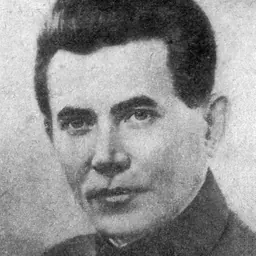
At Ivan Moskvin's apartment, for instance, Razgon met the future head of the NKVD Nikolai Yezhov. With a pass supplied by Moskvin he attended the 17th Congress of the All-Union Communist Party (Bolsheviks), the "1934 Congress of Victors" at which, he reports, Stalin received many more negative votes than Sergei Kirov when the Congress members voted to re-appoint members to the Central Committee.
Razgon's account of these years began to appear in printed form during perestroika, serialised in issues of the Ogonyok weekly. Subsequently, they were published as a book True Stories (Nepridumannoe, 1988), and it was only in a separate and slightly later publication in the Ogonyok library series that Razgon first admitted he had worked for Gleb Boky's organisation.
Lev Razgon and the NKVD A 2005 handbook detailing The Most Secret Relatives of Soviet writers and other public figures summarises Razgon's biography as follows: a Pioneer leader, he then began to work for the Central Bureau of Young Pioneers and as an editor at Molodaya gvardiya publishers; he worked for the NKVD until Gleb Boky's arrest; and went back to the Children's Literature publishing house (Detizdat).
On 18 April 1938, Razgon was arrested There are almost as many references to his memoirs in Anne Applebaum's Gulag: A history of the Soviet Camps (2003), as there are to Alexander Solzhenitsyn's Gulag Archipelago (1974).
Razgon describes the respect he received for being the son-in-law of Gleb Boky (shot in November 1937) and an existence in which he usually worked in the office as a norm-setter, not out in the forest with the rest of the convicts, felling trees. At one point in his memoirs he takes issue with Solzhenitsyn and speaks out on behalf of "trusties" like himself, and the camp medical service, who together made things easier for ordinary inmates.
A less flattering account has been offered by Anton Antonov-Ovseyenko, Razgon's junior by 11 years. Antonov-Ovseyenko also spent time in the Gulag; his famous Bolshevik/Red Army father was executed during the Great Purges of the late 1930s. Razgon was an "honoured provocateur", in Antonov-Ovseyenko's words, and was arrested and sentenced together with a group of "too assiduous torturers"; he did not push a wheelbarrow in a camp, he did not fell wood in the taiga, and he was not dying of starvation. Instead he worked as a norm setter, and helped the camp director and its "godfather", i.e. the supervisor of the NKVD department for internal security.
In 1955, Razgon was released.
Some of those in the 1st category were tortured to secure confessions that they were secret Trotskyists, agents of foreign powers and so on. After show trials of the kind mounted in Moscow from 1936 to 1938, the accused were shot. Boky's confession was not good enough and, according to NKVD records examined by Razgon in the late 1980s, his father-in-law was shot on 15 November 1937 shortly after being found guilty.
Others were executed almost immediately. In his chapter about "Niyazov", whom he met in 1977 at Moscow's Cardiology Institute, Razgon tells what that former NKVD executioner had to say concerning the hundreds and thousands of victims of such operations, despatched with a bullet to the back of the head and buried at concealed locations all over the Soviet Union.
Memorial and the Clemency Commission In 1988, Razgon and many others (e.g. Bulat Okudzhava) left the CPSU. For a while he joined the Italian Radical Party.
In 1989, Razgon was among the founders of the Memorial Society. He was also a member of the International PEN Club.
With many other prominent writers Razgon joined the Clemency Commission
Publications Shestaja Stantsiya (The Sixth Station, 1964) Odin God i Vsya Zhizn (One Year and All Life, 1973) Sila Tyazhesti (Force of Gravity, 1979) Zrimoe Znanie (Visible Knowledge, 1983) Moskovskie Povesti (The Moscow Stories, 1983),
Glasnost years Nepridumannoye (True Stories, 1988), Pered Raskrytymi Delami (Before Opened Case Files Cases, 1991),
The 1990s Plen v Svoyom Otechestve (A Captive in One's Homeland, 1994), an expanded version of True Stories Pozavchera i Segodnya (The Day before Yesterday and Today, 1995)
In translation Razgon's memoirs (Непридуманное, Nepridumannoe, 1988) have been translated into French, Italian and English and five other languages La vie sans lendemains, Horay: Paris, 1991
True Stories, published in US (1995) and in the UK (1997) Sin inventar NADA. El Polvo Anonimo del Gulag, 2013 (Spanish Edition) Χωρίς Επινοήσεις, Athens 1990 (in Greek)
Awards In 1998, to mark Razgon's 90th birthday, he was awarded the Order of Merit for the Fatherland of the fourth class for his personal contribution to Russian literature and his active participation in the country's democratic reforms. Razgon also received the Andrei Sakharov Prize for Writer's Civic Courage.
Don’t just read it —
keep it.
Full-length biographies made to live with: read them, listen on the way to work, watch them tonight.
- E-book
- Audio
- Video
Instant download · yours to keep · every purchase keeps this site free
Important facts
People in Lev Razgon's life
Named in this biography and alive at the same time


Related people
Same field, nearest in time


Contemporaries
People whose lives overlapped Lev Razgon's



Frequently asked questions
Who was Lev Razgon?
Soviet writer (1908–1999)
When was Lev Razgon born?
Lev Razgon was born on 1 April 1908 in Horki.
When did Lev Razgon die?
Lev Razgon died on 8 September 1999 in Moscow.
What was Lev Razgon's occupation?
Lev Razgon was a human rights defender, writer and prose writer.
What nationality was Lev Razgon?
Lev Razgon was Russian.
Sources & further reading
Cite this page
APA: Biography.guide. (2026). Lev Razgon. https://biography.guide/lev-razgon/
MLA: "Lev Razgon." Biography.guide, https://biography.guide/lev-razgon/.
Chicago: "Lev Razgon." Biography.guide. https://biography.guide/lev-razgon/.
Data last updated: 2026-09-20 · Spot an error? Report a correction.
Page generated 2026-09-27 05:31 UTC