
About Lev Dovator
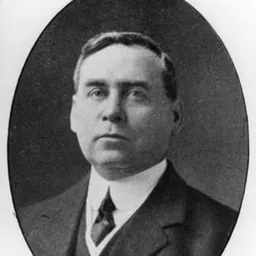
Lived 1903 – 1941 (aged 38). Lev Dovator was a Russian military leader.
Lev Dovator (upper left) on the Soviet stamp published during the war. The text says "Death to German occupiers!"
Lev Mikhaylovich Dovator ( 19 December 1941 ) was a famous Soviet major general who was killed in action during World War II and posthumously awarded the title of Hero of the Soviet Union.
Life Born in 1903, Dovator came from a Belarusian Jewish peasant family. In 1922, he was elected to be Secretary of the Komsomol Committee of Khotino village. He joined the Red Army in 1924 and went on to become an officer after graduating from cavalry school and a military academy. In 1926, he attended Borisoglebsk-Leningrad Cavalry Commanders School, graduating in 1929 to become a platoon commander in the 27th Cavalry Regiment, 5th Cavalry Division. In October 1933, he was posted with the 1st Cavalry Regiment, 1st Cavalry Division, as a commissar. From May 1935 to May 1936, Colonel Dovator was commissar of the Independent Reconnaissance Battalion of the 93rd Rifle Division. He attended Frunze Military Academy in 1939, and during the early months of the war, Dovator was with the Western Front Headquarters. At the outbreak of the Second World War, he was a colonel in charge of a brigade of Cossack cavalry.
Operation Barbarossa
At the start of the German invasion of the Soviet Union, he was posted as Chief of Staff of the Red Army's 36th Cavalry Division. In July 1941, he won the Order of the Red Banner for bravery in the defensive battles at the Solovyo crossing of the Dniepr. Colonel Dovator conducted a successful fighting withdrawal, crossing a bridge over the river just before the Germans captured it. In August 1941, he was given command of a cavalry group consisting of the 50th and 53rd Cavalry Divisions. General Lev Dovator's 50th and 53rd Cavalry Divisions were raised exclusively from Kuban Cossacks. Despite his Jewish heritage, unique with the Cossacks, they accepted Dovator as one of their own and considered him a great leader, superb horseman, and master of sabre.
Battle of Moscow
On 20 November, his unit became the 3rd Cavalry Corps due to its enormous battlefield success. On 27 November, however, it was renamed the 2nd Guards Cavalry Corps. During the Battle of Moscow, Dovator was the commander of 2nd Guards Cavalry Corps, which fended off the enemy advance at Volokolamsk.
He was killed in an offensive action on 19 December 1941, near the outskirts of Ruza. He was reportedly cut down by machine-gun fire while crawling towards a forward position to get a better look near the village of Palashkino.
Dovator was posthumously awarded the title Hero of the Soviet Union, two days afterwards, as well as the Order of Lenin. He was replaced in command by Major General Issa Pliyev. Lev Dovator was buried alongside Ivan Panfilov, as they fought together to stop the 9th Army (Wehrmacht) from reaching Moscow.
Don’t just read it —
keep it.
Full-length biographies made to live with: read them, listen on the way to work, watch them tonight.
- E-book
- Audio
- Video
Instant download · yours to keep · every purchase keeps this site free
Important facts
People in Lev Dovator's life
Named in this biography and alive at the same time

Related people
Same field, nearest in time


Contemporaries
People whose lives overlapped Lev Dovator's

Frequently asked questions
Who was Lev Dovator?
Soviet major general (1903–1941)
When was Lev Dovator born?
Lev Dovator was born on 20 February 1903 in Chocina.
When did Lev Dovator die?
Lev Dovator died on 19 December 1941 in Ruzsky Municipal Okrug.
What was Lev Dovator's occupation?
Lev Dovator was a military leader.
What nationality was Lev Dovator?
Lev Dovator was Russian.
Sources & further reading
Cite this page
APA: Biography.guide. (2026). Lev Dovator. https://biography.guide/lev-dovator/
MLA: "Lev Dovator." Biography.guide, https://biography.guide/lev-dovator/.
Chicago: "Lev Dovator." Biography.guide. https://biography.guide/lev-dovator/.
Data last updated: 2026-09-26 · Spot an error? Report a correction.
Page generated 2026-09-27 05:14 UTC