
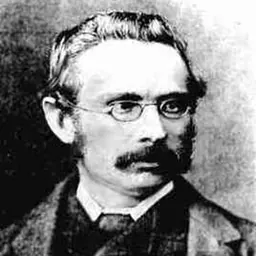
Lev Chernyi
Russian anarchist theorist, activist and poet executed by the Bolsheviks
About Lev Chernyi
Lived 1890 – 1921 (aged 30–31). Lev Chernyi was a Russian politician, poet, journalist, writer and philosopher.
Pavel Dmitrievich Turchaninov (; 1878–1921), commonly known by his pseudonym Lev Chernyi , was a Russian individualist anarchist. Having joined the anarchist movement during the Russian Revolution of 1905, during which he developed his individualist theory of "associational anarchism", Chernyi was arrested and exiled to Siberia for his revolutionary activities. After several escape attempts, one of which resulted in mutinous exiles capturing Turukhansk, he managed to flee to Paris, where he stayed until the Russian Revolution of 1917. After returning to Russia, he acted as secretary for the Moscow Federation of Anarchist Groups and organised the Black Guards, the federation's armed wing. As political repression against anarchists intensified after the Bolsheviks took power, Chernyi joined an underground anarchist group, which bombed a Russian Communist Party meeting. In 1921, Chernyi and Fanya Baron were arrested on charges of counterfeiting and were executed by shooting by the Cheka.
Biography Pavel Dmitrievich Turchaninov was born to noble family in the Smolensk Governorate of the Russian Empire, on . His father, Dmitry Turchaninov, was a colonel in the Imperial Russian Army.
Revolutionary activities After coming of age, Turchaninov enrolled in Moscow University but he was expelled in 1901 for his activity in revolutionary groups. By the outbreak of the Russian Revolution of 1905, he had joined the anarchist movement.
Under the pseudonym Lev Chernyi, he wrote a manifesto of his newfound anarchist beliefs, Associational Anarchism, which he finished in February 1906. Chernyi's brother Sergey Turchaninov, himself a Marxist and empirio-criticist, criticised his brother's work for utopianism and a lack of basis in materialism. In its own "Review of the Revolutionary Movement", the Ministry of Internal Affairs described Chernyi's book as a "paraphrasing" of the work of Pierre-Joseph Proudhon. Researcher Allan Antliff himself compared it to Max Stirner's book The Ego and Its Own.
From 1906 to 1908, Chernyi was a member of the Buntar group, through which he began a relationship with Nina Yagodina. In April 1908, he was exiled to the Yeniseysk Governorate in Siberia, while Yagodina was exiled Arkhangelsk Governorate in the Russian North. Turchaninov frequently attempted escaped from exile, aiming to reunite with Yagodina.
Exile In the autumn of 1908, he and a group of exiled revolutionaries made a plan to escape Siberia by hijacking a steamship. On 8 December 1908, the group ambushed a convoy at and headed north along the Yenisey, despite Chernyi's objections to the choice of route. On , they captured Turukhansk, where they led an armed uprising against the Tsarist authorities. Although he had himself refused to participate in the revolt, he was arrested on ; two days later, the rebels were disarmed by the Imperial Russian Army. By this time, the authorities had identified Turchaninov as the writer Lev Chernyi. Despite his lack of direct involvement in the Turukhansk uprising, the Ministry of Internal Affairs held him responsible for organising the mutiny.
After this setback, he again made a last attempt to escape Siberia; this one was successful. Chernyi moved to Paris, where he lived until the outbreak of the Russian Revolution of 1917. Details about Chernyi's Siberian exile were only revealed after the opening of the State Archive of the Russian Federation and the State Archive of Krasnoyarsk Krai, which contributed to a more complete biographical picture of his life.
Return to Moscow After the February Revolution, Chernyi returned to Moscow, where he joined the Moscow Federation of Anarchist Groups, serving as the organisation's secretary. Although the Federation largely opposed illegalist and expropriative activities, Chernyi himself advocated for the organization to seize private homes. Following the outbreak of the Russian Civil War, Chernyi helped organise the Black Guards, the armed wing of the Moscow Federation of Anarchist Groups. On 5 March 1918, the second issue of Anarkhiia after the October Revolution, Chernyi published an article in which he denounced the new Russian Soviet Republic and declared it to be as much of a threat as the old regime. In subsequent issues of the paper, Chernyi outlined proposals for the decentralisation of industry and the abolition of hierarchical power.
By the summer of 1918, political repression against the anarchist movement drove many of Moscow's anarchists underground; Chernyi himself facilitated the creation of an underground group of the Federation. Chernyi appeared to the Ukrainian anarchist Nestor Makhno, who visited Moscow in June 1918, to have been collaborating with the Soviet regime. In 1919, he joined the Underground Anarchists, founded by Kazimir Kovalevich and Pyotr Sobalev. On 25 September 1919, the Underground Anarchists carried out a bombing of a Russian Communist Party meeting, killing 12 functionaries and wounding 55 others, including Nikolai Bukharin, Yemelyan Yaroslavsky and Yuri Steklov. The bombing ultimately resulted in the intensification of political repression against the anarchists. Chernyi himself was not directly involved in the bombing.
Arrest and execution During the political repression that followed the bombing, Lev Chernyi and Fanya Baron were detained on charges of counterfeiting. In September 1921, Chernyi and Baron were shot by the Cheka. Their execution drew protests from others in the Russian anarchist movement, including Emma Goldman. The public outcry led to the government of Vladimir Lenin ordering the release and immediate deportation of a number of anarchist political prisoners, while other anarchists voluntarily left the country.
Political ideology Chernyi's "associational anarchism" was a spin on individualist anarchism, based on the free association of individuals. Alongside Émile Armand, Chernyi was one of the earliest European advocates of individualist anarchism, which drew inspiration from Max Stirner's egoist philosophy. Together with Alexei Borovoi, Chernyi was a leading figure of individualist anarchism during the revolutionary period in Russia. They were both inspired by Friedrich Nietzsche's call for the overthrow of bourgeois values, as well as Max Stirner and Benjamin Tucker's opposition to society. They even rejected the anarchist communism advocated by Peter Kropotkin, as they believed it would stifle individual freedoms.
Selected works Books Новое направление в анархизме: Ассоциационный анархизм / A New Trend in Anarchism: Associational Anarchism (New York, 1923) [Moscow, 1907] О классах / About the Classes (Moscow, 1924)
Articles "Госуправление и анархизм" / "The State and Anarchism" (Anarkhiia, 5 March 1918) "Мир захлючен. Да здравствует война!" "The Peace is Concluded. Long Live War!" (Anarkhiia, 7 March 1918)
Don’t just read it —
keep it.
Full-length biographies made to live with: read them, listen on the way to work, watch them tonight.
- E-book
- Audio
- Video
Instant download · yours to keep · every purchase keeps this site free
Important facts
People in Lev Chernyi's life
Named in this biography and alive at the same time

Related people
Same field, nearest in time






Contemporaries
People whose lives overlapped Lev Chernyi's


Frequently asked questions
Who was Lev Chernyi?
Russian anarchist theorist, activist and poet executed by the Bolsheviks (1890–1921)
When was Lev Chernyi born?
Lev Chernyi was born in 1890 in Moscow.
When did Lev Chernyi die?
Lev Chernyi died on 27 September 1921 in Moscow.
What was Lev Chernyi's occupation?
Lev Chernyi was a politician, poet, journalist, writer and philosopher.
What nationality was Lev Chernyi?
Lev Chernyi was Russian.
Sources & further reading
Cite this page
APA: Biography.guide. (2026). Lev Chernyi. https://biography.guide/lev-chernyi/
MLA: "Lev Chernyi." Biography.guide, https://biography.guide/lev-chernyi/.
Chicago: "Lev Chernyi." Biography.guide. https://biography.guide/lev-chernyi/.
Data last updated: 2026-09-20 · Spot an error? Report a correction.
Page generated 2026-09-27 05:22 UTC