
About Leslie Thornton
Born 1951. Leslie Thornton is an American film director, painter, film producer, film editor, cinematographer and artist.
Leslie Thornton (born 1951) is an American avant-garde filmmaker and artist.
Life Leslie Thornton was born in 1951 in Knoxville, Tennessee, and grew up in Oak Ridge, Tennessee, and Schenectady, New York. Both her father and grandfather worked on the Manhattan Project, but due to the project's high level of secrecy, neither knew of the other's involvement until many years later. Thornton learned as an adult, and as a result the atomic bomb and themes of apocalypse appear in some of her works (most notably, Peggy and Fred in Hell and Let Me Count the Ways, Minus 10, 9, 8, and 7...). She first developed an interest in film as a teenager when she frequented experimental cinema screenings at her local Unitarian Church in Schenectady. After earning a Bachelor of Fine Arts in painting at SUNY-Buffalo in 1973, she continued on to graduate work. Thornton earned a Master of Fine Arts in Painting from The Hartford Art School in 1976, and then studied film at the graduate level at the Massachusetts Institute of Technology in 1975 under Richard Leacock and Ed Pincus. Currently she works as a professor of Modern Culture and Media at Brown University and teaches at the European Graduate School. She lives in both Providence, Rhode Island, and New York City with her partner, artist and scholar Thomas Zummer.
Style Thornton began painting as a teenager, during "a period of Minimalism moving into Conceptualism." She recalls that lineage as a prominent part of her own work, where visually, "The paintings were moving towards white but there was some kind of grid that kept being laid down and re-established." Scholar Thomas Zummer characterizes those early paintings through their grids: "Thornton's paintings organized a sensual, expressionist hand into strict formal geometric mappings. These works begin with a painterly sensuality set within and against a series of structural grids, so that there is a constant between expressivity and the ineffable." But as her practice developed, he notes, "Painting was a vessel incapable of the containment of the sensate. Language, gesture, emotion the random and inexplicable things and occurrences of the world were among her subjects; painting seemed insufficient. It was a matter of finding an appropriate instrument for her investigations". and soundtrack, the body of work as a whole explores themes of language, childhood, nuclear war, technology, ethnography, seriality and narrative structure. These themes have been collectively described as "an investigation in the production of meaning through media." In her words, "I see myself as writing with media, and I position the viewer as an active reader, not a consumer. The goal is not a product, but shared thought." Throughout her career, Thornton has received significant critical acclaim for her work—particularly for her serial Peggy and Fred in Hell, and was the only woman experimental filmmaker included in Cahiers du cinéma's "60 Most Important American Directors" issue. In addition to acclaim from critics, Thornton has received many awards and her work is included in the collections of many museums.
Peggy and Fred in Hell Thornton's first widely-recognized and perhaps still best-known work is the epic serial Peggy and Fred in Hell. The project began as she was moving into a new apartment in San Francisco and the two children who lived upstairs, Janis and Donald Reading, came to offer help. While carrying her things, they saw the film equipment and wanted to be recorded (the resulting material would eventually become part of the serial's first episode, Peggy and Fred in Hell: The Prologue). These children, Peggy and Fred, wander through Hell (filmed primarily in California, but also across the United States) and fill their time learning "how to make avocado dip, getting lost in their own house, receiving imaginary phone calls and death threats, deciding what things are for," and monitoring the television sets that fill their homes.
The resulting works were released between 1984 and 2013 in a series of 17 episodes, which range in time from two to 20 minutes each, in format from 16 mm film to analog video to digital video, and are almost entirely in black and white with the exception of a short clip in from the 1996 episode Whirling. Later episodes introduced a variety of digital effects, including text crawls, graphic overlays, and rippling images. Thornton emphasizes the serial's "modular format," and encourages that the episodes be played in any order or simultaneously. She referred to the project as "ongoing and open-ended" until the release of The Fold in 2013.
Critics have praised Peggy and Fred in Hell since its beginning in 1984. Both The Village Voice and Cahiers du Cinéma placed the serial on their "Best Films of the Year: 1989" lists, and Senses of Cinema included it on their "50 Best films of 2004" (for the version Peggy and Fred in Hell: Beginning, Middle, End). The Pacific Film Archive began a restoration of a final-cut iteration of the serial in 2008. Film critic Jonathan Rosenbaum, who has praised Thornton's work elsewhere, called Peggy and Fred in Hell both "highly idiosyncratic and deeply creepy," and "the most exciting recent work in the American avant-garde, a saga that raises questions about everything while making everything seem very strange."
Iowa Film Festival, Honorable Mention (for X-TRACTS), 1976 San Francisco Art Institute Film Festival, Honorable Mention (for X-TRACTS), 1980 Athens International Film Festival, Special Merit Award (for Jennifer, Where Are You?), 1981 Athens International Film Festival, Special Merit Award (for Adynata), 1984 Rhode Island Council on the Arts, Grant (for Peggy and Fred in Hell), 1985 National Endowment for the Arts, Grants: 1981, 1992, 1995 The Jerome Foundation, Grants: 1985, 1988, 1992 New York State Council on the Arts, Grants: 1985, 1989 Art Matters, Inc., Grants, 1987, 1988, 1993 The Rockefeller Foundation, Fellowships: 1988, 1990, 1997 New York Foundation for the Arts, Fellowships: 1988, 1999 The Alpert Awards in the Arts, 1995 (first Media Arts Recipient) New England Film and Video Festival, Judges' Special Merit Award (for The Last Time I Saw Ron), 1995 Three Rivers Arts Festival, First Prize: Best of Show/Video Category (for The Last Time I Saw Ron), 1995 The Maya Deren Award for Independent Film and Video Artists, 1996 Hugo Boss Award of the Solomon R. Guggenheim Museum, Nominee, 1998 Stephen Holden's "Best Films in 1999" (for Another Worldy), New York Times, 2000 Rainbow Program, LAB Artist Outreach Program, Participating Artist, 2005 Onion City Film Festival, Second Place (for Let Me Count the Ways Minus 10, 9, 8, 7..., 2005 Anonymous Was A Woman, Grant, 2008 Brown University, Humanities Research Fund, 2009 Film Comment, "Best of the Decade Avant-Garde Films" (for Let Me Count the Ways), 2010 Jonathan Rosenbaum, "All Time Top 1000 Films", (for Adynata), 2010
Collections and representation Thorton is represented by the Winkleman Gallery in New York, New York and Unit 17 in Vancouver, Canada and distributed by Elisabeth de Brabant, the DIA Foundation, Video Data Bank, Electronic Arts Intermix, Women Make Movies, New York Film Makers Co-op, Light Cone, and LUX. In addition to numerous private collections, Thornton's pieces are in the collections of the following institutions:
Smithsonian American Art Museum Jeu de paume Fundacion La Laboral Fundacion Salamancia Ciudad de Cultura Museum of Modern Art, Fundacio la Caixa Centre Pompidou Pacific Film Archive Newark Museum Arteleku/Donostia-San Sebastian Parabola Arts Foundation Fundació Antoni Tàpies Harvard University School of the Art Institute of Chicago Ecole Nationale Supieure des Beaux Arts Bezalel Academy of Arts and Design University of Notre Dame Queen's University New York University Princeton University Carnegie Mellon University California Institute of the Arts University of California, San Diego Walker Art Center
Don’t just read it —
keep it.
Full-length biographies made to live with: read them, listen on the way to work, watch them tonight.
- E-book
- Audio
- Video
Instant download · yours to keep · every purchase keeps this site free
Important facts
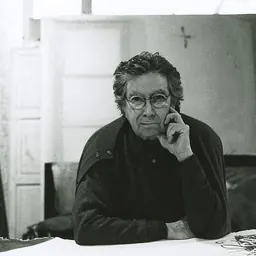
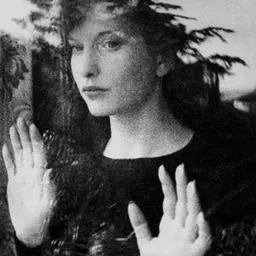
People in Leslie Thornton's life
Named in this biography and alive at the same time





Related people
Same field, nearest in time


Contemporaries
People whose lives overlapped Leslie Thornton's


Frequently asked questions
Who is Leslie Thornton?
American filmmaker (born 1951)
When was Leslie Thornton born?
Leslie Thornton was born in 1951 in Knoxville.
What is Leslie Thornton's occupation?
Leslie Thornton is a film director, painter, film producer, film editor, cinematographer and artist.
What nationality is Leslie Thornton?
Leslie Thornton is American.
Sources & further reading
· DBpedia: Leslie Thornton (filmmaker)
Cite this page
APA: Biography.guide. (2026). Leslie Thornton. https://biography.guide/leslie-thornton-film-director/
MLA: "Leslie Thornton." Biography.guide, https://biography.guide/leslie-thornton-film-director/.
Chicago: "Leslie Thornton." Biography.guide. https://biography.guide/leslie-thornton-film-director/.
Data last updated: 2026-09-20 · Spot an error? Report a correction.
Page generated 2026-09-27 05:23 UTC