
About Leslie Gay
Lived 1871 – 1949 (aged 78). Leslie Gay was a British cricketer and association football player.
Sporting career Cricket Prior to his matriculation to Cambridge, Gay played "second-class" county cricket for Hampshire (who had lost their first-class status in 1885) beginning in 1888, with his first match against fellow "second-class" county Somerset resulting in a heavy loss. In 1890, Gay received praise for his performance in a match against Sussex (a first-class side); helping Hampshire to a 164-run victory by scoring 63 not out in the first innings.
Having matriculated to Cambridge in 1890, Gay found his way into the Cambridge team was blocked by Gregor MacGregor, the incumbent Cambridge wicket-keeper, who was selected by England for two of the three Test matches that summer, and described as "a wicket-keeper of extraordinary ability" in Oxford and Cambridge Cricket. He eventually made his first-class debut for Cambridge against the Marylebone Cricket Club (MCC) at Fenner's in 1891. Following MacGregor's graduation in 1891, Gay managed to establish himself in the Cambridge side in 1892 and 1893; in a preview of the 1892 season, the magazine Cricket praised Gay's "excellent form as a wicket-keeper for Hampshire", and he captained one of the sides in the Seniors' trial match. He made a further seven first-class appearances for Cambridge in 1892, His cricket season with Cambridge culminated with him winning his Blue, appearing in the University Match against Oxford. Although Oxford won by five wickets, Gay was commended for wicket-keeping which was "one of the very best features of the match" and "quite up to the best standard of amateur cricket" according to Cricket. After several more prestigious players had turned down invitations to play for the Gentlmen in the 1892 Gentlemen v Players fixture at The Oval, Gay accepted an invitation to play for the team. He also played a late season match for the West of England against the East in Portsmouth.
After graduating from Cambridge, he played four matches for Somerset in the 1894 County Championship, in addition to playing twice for the South in the North v South fixtures and for the MCC against Yorkshire at the Scarborough Festival. In England's first innings, he scored 33 batting from number ten before being dismissed by Jack Reedman, while following-on in their second innings he was dismissed for 4 runs by Harry Trott. Behind the stumps he made four dismissals (three catches and one stumping), with England winning the Test by 10 runs. Gay was replaced for the remaining four Test matches by Hylton Philipson. He featured in two further first-class matches on the tour, against Victoria and South Australia.
Following the tour of Australia, Gay opted to stay in British Ceylon to work as a coffee planter, He resumed his first-class career in 1900, playing for the MCC against Leicestershire at Lord's, in addition to also playing nine first-class matches for Hampshire in that season's County Championship.
Football As a schoolboy, Gay initially played football as a centre-forward, but after an injury which prevented him from playing for a few years he returned as a full-back. It was playing this position that he won the Sussex Senior Challenge Cup in 1888–89 with Brighton College. After going up to Cambridge University, he initially tried for the university team as a defender, but could not secure a place. Instead, he dedicated himself to developing his skills as a goalkeeper, a position he had dallied with as a youngster.
His training paid off, as in 1891, he was selected to play as goalkeeper for England in a match against the touring Canadians. Though it was not an 'official' international match, The Times described England's team as being a "strong eleven", and they won 6–1. Gay earned his football Blue in February 1892, when his goalkeeping drew praise from The Times during a 5–1 victory for Cambridge University over Oxford University. After his graduation from university, he played for Old Brightonians and Corinthian F.C. he was selected to play versus Scotland in the 1892–93 British Home Championship, which England won 5–2. He featured in goal for England again the following year, playing in a 5–1 win against Wales in March, followed by a 2–2 draw with Scotland in April.
After returning from Ceylon, Gay joined Southampton in 1900 as reserve to fellow England goalkeeper, Jack Robinson, although he never played for the first team.
Military service and later life Gay served in the First World War, being commissioned as a lieutenant in the Territorial Force. He was promoted to captain with the South Lancashire Regiment in September 1915, before being made an adjutant in March 1916. He relinquished this appointment in September of the same year, and was seconded to the staff the following month. He relinquished his appointment to the staff in July 1918, having been made a temporary major in June 1918 for his appointment to assistant commandant with the Royal Defence Corps. Following the end of the war, Gay relinquished his commission in September 1919 but retained the rank of captain.
Gay was a keen golfer, having been secretary of the Northamptonshire Golf Club and later the East Devon Golf Club, with him representing Devon in the sport. Having split from his wife, he opted to live a "hedonistic" lifestyle; playing golf and cricket, and sharing the home of a wealthy young widower in east Devon. After the widowers' death he remained in the area, later dying in a nursing home at Sidmouth in November 1949. He was survived by his sister, Charlotte Evelyn Gay, who was a social reformer.
Don’t just read it —
keep it.
Full-length biographies made to live with: read them, listen on the way to work, watch them tonight.
- E-book
- Audio
- Video
Instant download · yours to keep · every purchase keeps this site free
Important facts
People in Leslie Gay's life
Named in this biography and alive at the same time



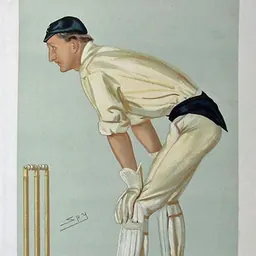
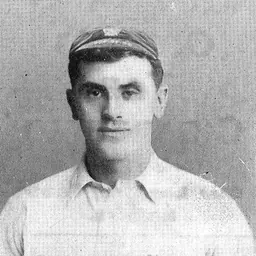

Related people
Same field, nearest in time


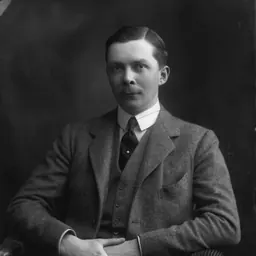

Contemporaries
People whose lives overlapped Leslie Gay's



Frequently asked questions
Who was Leslie Gay?
English cricketer and footballer (1871-1949)
When was Leslie Gay born?
Leslie Gay was born on 24 March 1871 in Brighton.
When did Leslie Gay die?
Leslie Gay died on 1 November 1949 in Sidmouth.
What was Leslie Gay's occupation?
Leslie Gay was a cricketer and association football player.
What nationality was Leslie Gay?
Leslie Gay was British.
Sources & further reading
Cite this page
APA: Biography.guide. (2026). Leslie Gay. https://biography.guide/leslie-gay/
MLA: "Leslie Gay." Biography.guide, https://biography.guide/leslie-gay/.
Chicago: "Leslie Gay." Biography.guide. https://biography.guide/leslie-gay/.
Data last updated: 2026-09-25 · Spot an error? Report a correction.
Page generated 2026-09-27 05:12 UTC