
Lesia Dychko
Soviet and Ukrainian composer, music educator, public figure
About Lesia Dychko
Born 1939. Lesia Dychko is a Russian and Ukrainian composer, music educator and public figure.
Lesia Vasylivna Dychko , originally Liudmyla Vasylivna Dychko (born 24 October 1939) is a Ukrainian composer and music educator.
Life Early years and education Lesia Vasylivna Dychko was born Liudmyla Vasylivna Dychko in Kyiv on 24 October 1939. She graduated from the Kyiv Lysenko State Music Lyceum in 1959 with a degree in music theory. In 1964 she graduated from the Ukrainian National Tchaikovsky Academy of Music in composition, studying with the composers Konstantyn Dankevych and Borys Lyatoshynsky. In 1971 she studied with the Soviet composer Nikolai Peiko.
Career After completing her studies, Dychko worked as a music teacher. Her output includes film soundtracks. She composes for orchestral, choral and instrumental performance including flute, violin, organ and piano.
Incomplete list of compositions (Information from the New Grove Dictionary of Music and Musicians)
(after paintings by Vasily Surikov, Isaac Levitan, Viktor Vasnetsov, and Ivan Shishkin), chorus and orchestra, 1962 [Fires Before Dawn] (ballet), 1966 [Inspiration] (ballet, after paintings by Kateryna Bilokur), 1966, revised in 1983 [The Mellifluous Talker] (opera), 1995 [The Red Guelder Rose Tree] (Ukrainian folk songs from 1400-1600), for solo voices and chorus, 1969, revised 1971 [Greeting to Life] (symphony, texts after Bohdan Ihor Antonych), for male soloists and orchestra, 1972 [The Carpathian Canticles] for chorus, 1975 [The Four Seasons] for chorus, 1975 [The Circle of the Sun] for children's chorus and orchestra 1975 [Spring], children's chorus and orchestra 1976 [Greetings, New, Fine Day!], children's chorus, 1976 [The Wind of Revolution] (symphony, Maksym Rylsky and Pavlo Tychyna), chorus, 1976 [Glory to the Working Professions!], for children's chorus, 1980 [The Stars in Kiev] (traditional), 1982 [And They Gave it the Name Kiev] (oratorio, taken from Russian chronicles), 1982 (oratorio, Indian poets), 1986 (choral concerto), 1989 (choral concerto), 1994 (choral concerto), 1995 [French Frescoes] (choral concerto), 1996 [Spanish Frescoes] (choral concerto), 1996 Romances (after Ukraïnka, Ivan Franko, Rylsky and Tychyna)
[Famine 1933], choir poem, based on the words of S. Kolomiiets [The Swans of Motherhood], choir poem, based on the poems of Vasyl Symonenko)
Orchestral suites, string quartet, solo instrumental works, film scores music for piano.
Don’t just read it —
keep it.
Full-length biographies made to live with: read them, listen on the way to work, watch them tonight.
- E-book
- Audio
- Video
Instant download · yours to keep · every purchase keeps this site free
Important facts
People in Lesia Dychko's life
Named in this biography and alive at the same time

Related people
Same field, nearest in time
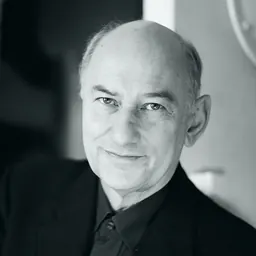
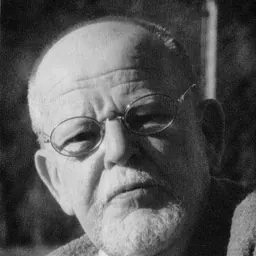



Contemporaries
People whose lives overlapped Lesia Dychko's


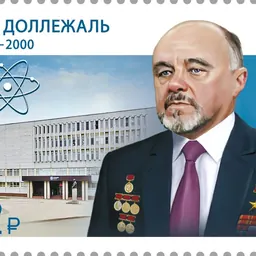
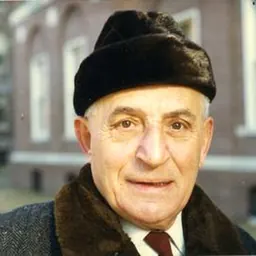

Frequently asked questions
Who is Lesia Dychko?
Soviet and Ukrainian composer, music educator, public figure
When was Lesia Dychko born?
Lesia Dychko was born on 24 October 1939 in Kyiv.
What is Lesia Dychko's occupation?
Lesia Dychko is a composer, music educator and public figure.
What nationality is Lesia Dychko?
Lesia Dychko is Russian and Ukrainian.
Sources & further reading
Cite this page
APA: Biography.guide. (2026). Lesia Dychko. https://biography.guide/lesia-dychko/
MLA: "Lesia Dychko." Biography.guide, https://biography.guide/lesia-dychko/.
Chicago: "Lesia Dychko." Biography.guide. https://biography.guide/lesia-dychko/.
Data last updated: 2026-09-20 · Spot an error? Report a correction.
Page generated 2026-09-27 05:20 UTC