
About Les Jackson
Lived 1921 – 2007 (aged 86). Les Jackson was a British cricketer.
Herbert Leslie Jackson (5 April 1921 – 25 April 2007) was an English professional cricketer. A fast or fast-medium bowler renowned for his accurate bowling and particular hostility on uncovered wickets, he played county cricket for Derbyshire from 1947 to 1963, and was regularly at, or near the top of, the English bowling averages. He played in only two Test matches for England, one in 1949 and a second in 1961. a number known to be exceeded only by Jem Shaw, Nobby Clark, Eric Hollies (twice), Brian Boshier and Mark Robinson. His leading competitors like Trueman, Tyson, and even teammate Gladwin were far better batsmen.
Cricket writer, Colin Bateman, noted, "it is one of cricket’s great crimes that Les Jackson, a most respected fast bowler on the circuit throughout the 1950s, played only twice for England. It is said that his slingy, hostile action and his blunt opinions did not please the Marylebone Cricket Club (MCC) but in an era when Alec Bedser carried England‘s attack on his own, Jackson’s omission was a scandalous loss". He was able to swing the ball both ways and move off the seam, and his six-foot height enabled him to make the ball lift awkwardly from just short of a length. He bowled from a short run-up, which enabled him to continue bowling for lengthy periods, and was particularly difficult to play on the uncovered wickets used in county cricket. He made his Test debut alongside Brian Close, opening the bowling with Trevor Bailey while the first choice fast bowler, Alec Bedser, was rested. Jackson met with some success, taking 2 for 47 and 1 for 25, but the match was drawn and he was replaced by Bedser for the fourth and deciding Test. He was not chosen to tour Australia in 1950–51, losing out to John Warr whose sole Test wicket came at a cost of 284 runs, but toured to India instead with a Commonwealth side, only to return home early with an elbow injury. Jackson played in another Test trial in 1950, but was unable to make much of an impression: on a soft wicket Jim Laker took 8 wickets for 2 runs, Bob Berry did the bulk of the bowling for "The Rest" and Jackson's bowling was described as "mediocre".
Nonetheless, Jackson averaged under twenty runs a wicket in every season from 1951 to 1962, and took 100 or more in every season except 1951, 1955 and 1961 when he was severely handicapped by injuries. In the 1958 season, he took 143 wickets at an average of 10.99 runs per wicket, an average not equalled by any regular first-class bowler since and not previously seen since the days of Tom Richardson. This feat was all the more extraordinary because owing to a serious groin strain Jackson bowled at only medium pace for most of the season. ), and then 160 at 13.61 in 1960. In all, he passed 100 wickets in ten domestic seasons. Fred Trueman described Jackson as "The best six-days-a-week bowler in county cricket".
Jackson had to wait twelve years to play his second Test, allegedly and almost certainly due to upper class prejudice by the England captain Freddie Brown in early years, and of England selector Gubby Allen later. He was finally selected for the third Test against the 1961 Australians at Headingley, when he was 40 years old. Again, he was chosen to replace the first-choice fast bowler, Brian Statham, who had a side strain, and again he provided able support, this time to Trueman, taking 2 for 57 and 2 for 26, as England won by eight wickets. Statham came back for the final two Tests, and Jack Flavell was picked ahead of Jackson. He never played Test cricket again. Jackson was elected President of the Derbyshire Players' Association in 1995.
He continued mining in the winter through much of his cricketing career, later becoming a chauffeur for the National Coal Board until 1982. His death, in Chesterfield, Derbyshire, after a short illness was announced on Test Match Special on 25 April 2007, less than three weeks after his 86th birthday. He married his wife, Norma, in 1942; she died in 1991. He was survived by their daughter.
Don’t just read it —
keep it.
Full-length biographies made to live with: read them, listen on the way to work, watch them tonight.
- E-book
- Audio
- Video
Instant download · yours to keep · every purchase keeps this site free
Important facts
People in Les Jackson's life
Named in this biography and alive at the same time



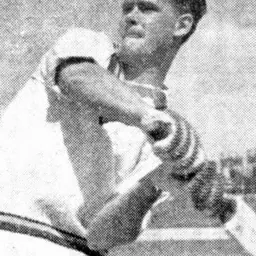
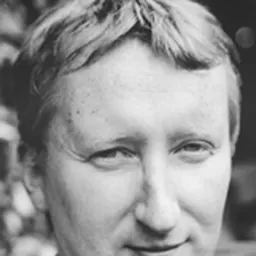
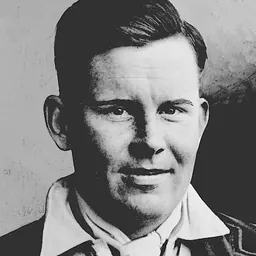


Related people
Same field, nearest in time


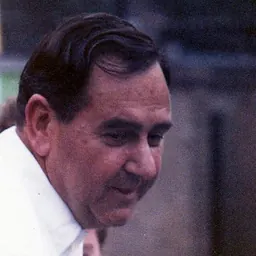

Contemporaries
People whose lives overlapped Les Jackson's



Frequently asked questions
Who was Les Jackson?
English Test and County cricketer (1921-2007)
When was Les Jackson born?
Les Jackson was born on 5 April 1921 in Whitwell.
When did Les Jackson die?
Les Jackson died on 25 April 2007 in Chesterfield.
What was Les Jackson's occupation?
Les Jackson was a cricketer.
What nationality was Les Jackson?
Les Jackson was British.
Sources & further reading
· DBpedia: Les Jackson (cricketer)
Cite this page
APA: Biography.guide. (2026). Les Jackson. https://biography.guide/les-jackson/
MLA: "Les Jackson." Biography.guide, https://biography.guide/les-jackson/.
Chicago: "Les Jackson." Biography.guide. https://biography.guide/les-jackson/.
Data last updated: 2026-09-20 · Spot an error? Report a correction.
Page generated 2026-09-27 05:16 UTC