
About Leroy Sibbles
Born 1949. Leroy Sibbles is a Canadian singer-songwriter, singer, composer, record producer, guitarist and musician.
Leroy Sibbles (born Leroy Sibblies, 29 January 1949) is a Jamaican reggae musician and producer. He was the lead singer for The Heptones in the 1960s and 1970s.
In addition to his work with The Heptones, Sibbles was a session bassist and arranger at Clement "Coxsone" Dodd's Jamaica Recording and Publishing Studio and the associated Studio One label during the prolific late 1960s. He was described as "the greatest all-round talent in reggae history" by Kevin O'Brien Chang and Wayne Chen in their 1998 book Reggae Routes.
Biography The son of a grocer, Sibbles began singing in the 1950s and also played guitar, having been taught by Trench Town Rastas Brother Huntley and "Carrot".
The trio made their first recordings for Ken Lack in 1966 with "School Girls" and "Gun Man Coming to Town", the latter the A-side of their début single. along with the Pioneers, the Gaylads, the Paragons, the Uniques, and the Techniques. Signature Heptones songs included "Baby", "Get in the Groove", "Ting a Ling", "Fattie Fattie", "Got to Fight On (To the Top)", "Party Time", and "Sweet Talking". The group's Studio One output has been collected on albums The Heptones, On Top, Ting a Ling, Freedom Line, and the Heartbeat Records anthology, Sea of Love.
Studio One Beyond his work as a singer-songwriter, Sibbles contributed to the collective output of Studio One as a bass player during the late 1960s. Keyboardist and arranger Jackie Mittoo encouraged Sibbles to play the bass when he needed a bassist for his jazz trio. Lloyd Bradley notes that as bass became more central than organ in Studio One's productions, Sibbles assumed an increasingly prominent musical role at the label, reflecting the shift from organ-led arrangements toward bass-driven rocksteady and reggae.
When Mittoo stepped back from full-time Studio One duties, Sibbles assumed increasing responsibility for arranging sessions and overseeing recordings, reflecting the growing importance of bass in rocksteady and reggae. Bradley describes Sibbles as a central figure in Studio One’s classic period, noting that beyond performing with the Heptones, he worked as a bassist, arranger, studio singer, talent scout, and repertoire selector, and was responsible for signing artists and shaping much of the label’s sound during the rocksteady era. These musicians, with engineering supervision Sylvan Morris, played backing tracks used by vocalists Bob Andy, Alton Ellis, Horace Andy, Carlton Manning, The Abyssinians, The Gladiators, Willi Williams, Ken Boothe, John Holt, Burning Spear, Dennis Brown, Slim Smith, and scores of others.
Sibbles was a contributor to tracks including "Freedom Blues" (which evolved into the Jamaican rhythm known as "MPLA") by Roy Richards, "Love Me Forever" by Carlton & The Shoes, "Satta Massagana" and "Declaration of Rights" by the Abyssinians, "Door Peep (Shall Not Enter)" by Burning Spear, and the instrumental "Full Up", which was used by Musical Youth for their huge worldwide hit "Pass the Dutchie".
Because of the Jamaican process of versioning and the liberal recycling of rhythms in subsequent years, many of the songs, rhythms, and melodies written and recorded during the rocksteady era, the aforementioned in particular, continue to be referenced today. The most frequently referenced of Sibbles' bass lines is that found on the instrumental "Full Up", popularised internationally by Musical Youth's recording of "Pass the Dutchie", an adaptation of Mighty Diamonds' "Pass the Kouchie". Harry J,
Other Heptones releases from the early 1970s were Book of Rules (Trojan Records) and the Harry Johnson-produced album Cool Rasta (Trojan), recorded just before the group benefited from the internationalisation of reggae via Island Records. Danny Holloway produced Night Food and Lee "Scratch" Perry-produced Party Time were the fruit of the association with Island.
As a solo artist, Sibbles worked with Lloyd "Bullwackie" Barnes, Lloyd Parks, Sly & Robbie, Augustus Pablo, Bruce Cockburn, and Lee Perry, but primarily produced himself. Sibbles moved to Canada in 1973, where he married and remained for twenty years, and won a U-Know Award for best male vocalist in 1983, and a Juno Award for best reggae album in 1987. He left the Heptones in 1976, midway through a US tour.
Sibbles continued to visit Jamaica, and performed at Reggae Sunsplash in 1980, 1981, 1983, 1986, and 1990.
Production work Sibbles moved into production in 2009, and set up the Bright Beam record label. He has produced records by singer Sagitar and deejay Chapter, as well as his own recordings, including a successful cover version of "Harry Hippy".
Solo discography Now (1980), Micron Strictly Roots (1980), Micron On Top (1982), Micron The Champions Clash (1985), Kingdom – with Frankie Paul Selections (1985), Leggo Sounds – also released as Mean While (1986), Attic It's Not Over (1995), VP Come Rock With Me (1999), Heartbeat Reggae Hit Bass Lines (2009), Ernie B
Don’t just read it —
keep it.
Full-length biographies made to live with: read them, listen on the way to work, watch them tonight.
- E-book
- Audio
- Video
Instant download · yours to keep · every purchase keeps this site free
Important facts
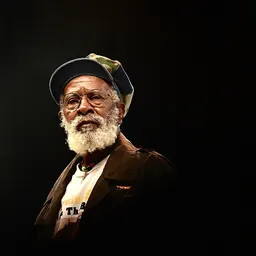
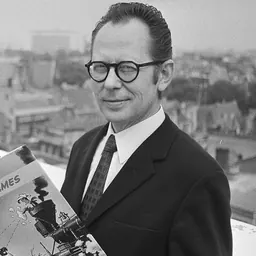
People in Leroy Sibbles's life
Named in this biography and alive at the same time





Related people
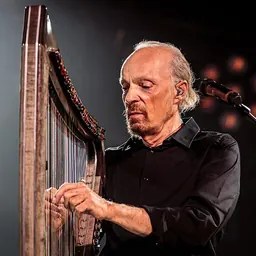
Same field, nearest in time



Contemporaries
People whose lives overlapped Leroy Sibbles's

Frequently asked questions
Who is Leroy Sibbles?
Canadian musician
When was Leroy Sibbles born?
Leroy Sibbles was born on 29 January 1949 in Kingston.
What is Leroy Sibbles's occupation?
Leroy Sibbles is a singer-songwriter, singer, composer, record producer, guitarist and musician.
What nationality is Leroy Sibbles?
Leroy Sibbles is Canadian.
Sources & further reading
Cite this page
APA: Biography.guide. (2026). Leroy Sibbles. https://biography.guide/leroy-sibbles/
MLA: "Leroy Sibbles." Biography.guide, https://biography.guide/leroy-sibbles/.
Chicago: "Leroy Sibbles." Biography.guide. https://biography.guide/leroy-sibbles/.
Data last updated: 2026-09-20 · Spot an error? Report a correction.
Page generated 2026-09-27 05:22 UTC