
About Leopold Oser
Lived 1839 – 1910 (aged 71). Leopold Oser was an Austrian internist, university teacher and physician.
Leopold (Löb) Oser (27 July 1839 – 22 August 1910) was an Austrian physician. He was a full professor at the University of Vienna, and – alongside Carl Anton Ewald from Berlin – was the first doctor to use a soft stomach tube instead of a rigid tube for gastroscopy.
About Early life Leopold Oser was the son of textile merchant Hermann Hirsch Oser and Amalia Maly Milka. From 1856 to 1861, Oser studied medicine at the University of Vienna. In 1862, he received his doctorate in medicine and surgery and received the Magister obstetricis (obstetrician). He then worked at the Institute for Experimental Pathology under Salomon Stricker. He was a student of Josef von Škoda and Johann Ritter von Oppolzer, the founders of holistic diagnosis and therapy at the Second Vienna Medical School. Oser married Amélie (Chaya; , 1852–1933), daughter of the Viennese art dealer Leopold Hirsch and Katharina Hirsch. He had five sisters (Julie, Josefine, Karoline, Therese and Regine), and four brothers (Adolf, Sigmund, Ludwig and Bernhard). In various newspaper articles it was reported that the couple in Vienna led a lively social life. According to Oser's obituary, they had no children.
Later life In 1909, Oser's 70th birthday was celebrated at the Rothschild Hospital in the presence of Governor Erich von Kielmansegg and founder Albert Rothschild. He received a crown pension of 20,000 Austro-Hungarian krones, which he donated to the Jewish Community of Vienna to support young doctors. He died the following year. His last words are said to be:
which were immortalized on his tombstone in the Wiener Zentralfriedhof. A blessing in the Hebrew language ("His soul be bound into the bundle of life!"), abbreviated , concludes the inscription. The ('Illustrated Austrian Journal') wrote on the occasion of his death:
Quote|His urban, unaffected nature and his efforts to encourage students have given him immortalized sympathy. The sick, to whom he was always a helpful comforter in his kind heart, adored him. He was a department head at the General Polyclinic Vienna, which he co-founded in 1872 alongside eleven other doctors, including Heinrich Auspitz, Carl von Rokitansky, Johann Schnitzler, and Wilhelm Winternitz. It was primarily intended for the training of doctors and the care of poorer patients and was financed by its founders and later also from donations. The novelty of the Vienna Polyclinic was that it attempted to cover the entire range of medical disciplines, while foreign polyclinics always focused on individual medical fields. It was thus the first of its kind in Europe.
In 1872 Oser was appointed primary physician of the newly opened Rothschild Hospital for the Jewish Community of Vienna, which he ran until his death. The same year he completed his Habilitation. In Vienna, cholera broke out due to the large number of visitors to the 1873 World's Fair and the inadequate sewage system. It was therefore no coincidence that Oser did pioneering work in the field of cholera treatment. In 1872 he was appointed head of the department of the General Polyclinic, and from 1873 he was a full member of the Lower Austrian State Medical Council, of which he was chairman from 1905.
In 1896 he became co-editor of the journal (Archive for Digestive Diseases including Metabolic Pathology and Dietetics), newly founded by Ismar Isidor Boas together with leading internists from international university hospitals who at that early stage had worked with digestive and metabolic diseases and had published monographs on the subject. It soon became one of the leading and internationally recognized publications in gastroenterology and still exists today under the name Digestion, International Journal of Gastroenterology.
In 1907 Oser became a member of the board of trustees of Nathaniel Meyer von Rothschild's Foundation for Nervous Illnesses. ) This was preceded by the development of Charles Goodyear, who invented the vulcanization process in 1839 and was therefore able to produce elastic rubber. This flexible stomach tube conformed better to the human anatomy and was able to both alleviate the inconvenience of the examination and enable the doctor to analyze stomach function. It also prevented dangerous perforation of the esophagus or the stomach, which was not uncommon with rigid gastroscopy and was often fatal. According to an obituary, this achievement was not recognized accordingly and the innovation was later attributed to other doctors or Oser was not even mentioned. About the same time, Berlin physician Carl Anton Ewald also introduced this new method for probing the stomach, a method for the systematic examination of gastric secretions and stomach contents.
Oser and Wilhelm Schlesinger (1839–1896), a Hungarian-Austrian gynecologist working as a private lecturer in Vienna, made the innervation of the uterus the subject of their investigations and in 1872 demonstrated an excitation center in the medulla oblongata, which is located at the transition of the central nervous system to the spinal cord. They also tried to experimentally determine the triggering of uterine movements when the blood is overloaded with carbon dioxide.
Awards and honors Order of the Crown (Württemberg), Grand Cross with the Crown After the end of the war, all damaged and removed monuments were put back in the arcade courtyard in 1947.
Don’t just read it —
keep it.
Full-length biographies made to live with: read them, listen on the way to work, watch them tonight.
- E-book
- Audio
- Video
Instant download · yours to keep · every purchase keeps this site free
Important facts
People in Leopold Oser's life
Named in this biography and alive at the same time



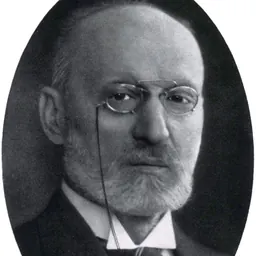
Related people
Same field, nearest in time
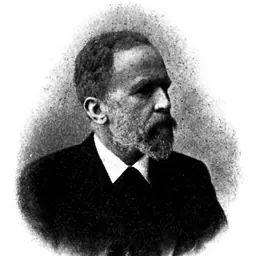
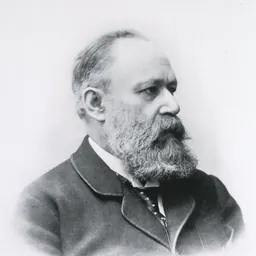
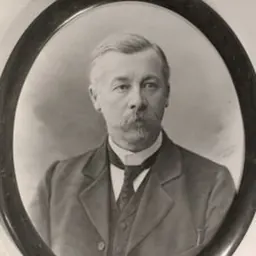

Contemporaries
People whose lives overlapped Leopold Oser's
Frequently asked questions
Who was Leopold Oser?
Austrian gastroenterologist
When was Leopold Oser born?
Leopold Oser was born on 27 July 1839 in Mikulov.
When did Leopold Oser die?
Leopold Oser died on 22 August 1910 in Gainfarn.
What was Leopold Oser's occupation?
Leopold Oser was an internist, university teacher and physician.
What nationality was Leopold Oser?
Leopold Oser was Austrian.
Sources & further reading
Cite this page
APA: Biography.guide. (2026). Leopold Oser. https://biography.guide/leopold-oser/
MLA: "Leopold Oser." Biography.guide, https://biography.guide/leopold-oser/.
Chicago: "Leopold Oser." Biography.guide. https://biography.guide/leopold-oser/.
Data last updated: 2026-09-20 · Spot an error? Report a correction.
Page generated 2026-09-27 05:32 UTC