
About Leopold Karl von Kollonitsch
Lived 1631 – 1707 (aged 75). Leopold Karl von Kollonitsch was a German and Hungarian catholic priest, judge, catholic bishop, cleric, chamberlain and bishop.
Leopold Karl von Kollonitsch (also spelt Collonicz, Colonitz, Kollonitz, Kolonits and Kolonić; 26 October 1631 – 20 January 1707) or Lipót Kollonich was a cardinal of the Holy Roman Church, Archbishop of Kalocsa and later of Esztergom, and Primate of Hungary. Also a count of the Holy Roman Empire, he was a leading figure of the Hungarian Counter-Reformation.
As an imperial minister, Kollonitsch was responsible for reorganizing the new Hungarian territories won from the Ottoman Empire and later ceded at the Treaty of Karlowitz. He was said to have gained over one hundred thousand converts to Rome from Orthodox Christianity.
Early life and military career Contemporary Mailberg Born at the Hungarian castle of Komárom (now Komárno, on the northern shore), Leopold Karl von Kollonitsch was the son of Count Ernst von Kollonitsch, Governor of the castle, by his marriage to Anne Elizabeth von Kueffstein. He became a candidate officer of the Sovereign Military Order of Malta, first seeing action in the Cretan War, when the Knights of Malta supported Venice against the Turks. In 1650 he was knighted at Vienna. In 1654 he took part in the defence of Crete, and in 1655 he fought at the Battle of the Dardanelles, a victory for Venice. He became a Knight Hospitaller in 1658 and was next appointed as Prior and Castellan of the Order of Mailberg, based at Schloss Mailberg. Soon he was also in command of Eger in Bohemia.
Churchman
In 1659, the Emperor Leopold I appointed Kollonitsch as his Lord Chamberlain and also named him as Bishop of Nitra. Kollonitsch then began some studies in theology, but he was not ordained a priest until 1668. From 1672 to 1681, he was president of the Hungarian Court Chamber.
Kollonitsch took part in the Papal conclaves of 1689 and 1691, but was unable to attend that of 1700. He died at Vienna in 1707. His body was laid to rest in the Jesuits' Annakirche, then taken to Pressburg (now Bratislava) for burial.
Memorials In front of the Rathaus at Vienna stands a statue of Kollonitsch by Vincenz Pilz. In 1862 a street in the city's Landstraße district was named after him Kolonitzgasse, and in 1873 this was joined by the Kolonitzplatz.
Under Kollonitsch the settlement of the Capuchins in Bratislava was begun, and in 1708 the cornerstone of a Capuchin monastery was laid.
Don’t just read it —
keep it.
Full-length biographies made to live with: read them, listen on the way to work, watch them tonight.
- E-book
- Audio
- Video
Instant download · yours to keep · every purchase keeps this site free
Important facts
Related people
Same field, nearest in time

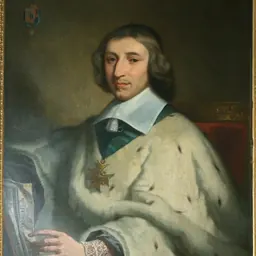

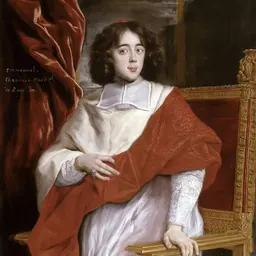
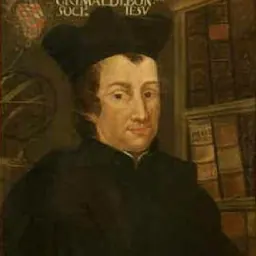
Contemporaries
People whose lives overlapped Leopold Karl von Kollonitsch's





Frequently asked questions
Who was Leopold Karl von Kollonitsch?
Hungarian cardinal
When was Leopold Karl von Kollonitsch born?
Leopold Karl von Kollonitsch was born on 26 October 1631 in Komárno.
When did Leopold Karl von Kollonitsch die?
Leopold Karl von Kollonitsch died on 20 January 1707 in Vienna.
What was Leopold Karl von Kollonitsch's occupation?
Leopold Karl von Kollonitsch was a catholic priest, judge, catholic bishop, cleric, chamberlain and bishop.
What nationality was Leopold Karl von Kollonitsch?
Leopold Karl von Kollonitsch was German and Hungarian.
Sources & further reading
· Wikipedia: Leopold Karl von Kollonitsch
· DBpedia: Leopold Karl von Kollonitsch
Cite this page
APA: Biography.guide. (2026). Leopold Karl von Kollonitsch. https://biography.guide/leopold-karl-von-kollonitsch/
MLA: "Leopold Karl von Kollonitsch." Biography.guide, https://biography.guide/leopold-karl-von-kollonitsch/.
Chicago: "Leopold Karl von Kollonitsch." Biography.guide. https://biography.guide/leopold-karl-von-kollonitsch/.
Data last updated: 2026-09-20 · Spot an error? Report a correction.
Page generated 2026-09-27 05:31 UTC