
About Leonas Bistras
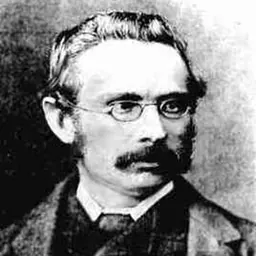
Lived 1890 – 1971 (aged 80). Leonas Bistras was a Lithuanian diplomat, politician, university teacher, journalist and philosopher.
Leonas Bistras (20 October 1890 in Liepāja – 17 October 1971 in Kaunas) was one of the most prominent Lithuanian politicians of the interwar period. A Christian Democrat, he was appointed as Prime Minister of Lithuania in 1925. Bistras also headed the ministries of education, defense, and foreign affairs in several different governments throughout the 1920s and 1930s, and twice served as the speaker of the Lithuanian parliament, the Seimas. After the 1926 Lithuanian coup d'état and the subsequent fall of parliamentary democracy, Bistras led the Christian Democrats and, despite persecution, acted as an outspoken leader of the opposition to the authoritarian President Antanas Smetona.
After the Soviet occupation and annexation of Lithuania, Bistras was arrested, sentenced without a trial and deported from Lithuania. He only permanently returned after the death of Josef Stalin. Bistras lived the remaining years of his life in obscurity and poverty, supported only by the local people of Kaunas.
Early life and education Bistras was born in 1890 to a working-class family in Liepāja, Courland Governorate of the Russian Empire (now in Latvia), where his father had emigrated. He graduated from the Liepāja Gymnasium in 1911.
Bistras attempted to study medicine at the University of Geneva, switching to philosophy at the University of Freiburg a year later. He then returned to studying medicine in Dorpat (now Tartu), but was unable to finish due to the complex international environment leading up to World War I. When the war started, Bistras was conscripted into the Imperial Russian Army and served in Russia until the Bolshevik Revolution, initially as a private and later as a medic. After the war, Bistras returned to Lithuania and helped to establish the Kaunas municipality, and worked for the press office in Lithuania and Switzerland.
Bistras graduated from the University of Freiburg in 1921 with a PhD in philosophy. Between 1922 and 1940, he taught at the Faculty of Theology and Philosophy at Kaunas University. Throughout his life, Bistras did not publish a single article (other than his doctoral thesis), but was proud of his doctoral degree, signing his name "Dr. Leonas Bistras" throughout his political career.
Political career Entry into politics Bistras first ventured into politics during World War I. The February Revolution liberalized the political environment and allowed for discussions on the status of Lithuania. In Voronezh, Bistras met other active Lithuanian Catholics and edited the newspaper Voice of the Lithuanians , giving him his first experience in journalism, which would take much of his interest in the coming decades. In 1917, Bistras joined the emerging Lithuanian Christian Democratic movement.
The political situation during the war led to the formation of two parties styling themselves as the Lithuanian Christian Democratic Party. One was originally established by Lithuanian refugees in Russia, led by the priest Mykolas Krupavičius, and was radicalized by the ongoing revolution there. The other, established in Lithuania, was led by Aleksandras Stulginskis and was more moderate in its goals. In November 1918, a conference was called to unite the two parties. During the conference, Bistras emerged as one of the leaders of the movement and proposed a solution once an impasse was reached – both radical and moderate Christian Democrats would be represented in the joint leadership of the party and both programs would remain in place until they could be aligned. The first Seimas, however, had a short and troubled life – no clear majority emerged in the elections (Christian Democrats and their allies won 38 of the 78 seats allocated), making it difficult to govern. In fact, Prime Minister Ernestas Galvanauskas failed twice to get his cabinet approved by the Seimas and Stulginskis dissolved the First Seimas on 12 March 1923. However, the Seimas did play a role in the history of interwar Lithuania, authorizing the Klaipėda Revolt that saw the Klaipėda Region become an autonomous part of Lithuania between 1923 and 1939.
Bistras was reelected to the Second Seimas in 1923. Between June 1923 and January 1925, he served as minister of education in successive cabinets headed by Galvanauskas and Antanas Tumėnas. As a minister, he took a hard line insisting on religious instruction in public schools, drawing criticism from political opponents. the government of Vytautas Petrulis opened negotiations with Poland over navigation on the Neman as required by the Klaipėda Convention. Successive Lithuanian governments bitterly contested Polish possession of the Vilnius region and refused to open diplomatic relations. Although Petrulis' government saw negotiations as technical and not constituting diplomatic recognition, public and military discontent was widespread. An ultimatum from military offices forced Petrulis to resign and Bistras was appointed as prime minister of the 12th cabinet on 25 September 1925. He also served as minister of defense and, after Mečislovas Reinys resigned, as the minister of foreign affairs. His government was in power for less than a year, until the Seimas elections.
Bistras' cabinet withdrew from the negotiations with Poland. Feeling isolated in the international arena, Bistras started negotiations with the Soviet Union on the Soviet–Lithuanian Non-Aggression Pact that the government of Mykolas Sleževičius eventually signed in 1926. Bistras later regretted this shift in political direction. Seeing the growing power of the Soviet Union and Germany in the mid-1930s, he advocated for stronger ties with Latvia, Estonia and, above else, Poland, even if it meant accepting Polish possession of Vilnius. Christian Democrats voted to elect Antanas Smetona president, thus giving him constitutional legitimacy, and initially joined the government, with Bistras appointed minister of education. Bistras, ever trying to reach a compromise, initially hoped that a new election would be called, allowing the Christian Democrats to return to power. As the prospect of new elections waned and the Third Seimas was dissolved, Bistras and other Christian Democrats resigned from the government, leaving Smetona's Nationalists Union of Lithuania as the sole governing party.
Bistras assumed leadership of the Christian Democrats in 1927 in a difficult period. Smetona did not call for new parliamentary elections until 1936, severely limiting the activities and influence of the party. Party leadership was constantly persecuted and surveilled, and party congresses were banned in 1929. Christian Democrats also struggled to maintain unity with their traditional allies, the Farmers' Association and the Labour Federation, as well as within their own ranks. As he was not granted a pension or given work by the Soviet government, Bistras lived on donations from the people of Kaunas, where he died in 1971, three days before his 81st birthday. He was buried in Petrašiūnai Cemetery in Kaunas.
Don’t just read it —
keep it.
Full-length biographies made to live with: read them, listen on the way to work, watch them tonight.
- E-book
- Audio
- Video
Instant download · yours to keep · every purchase keeps this site free
Important facts
People in Leonas Bistras's life
Named in this biography and alive at the same time

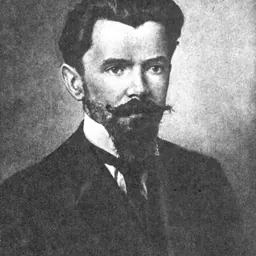


Related people
Same field, nearest in time
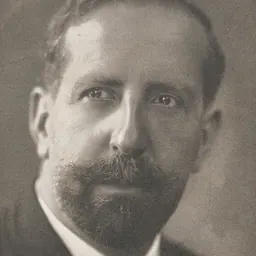
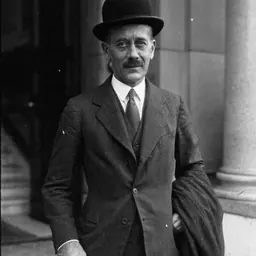
Contemporaries
People whose lives overlapped Leonas Bistras's
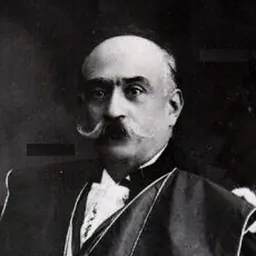
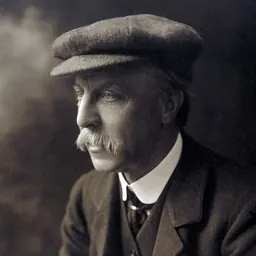



Frequently asked questions
Who was Leonas Bistras?
Lithuanian politician (1890-1971)
When was Leonas Bistras born?
Leonas Bistras was born on 20 October 1890 in Liepāja.
When did Leonas Bistras die?
Leonas Bistras died on 17 October 1971 in Kaunas.
What was Leonas Bistras's occupation?
Leonas Bistras was a diplomat, politician, university teacher, journalist and philosopher.
What nationality was Leonas Bistras?
Leonas Bistras was Lithuanian.
Sources & further reading
Cite this page
APA: Biography.guide. (2026). Leonas Bistras. https://biography.guide/leonas-bistras/
MLA: "Leonas Bistras." Biography.guide, https://biography.guide/leonas-bistras/.
Chicago: "Leonas Bistras." Biography.guide. https://biography.guide/leonas-bistras/.
Data last updated: 2026-09-20 · Spot an error? Report a correction.
Page generated 2026-09-27 05:27 UTC