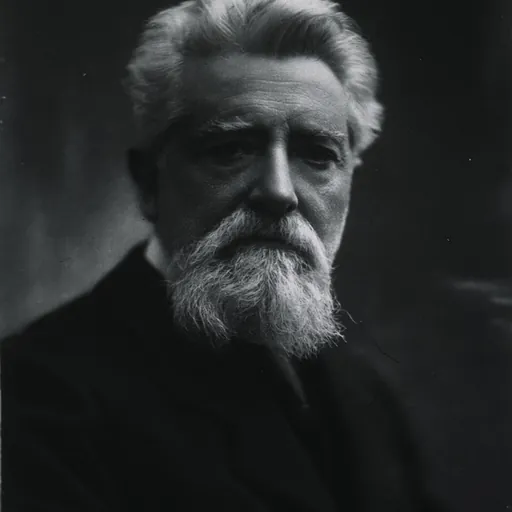
About Leonardo Bianchi
Lived 1848 – 1927 (aged 78). Leonardo Bianchi was an Italian neurologist, university teacher and politician.
Leonardo Bianchi (5 April 1848 – 13 February 1927), an Italian neuropathologist, politician, and writer from San Bartolomeo in Galdo in the Province of Benevento, earned fame from his work on cerebral functions and diseases of the nervous system. His work contributed to the very first known handbook of neurological semiology and examination in Italy.
Early life and education Leonardo Bianchi was born in the small Italian town San Bartolomeo in Galdo on 5 April 1848. He was the son of Vincenzo, a pharmacist, and chemist, and Alessia Longo. Bianchi showed an interest in literature, classical arts, and education from an early age. He completed his secondary and high school education in Benevento and graduated in Medicine and Surgery from the University of Naples in January 1871. Where he was taught by great influences, such as Luciano Armanni and Otto Von Schron.
Medical career After receiving his medical degree, Bianchi developed an interest in neuropsychiatry while working as a doctor at the Real Albergo dei Poveri. He delved into various scientific and medical topics, and in 1876, he received a teaching degree in electrotherapy, medical pathology, and medical clinic at the University of Naples.
From 1879 to 1881, Bianchi was appointed professor of the medical clinic at the University of Cagliari, where he worked with the Director of the Clinic of Nervous and Mental disease, Giuseppe Buonomo, at the Royal Asylum of S. Francesco di Sales. Giuseppe Buonomo also served as a professor of psychiatry at the University of Naples, with Binachi serving as his assistant. In 1882, he founded the Annali di neurologia or better known as the Psychiatric Institute of Naples. He eventually served as a professor of psychiatry and neuropathology at the Universities of Palermo and Naples from 1888 to 1923. While working as a professor, he wrote a manual on the semiology of diseases of the nervous system.
Death Leonardo Bianchi died on 13 February 1927, during a conference at the University of Naples from complications due to angina pectoris. To honour his memory, work, and contributions, the hospital where he was a previous director, the Provincial Asylum San Francesco di Sales in Naples, was renamed The Leonardo Bianchi Psychiatric Hospital. A monument was later created by artist Fulvio Rosapane in Leonardo Bianchi's hometown of San Bartolomeo in Galdo at the Piazza Municipio. Not much is known regarding Leonardo Bianchi's personal life.
Work and contributions
Bianchi is remembered for his studies and experiments of the frontal lobe. Most of his research was derived from experiments with monkeys and dogs after he had surgically removed (ablation) the animals' frontal lobe. He concluded from his experiments that the frontal lobe had more functionality than previously believed. He described the lobe as the centre of coordination and fusion of the incoming and outgoing products of the sensory and motor areas of the cortex. From his experiments, he showed the frontal lobe's role in "reminiscence, judgment and discrimination" and listed five areas of deficit due to frontal lobe ablation. Bianchi's research was the first to describe frontal lobe syndrome, which helped to earn him fame in the academic world of Europe and the USA.
Other accomplishments of Leonardo Bianchi were that he was one of the first known medical doctors who diagnosed parietal syndrome, and he was the first president of the Italian Society of Neurology.
Leonardo Bianchi's fame in the neuropsychiatry world led to his appointment as editor of the International Journal of Medical Sciences in 1898. In 1904, Bianchi published one of his most famous publications titled the Treatise on Psychiatry which became a universal reference for psychiatry.
Leonardo Bianchi's publications had worldwide fame in the psychiatry field. His publications were translated into many languages, such as English. In his English-translated version of his Text-Book of Psychiatry, his work had three parts. Part one focused on the anatomy and physiology of the brain, part two dealt with the psychological aspects of insanity, and part three focused on the individual forms of mental disorder.
Honours and nominations Bianchi received many honours and nominations throughout his lifetime. During Bianchi's political career, he was honoured with the Grand Cross of the Mauritian Order by the King of Italy. Bianchi was also nominated seven times for the Nobel Prize in Medicine between 1910 and 1926.
Throughout his involvement in medicine and politics, he worked with various famous lecturers and politicians. Quotes regarding Leonardo Bianchi by these influential figures are seen from the quote by Louis Luzzatti below, who was the president of the council of ministers: "High knowledge and very sweet character together give prominence to the noble figure of Leonardo Bianchi."
Don’t just read it —
keep it.
Full-length biographies made to live with: read them, listen on the way to work, watch them tonight.
- E-book
- Audio
- Video
Instant download · yours to keep · every purchase keeps this site free
Important facts
Related people
Same field, nearest in time



Contemporaries
People whose lives overlapped Leonardo Bianchi's




Frequently asked questions
Who was Leonardo Bianchi?
Italian neurologist (1848-1927)
When was Leonardo Bianchi born?
Leonardo Bianchi was born on 5 April 1848 in San Bartolomeo in Galdo.
When did Leonardo Bianchi die?
Leonardo Bianchi died on 13 February 1927 in Naples.
What was Leonardo Bianchi's occupation?
Leonardo Bianchi was a neurologist, university teacher and politician.
What nationality was Leonardo Bianchi?
Leonardo Bianchi was Italian.
Sources & further reading
Cite this page
APA: Biography.guide. (2026). Leonardo Bianchi. https://biography.guide/leonardo-bianchi-neurologist/
MLA: "Leonardo Bianchi." Biography.guide, https://biography.guide/leonardo-bianchi-neurologist/.
Chicago: "Leonardo Bianchi." Biography.guide. https://biography.guide/leonardo-bianchi-neurologist/.
Data last updated: 2026-09-20 · Spot an error? Report a correction.
Page generated 2026-09-27 05:09 UTC