
About Leonard Rifas
Born 1951. Leonard Rifas is an academic, cartoonist, publisher and editor.
Leonard Rifas (born April 16, 1951)
Career Rifas' first published work was a self-published minicomic called Quoz, published in 1969. Printed by underground publisher Don Donahue, it is considered one of the first true minicomics. The contents are reprinted in Michael Dowers' Treasury of Mini Comics — Volume One (Fantagraphics Books, Oct. 2013) .
In the early 1970s, Rifas contributed comics to the underground anthologies San Francisco Comic Book #1 (Gary Arlington, 1970) and Hee Hee Comics (Company & Sons, 1970), and then put together Gimme, an underground one-shot mostly scripted by Rifas with art by Rifas and a group of other contributors.
Rifas set up EduComics in 1976, ostensibly to publish All-Atomic Comics, an educational comic about "the many dangers of nuclear energy development and operations. The product of two years of work, All-Atomic Comics was scripted by Rifas, with art by himself and a number of other artists, including Melinda Gebbie and Larry Rippee. The comic found great success, with an initial print-run of 10,000 copies (and revised editions released in 1977, 1978, 1979, and 1980). All-Atomic Comics was translated and published in Germany (by a number of different publishers) in the late 1970s.
In 1976, Rifas struck up a relationship with Wisconsin-based publisher Kitchen Sink Press, which, in conjunction with the United States Bicentennial, released his An Army of Principles, about "The History and Philosophy of the American Revolution." The 36-page comic was mostly drawn and entirely inked by Rifas, with some penciling assists by others.
Next, Rifas spearheaded the anthology series Corporate Crime for Kitchen Sink Press, the first issue appearing in 1977 and the second in 1979. Corporate Crime is an early example of comics reportage,
Meanwhile, Rifas expanded EduComics into a true publisher. From 1978 to 1982, the company released a number of politically oriented educational anthologies (most edited by Rifas) on such topics as motherhood, energy policy, and food production. These anthologies included the work of such underground luminaries as Trina Robbins, Suzy Varty, Joyce Farmer, Robert Crumb, Harry Driggs, Denis Kitchen, Greg Irons, Sharon Rudahl, and Harry S. Robins. The company also published a number of works by Japanese cartoonist Keiji Nakazawa, making Rifas the first American publisher to publish translated manga.
EduComics' second published title was Mama! Dramas, an all-female underground comix anthology about motherhood released in 1978.
1980 was a busy year for EduComics. Leading off was the translation and publication of Keiji Nakazawa's historical manga Barefoot Gen (as Gen of Hiroshima). About Nakazawa's own experiences as a Hiroshima bombing survivor, Gen of Hiroshima was also the "first full-length translation of a manga from Japanese into English to be published in the West." Also appearing that year was the one-shot anthology Energy Comics, about "the risks and rewards of various energy sources," edited by Rifas. The third EduComics publication of 1980 was Food Comix/cs, a flip comic anthology about food injustice, specifically "in the world's food supply and food production industry, as well as the unhealthy dietary choices made by consumers."
In 1982, EduComics published Keiji Nakazawa's I Saw It, the original predecessor of Barefoot Gen. Published in a single volume, Educomics colorized the series and offered lesson plans for bulk orders to aid in using the series in classrooms to help explain the Pacific War to students. Also with bulk orders, an 11 × 17 inch free poster was added for promoting the manga in stores, with endorsements by other manga artists and peace educators.
In 1988, Rifas put together and edited three issues of Itchy Planet, an anthology of political comics and cartoons published by Fantagraphics. Contributors included David Suter, Larry Gonick, Joyce Farmer, Mary Fleener, Dennis Worden, Harry Driggs, Peter Kuper, Joyce Brabner, Seth Tobocman, Spain Rodriguez, Norman Dog, Michael Dougan, and Steve Lafler.
In the 1990s, Rifas transitioned from cartoonist and editor to academic. He earned an M.A. and a Ph.D. in Communications from the University of Washington. "A Typical Hippie Dope," in Dope Comix #2 (Kitchen Sink Press, June 1982) — collaboration with Moria Wright Peters and Rusty Wright
Don’t just read it —
keep it.
Full-length biographies made to live with: read them, listen on the way to work, watch them tonight.
- E-book
- Audio
- Video
Instant download · yours to keep · every purchase keeps this site free
Important facts
People in Leonard Rifas's life
Named in this biography and alive at the same time






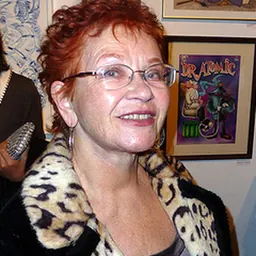
Related people
Same field, nearest in time





Contemporaries
People whose lives overlapped Leonard Rifas's

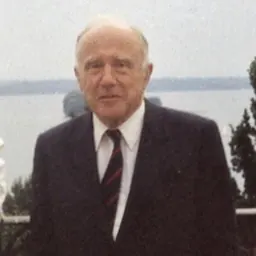
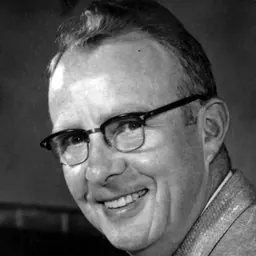

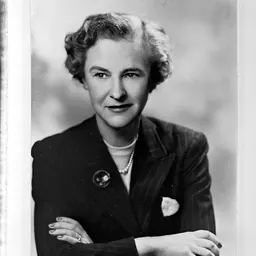
Frequently asked questions
Who is Leonard Rifas?
American cartoonist
When was Leonard Rifas born?
Leonard Rifas was born on 16 April 1951.
What is Leonard Rifas's occupation?
Leonard Rifas is an academic, cartoonist, publisher and editor.
Sources & further reading
Cite this page
APA: Biography.guide. (2026). Leonard Rifas. https://biography.guide/leonard-rifas/
MLA: "Leonard Rifas." Biography.guide, https://biography.guide/leonard-rifas/.
Chicago: "Leonard Rifas." Biography.guide. https://biography.guide/leonard-rifas/.
Data last updated: 2026-09-20 · Spot an error? Report a correction.
Page generated 2026-09-27 05:16 UTC