
About Leonard Feeney
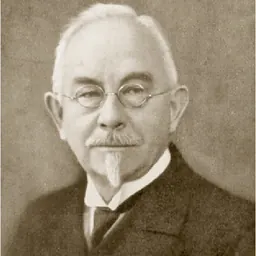
Lived 1897 – 1978 (aged 80). Leonard Feeney was an American poet, theologian, catholic priest, lyricist, songwriter and journalist.
Leonard Edward Feeney (February 18, 1897 – January 30, 1978) was an American Jesuit Catholic priest, poet, lyricist, and essayist.
He articulated a strict interpretation of the Catholic doctrine extra Ecclesiam nulla salus ("outside the Church there is no salvation"). He took the position that baptism of blood and baptism of desire are unavailing and that therefore non-Catholics will not be saved. Feeney reconciled with the church in 1972, though never recanted his controversial views on salvation.
He was described as Boston's homegrown version of Father Charles Coughlin for his antisemitism.
Biography
America In the 1930s, as a Jesuit, Feeney was a literary editor at the Jesuit magazine America.
Professor and polemics He was a professor in Boston College's graduate school, and then professor of spiritual eloquence at the Jesuit seminary in Weston, Massachusetts. Thereafter, he became the priest chaplain at the Catholic Saint Benedict Center, a religious center at Harvard Square founded by Catherine Goddard Clarke, in 1945; Feeney had first visited in 1941. He gave incendiary speeches on the Boston Common on Sundays, leading Robert F. Kennedy, then a Harvard undergraduate, to write Archbishop Richard Cushing of Boston requesting his removal.
After April 1949 the affair became a public scandal when Feeney undertook in the press the defence of dismissed laymen who were teaching in the Jesuit College (founded in Boston by the Society of Jesus in 1863) that those who were not members of the Catholic Church were damned.
Feeney criticized Cushing for, among other things, accepting the church's definition of "baptism of desire". Finally, in 1949, Cushing declared Feeney's St. Benedict's Center off-limits to Catholics. That same year Boston College and Boston College High School dismissed four of the center's members from the theology faculty for spreading Feeney's views in the classroom. In light of his controversial behavior, his Jesuit superiors ordered him to leave the center for a post at College of the Holy Cross, but he repeatedly refused, which led to his expulsion from the order. Cushing suspended Feeney's priestly faculties in April 1949; Feeney continued to celebrate the sacraments although he was no longer authorized to do so.
After Feeney refused twice to oblige to the Holy See's summons to Rome to explain himself, he was excommunicated on 13 February 1953 by the Holy See for persistent disobedience to legitimate church authority due to his refusal to comply. According to Cardinal John Wright, Pope Pius XII personally translated the edict into English. His followers claimed that his excommunication was invalid.
Following his excommunication, Feeney co-founded a community called the Slaves of the Immaculate Heart of Mary with Catherine Goddard Clarke. This group later split in two, one of which became the Still River Branch, in good standing with the Catholic Church; the other is a schismatic group that holds to Feeney's views on Salvation.
Reconciliation with the Catholic Church and death Feeney reconciled with the Catholic Church in 1972 without any recantation from his part on his positions on salvation. This reconciliation without Feeney's recantation, reports the National Catholic News Service, "came about at least in part through the intervention of Cardinal Humberto Medeiros of Boston who had attended lectures at St. Benedict's during his days as a seminarian. Cardinal John Wright, head of the Vatican's Congregation for the Clergy, reportedly personally brought the matter to the attention of the Congregation for the Doctrine of the Faith".
The Point Feeney was editor of The Point, which ran a mixture of theological and political articles, some of them branded anti-semitic by Feeney's critics. The newsletter frequently contained sentiments such as:
The Anti-Defamation League of B'nai B'rith monitored The Point magazine for at least 14 editions. In 1955, the League exchanged correspondence with the Federal Bureau of Investigation regarding possible criminal investigation of Feeney and his followers, but no investigation was started.
Reactions As a Harvard undergraduate, Robert Francis "Bobby" Kennedy attended a meeting of students at which he stood up and challenged Feeney, later storming out following the priest's assertion that there was no salvation outside the Catholic faith. A similarly negative reaction to Feeney's teaching was recorded by British novelist and Catholic convert Evelyn Waugh, who wrote of visiting the priest while in the United States:
A few years later Feeney wrote critically of Knox and Newman in his collection of essays London is a Place, with an unsympathetic passing reference to Waugh's biography of St. Helena:
In 2003, in an article for The Jewish Week newspaper, editor Gary Rosenblatt wrote:
Don’t just read it —
keep it.
Full-length biographies made to live with: read them, listen on the way to work, watch them tonight.
- E-book
- Audio
- Video
Instant download · yours to keep · every purchase keeps this site free
Important facts
People in Leonard Feeney's life
Named in this biography and alive at the same time

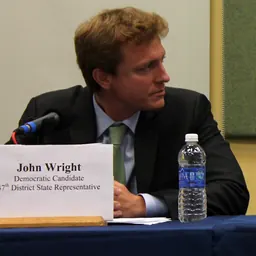

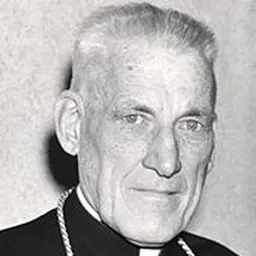
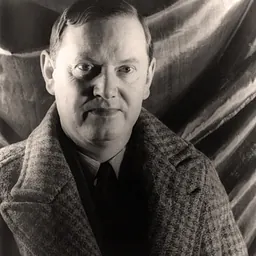
Related people
Same field, nearest in time

Contemporaries
People whose lives overlapped Leonard Feeney's


Frequently asked questions
Who was Leonard Feeney?
American priest
When was Leonard Feeney born?
Leonard Feeney was born on 18 February 1897 in Lynn.
When did Leonard Feeney die?
Leonard Feeney died on 30 January 1978 in Ayer.
What was Leonard Feeney's occupation?
Leonard Feeney was a poet, theologian, catholic priest, lyricist, songwriter and journalist.
What nationality was Leonard Feeney?
Leonard Feeney was American.
Sources & further reading
Cite this page
APA: Biography.guide. (2026). Leonard Feeney. https://biography.guide/leonard-feeney/
MLA: "Leonard Feeney." Biography.guide, https://biography.guide/leonard-feeney/.
Chicago: "Leonard Feeney." Biography.guide. https://biography.guide/leonard-feeney/.
Data last updated: 2026-09-20 · Spot an error? Report a correction.
Page generated 2026-09-27 05:13 UTC