
About Leonard Cutler
Lived 1928 – 2006 (aged 77–78). Leonard Cutler was an American scientist.
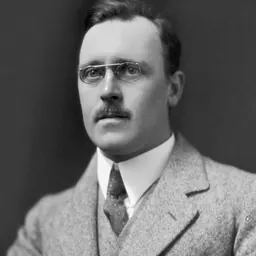
Leonard Cutler (1928–2006), also known as Leonard S. Cutler, was a pioneer and authority on ultra-precise timekeeping devices and standards, and was well known for his work with quantum-mechanical effects. He was the co-inventor of the HP5060A Cesium Beam Clock, its successor the HP 5071A, and the two-frequency laser inferometer. He has also been praised for his crucial contributions to the design of the Allen Telescope Array.
Life Leonard Cutler was born in Los Angeles in 1928. He attended Stanford University, but after two years returned home to help his family out of financial troubles. While away from academia he served in the U.S. Navy and married his wife, Dorothy. Shortly after getting married, he and his wife started their family of four sons, Jeff, Greg, Steve and Scott. During which time he also returned to Stanford University where he earned a BS in 1958, a MS in 1960, and a PhD in 1966. On September 5, 2006, at the age of 78, he died of heart failure while camping with his wife in Big Basin Redwoods State Park in California, USA. Len participated in Bay Area car rallies in the late 1970’s. Driving his Porsche 911 with his son (which one?) as navigator, he frequently finished in first place.
Career Cutler worked at Hewlett-Packard Laboratories (1957–1999), where he developed oscillators, atomic frequency standards and designed atomic chronometers. In 1999, he went on to work at Agilent Technologies, a spin-off from H-P, where he developed quartz oscillators, atomic clocks, and used the Global Positioning System to synchronize clocks worldwide. Towards the end of his time there, he concentrated on designs related to the chip scale atomic clock.
In 1964, Leonard Cutler and his colleague Al Bagley invented the first all-solid-state cesium-beam chronometer known as the HP5060A Cesium Beam Clock. The clock measured international time within a microsecond and increased the accuracy of time tracking from a millisecond held by its predecessors. Shortly after the clock's invention, its frequency standard was adopted by the US National Institute of Standards and technology and scientific centers around the world.
In 1967, his cesium "flying clock" was used in flights around the world to bring timekeeping accuracy down to about 0.1 microseconds. In 1972 and 1976, these same clocks were used in flight tests verifying Albert Einstein's theories of special and general relativity, showing that time does slow down the faster you move or the closer you are to a source of gravity, such as the Earth.
In 1991, Cutler invented the HP 5071A, which is twice as accurate as its 1964 counterpart. Losing only a second of accuracy every 1.6 million years, it remains the most accurate commercial clock in the world, and accounts for 82% of the data used to keep the International Atomic Time Standard (as of 2006). The 5071A is now manufactured by Microchip in Beverly MA, along with the newer, higher performance model, the 5071B .
Additional inventions Leonard and his colleagues invented and held patents for quartz oscillators and the two-frequency laser interferometer, which is used in fiber optics, integrated circuit manufacturing, physics and many other scientific fields of study today.
Awards and honors Known worldwide as an authority on atomic timekeeping and quantum-mechanical effects, Cutler received many awards and honors throughout his career.
2004 – Named Agilent Technologies’ first Distinguished Fellow 2000 – Named Inventor of the Week by the Massachusetts Institute of Technology as part of the Lemelson-MIT National Program in Invention, Innovation and Creativity 2000 – IEEE Third Millennium Medal 1999 – Distinguished PTTI Service Award for outstanding contributions related to the management of PTTI (Precise Time and Time Interval) systems. 1997 – Front-page profile written about him in The Wall Street Journal (March 19, 1997) 1996 – Elected a Fellow of the American Physical Society 1993 – American Institute of Physics Prize for Industrial Application of Physics 1990 – Named H-P’s first Distinguished Contributor 1989 – Rabi Award from the IEEE Ultrasonics, Ferroelectrics, and Frequency Control Society, for "consistent technical and managerial contributions to the development of atomic cesium, rubidium and mercury ion frequency standards." 1987 – Elected to the National Academy of Engineering 1984 – IEEE Morris E. Leeds Award for outstanding contributions to the development of advanced time standards 1984 – IEEE’s Centennial Award 1978 – Elected an IEEE Fellow for contributions to the design of atomic frequency standards and to the theory and measurement of frequency stability 1974 – Served on the Technical Program Committee of the IEEE Frequency Control Symposium for 32 years, until his death in 2006.
Patents
Don’t just read it —
keep it.
Full-length biographies made to live with: read them, listen on the way to work, watch them tonight.
- E-book
- Audio
- Video
Instant download · yours to keep · every purchase keeps this site free
Important facts
People in Leonard Cutler's life
Named in this biography and alive at the same time
Related people
Same field, nearest in time



Contemporaries
People whose lives overlapped Leonard Cutler's


Frequently asked questions
Who was Leonard Cutler?
American scientist
When was Leonard Cutler born?
Leonard Cutler was born in 1928.
When did Leonard Cutler die?
Leonard Cutler died in 2006.
What was Leonard Cutler's occupation?
Leonard Cutler was a scientist.
What nationality was Leonard Cutler?
Leonard Cutler was American.
Sources & further reading
Cite this page
APA: Biography.guide. (2026). Leonard Cutler. https://biography.guide/leonard-cutler/
MLA: "Leonard Cutler." Biography.guide, https://biography.guide/leonard-cutler/.
Chicago: "Leonard Cutler." Biography.guide. https://biography.guide/leonard-cutler/.
Data last updated: 2026-09-20 · Spot an error? Report a correction.
Page generated 2026-09-27 05:00 UTC