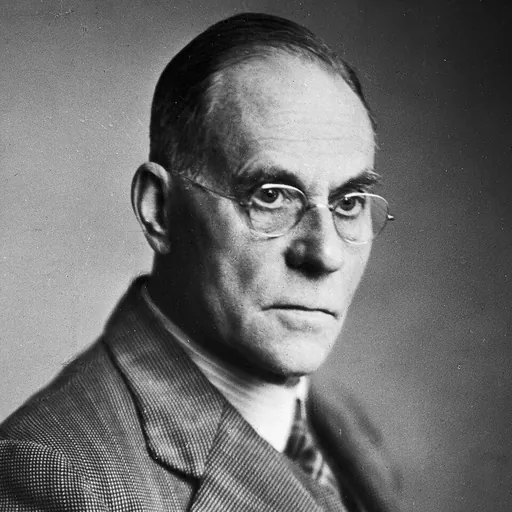
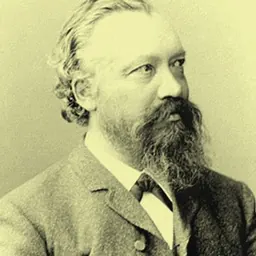
About Leonard Colebrook
Lived 1883 – 1967 (aged 84). Leonard Colebrook was a British physician and bacteriologist, known for Prontosil.
Leonard Colebrook FRS
Education Colebrook was educated at the Grammar School in Guildford (1891–96), Westbourne High School in Bournemouth (1896–99) and Christ's College Blackheath in Kent (1899 - 1900). Colebrook started his medical training at the London Hospital Medical College after which he won a scholarship to St Mary's Hospital, London, graduating in 1906 with M.B. and B.S. (Lond). degrees. In 1935 Colebrook showed Prontosil was effective against haemolytic streptococcus in childbirth and hence a cure for puerperal fever. His use of Prontosil was the first clinical trial of any antibiotic, that demonstrated a reduction in death rates from 1 in 4 to 1 in 20. He campaigned for the use of gloves, mask, and gown before touching patients and showed that chloroxylenol was both an effective disinfectant and superior to soap and water for hand cleansing.
In the Second World War he was appointed a Colonel in the Royal Army Medical Corps and Bacteriological Consultant to the British Expeditionary Force, working first in France and then England. Treatment of infections in burns was his focus and in 1942 he moved to Glasgow as Director of the Medical Research Council's Burns Unit in Glasgow's Royal Infirmary. There he established the practice of placing the burns patients in a near sterile environment.
Following his retirement, he and his wife Vera promoted the use of guards on all portable electric heaters to prevent clothes catching alight. Despite substantial opposition, their campaign led to legislation requiring these guards (Heating Appliances (Fireguards) Act, 1952) and increased interest in flame-proof clothing.
Family Colebrook was born in Guildford, Surrey to May Colebrook (1838-1896) and Mary née Gower (1845- ). His father was a farmer, nonconformist preacher and active to benefit the local community. He had two brothers and three sisters, among whom the youngest, Dora, became a bacteriologist, as well as seven half-siblings from his father's first marriage.
In 1914 he married Dorothy Scarlett Campbell (1875-1941), a social worker, daughter of John Scarlett Campbell (1828-1897), a judge in the Indian service. After her death he married again, in 1946, Vera Locke (1903-1984), a freelance broadcaster and widow of Edward Robert Scovell (1881-1944). There were no children from either marriage. His main hobby was gardening.
He died in 1967 at his home in Farnham Common, Buckinghamshire.
Don’t just read it —
keep it.
Full-length biographies made to live with: read them, listen on the way to work, watch them tonight.
- E-book
- Audio
- Video
Instant download · yours to keep · every purchase keeps this site free
Important facts
People in Leonard Colebrook's life
Named in this biography and alive at the same time


Related people
Same field, nearest in time



Contemporaries
People whose lives overlapped Leonard Colebrook's


Frequently asked questions
Who was Leonard Colebrook?
English physician (1883–1967)
When was Leonard Colebrook born?
Leonard Colebrook was born on 2 March 1883 in Guildford.
When did Leonard Colebrook die?
Leonard Colebrook died on 29 September 1967 in Farnham Common.
What was Leonard Colebrook's occupation?
Leonard Colebrook was a physician and bacteriologist.
What was Leonard Colebrook known for?
Leonard Colebrook was known for Prontosil.
What nationality was Leonard Colebrook?
Leonard Colebrook was British.
Sources & further reading
· Wikipedia: Leonard Colebrook
Cite this page
APA: Biography.guide. (2026). Leonard Colebrook. https://biography.guide/leonard-colebrook/
MLA: "Leonard Colebrook." Biography.guide, https://biography.guide/leonard-colebrook/.
Chicago: "Leonard Colebrook." Biography.guide. https://biography.guide/leonard-colebrook/.
Data last updated: 2026-09-22 · Spot an error? Report a correction.
Portrait: Wikimedia Commons · author & licence
Page generated 2026-09-27 05:01 UTC