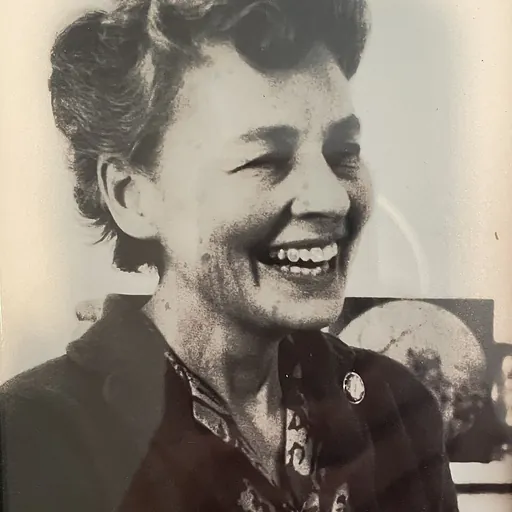
About Leona Zacharias
Lived 1907 – 1990 (aged 82–83). Leona Zacharias was an American scientist and teacher.
Leona Ruth Hurwitz Zacharias (1907 – 1990) was an American biologist and medical researcher whose career spanned several prestigious institutions and diverse fields. She’s best known for her part in pioneering research on retrolental fibroplasia (RLF), now known as retinopathy of prematurity (ROP), which causes incurable blindness in the smallest premature infants. In 1927, Zacharias graduated from Barnard College, where she majored in Biology. In 1935, Zacharias became an Instructor of Anatomy at P&S and was awarded a research fellowship in Embryology in 1936. In 1938, she received her Ph.D. in anatomy, being the sole woman to achieve this distinction that year.
Research and career In 1935, Zacharias joined the P&S faculty as an Anatomy Instructor, a position she held for nearly a decade. During this period, she also held other research and teaching positions.
Before the advent of modern medical technologies, many premature infants did not survive due to their underdeveloped organs. However, with the introduction of incubators and other innovations, premature babies were given a better chance. Despite these advancements, a significant and alarming issue arose. In the 1940s, startlingly, many tiny, premature infants were going blind shortly after birth; the cause was unknown.
This phenomenon was initially termed retrolental fibroplasia, which is characterized by the formation of fibrous tissue behind the lens of the eye.
When Zacharias arrived at Massachusetts Eye and Ear she initially worked alongside Dr. T.L. Terry, a prominent ophthalmologist who first described the disease and associated it with prematurity. After Terry's death in 1946, she joined Dr. V. Everett Kinsey's laboratory, researching the incidence and possible causes of the disease. Together, Kinsey and Zacharias conducted the first survey examining associated causes and complications of RLF/ROP. Their collaborative work resulted in the first comprehensive survey examining the associated causes and complications of retinopathy of prematurity. (Parallel studies, based first in Washington, D.C. and then in Baltimore, under Dr. Arnall Patz, would come to similar and compatible conclusions about the cause of premature infants’ postnatal blindness.)
In 1952, Zacharias summarized and debunked various erroneous hypotheses about the potential causes of the disease. Her work helped lead to the identification of high oxygen levels in incubators as the primary factor by 1955. This discovery was groundbreaking, revealing that the oxygen therapy used to support premature infants’ developing lungs at the same time disrupted blood vessel growth in the retina, leading to retinal detachment and blindness. Her research provided crucial insights into the genetic and environmental influences on menarche, and challenged prevailing notions about sexual maturation of girls. Her findings helped lead to the emphasis on the need for personalized approaches to healthcare and education for adolescent girls.
Between 1975 and 1989, Zacharias held various research positions at the Massachusetts Institute of Technology, in the Department of Nutrition and Food Science, the Department of Brain and Cognitive Science, and the Department of Applied Biological Sciences from 1987 to 1989.
Personal life Zacharias met her husband on a blind date in 1925, and the pair were married on June 23, 1927. Her husband, Jerrold R. Zacharias, was a nuclear physicist who developed the first atomic clock and served on the President’s Science Advisory Committee. On October 14, 1931, Leona Zacharias gave birth to their first child Susan. On August 28, 1942, their second daughter Johanna was born. She loved animals–especially dogs–and owned a succession of poodles. In 2023, Zacharias's story was documented by Katie Hafner in Scientific American.
Selected publications Zacharias LR. An analysis of cellular proliferation in grafted segments of embryonic spinal cord. Journal of Experimental Zoology. 1938;78(2):135-157. doi:10.1002/jez.1400780203 Rosen S, Shelesnyak MC, Zacharias L. Naso-genital relationship II: Pseudopregnancy following extirpation of the sphenopalatine ganglion in the rat. Endocrinology. 1940;27:463. Shelesnyak MC, Rosen S, Zacharias L. Naso-genital relationship, III: Some aspects of sexual function in female rats deprived of sphenopalatine ganglia. Proceedings of the Society for Experimental Biology and Medicine. 1940;45:449. Zacharias L. Further studies of the vidian ganglion as a source of innervation of the anterior lobe of the hypophysis. Endocrinology. 1942;31:638. Oppenheimer BS, Zacharias L. A note on the effect of a vitamin K-like quinone upon experimental renal hypertension in dogs. Journal of the Mount Sinai Hospital, New York. 1947 Sep-Oct;14(3):542. PMID: 20265090. Kinsey VE, Zacharias L. Retrolental fibroplasia: incidence in different localities in recent years and a correlation of the incidence with treatment given to the infants. Journal of the American Medical Association. 1949;139(9):572-578. Zacharias L, Goldhaber P, Kinsey VE. Vitamin E Deficiency in Chicks I. The Effects of Dietary Supplements on Plasma Tocopherol Levels and Vitamin E Deficiency Symptoms. The Journal of Nutrition. 1950;42(3):359-373. Goldhaber P, Zacharias L, Kinsey VE. Vitamin E deficiency in chicks. II. Plasma xanthophyll levels and vitamin E deficiency symptoms. The Journal of Nutrition. 1950;42:453. Zacharias L. Retrolental fibroplasia: a survey. American Journal of Ophthalmology. 1952;35(10):1426-1454. Zacharias L. Retrolental fibroplasia. 1952 Year Book of Eye, Ear, Nose, and Throat. Chicago: Year Book Publishers. Zacharias L. Progress in the study of retrolental fibroplasia. Sight Saving Review. 1953;23:68. Zacharias L, Reynolds WE, Chisholm Jr JF, King MJ. The incidence and severity of retrolental fibroplasia in relation to possible causative factors. I. Observations on the occurrence of retrolental fibroplasia. II. Studies of the relationship of retrolental fibroplasia to degree of prematurity, oxygen therapy, general health, and date of birth of premature infants. American Journal of Ophthalmology. 1954;38(3):317-336. Zacharias L. Incidence of retrolental fibroplasia. Pediatrics. 1960;25(4):726-727. Zacharias L, Chisholm Jr JF, Chapman RB. Visual and ocular damage in retrolental fibroplasia. American Journal of Ophthalmology. 1962;53(2):337-345. Zacharias L. Retrolental fibroplasia. Journal of Pediatrics. 1964;64:156. Zacharias L, Wurtman RJ. Blindness: its relation to age of menarche. Science. 1964;144(3622):1154-1155. doi:10.1126/science.144.3622.1154. Zacharias L, Wurtman RJ. Age at menarche: genetic and environmental influences. New England Journal of Medicine. 1969;280(16):868-875. Zacharias L, Wurtman RJ. Blindness and Menarche. Obstetrics & Gynecology. 1969;33(5):603-608. Zacharias L, Wurtman RJ, Schatzoff M. Sexual maturation in contemporary American girls. American Journal of Obstetrics and Gynecology. 1970;108(5):833-846. doi:10.1016/0002-9378(70)90552-1. Zacharias L, Rand WM, Wurtman RJ. A prospective study of sexual development and growth in American girls: the statistics of menarche. Obstetrical & Gynecological Survey. 1976;31(4):325-337. Zacharias L, Rand WM. American Girls: Their Growth and Development. National Elementary Principal. 1978;57(2):29-34.
Don’t just read it —
keep it.
Full-length biographies made to live with: read them, listen on the way to work, watch them tonight.
- E-book
- Audio
- Video
Instant download · yours to keep · every purchase keeps this site free
Important facts
People in Leona Zacharias's life
Named in this biography and alive at the same time


Related people
Same field, nearest in time


Contemporaries
People whose lives overlapped Leona Zacharias's



Frequently asked questions
Who was Leona Zacharias?
biologist, researcher
When was Leona Zacharias born?
Leona Zacharias was born in 1907 in New York City.
When did Leona Zacharias die?
Leona Zacharias died in 1990.
What was Leona Zacharias's occupation?
Leona Zacharias was a scientist and teacher.
What nationality was Leona Zacharias?
Leona Zacharias was American.
Sources & further reading
Cite this page
APA: Biography.guide. (2026). Leona Zacharias. https://biography.guide/leona-zacharias/
MLA: "Leona Zacharias." Biography.guide, https://biography.guide/leona-zacharias/.
Chicago: "Leona Zacharias." Biography.guide. https://biography.guide/leona-zacharias/.
Data last updated: 2026-09-23 · Spot an error? Report a correction.
Portrait: Wikimedia Commons · author & licence
Page generated 2026-09-27 05:07 UTC