
About Leon Wieseltier
Born 1952. Leon Wieseltier is an American journalist, translator, literary critic, writer, critic and editing staff.
Leon Wieseltier ( ; born June 14, 1952) is an American critic and magazine editor. From 1983 to 2014, he was the literary editor of The New Republic. He was a contributing editor and critic at The Atlantic until 2017, when the magazine fired him following allegations and an admission by Wieseltier of multiple instances of sexual harassment. In 2020, he became the editor of Liberties, a quarterly literary review.
Early life and education Wieseltier was born in Brooklyn, New York, the son of Stella (Backenroth) and Mark Wieseltier, who were Holocaust survivors from Poland.
Career During his tenure as literary editor of The New Republic, Wieseltier played a central role in editing its "back of the book" or literary, cultural, and arts pages. The magazine's owner, Marty Peretz, discovered Wieseltier, then working at Harvard's Society of Fellows, and installed him in charge of the book review section. In 2007, media critic Eric Alterman called the section "simultaneously erudite and zestful [and] probably [...] Peretz's single most significant positive achievement" in running the magazine.
Wieseltier has published several fiction and nonfiction books. Kaddish, a National Book Award finalist in 2000, and a National Jewish Book Award winner in the Nonfiction category in 1998, is a genre-blending meditation on the Jewish prayers of mourning. Against Identity is a collection of thoughts about the modern notion of identity.
Wieseltier also edited and introduced a volume of works by Lionel Trilling entitled The Moral Obligation to Be Intelligent and wrote the foreword to Ann Weiss's The Last Album: Eyes from the Ashes of Auschwitz-Birkenau, a collection of personal photographs that serves as a paean to pre-Shoah innocence.
Wieseltier's translations of the works of Israeli poet Yehuda Amichai have appeared in The New Republic and The New Yorker.
Wieseltier served on the Committee for the Liberation of Iraq and was an outspoken advocate of the George W. Bush administration's invasion of Iraq and the Iraq War. "I am in no sense a neoconservative, as many of my neoconservative adversaries will attest," Wieseltier wrote in a May 2007 letter to Judge Reggie Walton, seeking leniency for his friend Scooter Libby.
In 2013, he was the recipient of the Dan David Prize for being "a foremost writer and thinker who confronts and engages with the central issues of our times, setting the standard for serious cultural discussion in the United States".
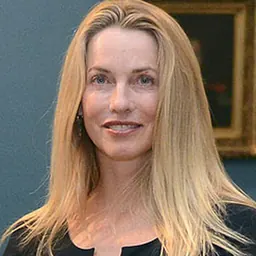
In January 2016, it was announced that Wieseltier would be joining Laurene Powell Jobs to form a new publication devoted to exploring the effects of technology on people's lives. But on October 24, 2017, Jobs withdrew funding for the journal after Wieseltier admitted to sexual harassment and inappropriate advances with several former female employees of The New Republic.
In 2020, Wieseltier launched a quarterly journal called Liberties, which was described as being dedicated to "the rehabilitation of liberalism".
Sexual harassment acknowledgment (2017) In the immediate aftermath of Harvey Weinstein allegations and the #MeToo movement, a list of "Shitty Media Men" that featured men in the media industry who were accused of sexual misconduct was widely shared on the internet. Wieseltier's name was on the list.
Wildman further wrote that the sexual harassment went hand in hand with gender discrimination at the magazine during Peretz's and Wieseltier's tenure: "The women knew we had a far shallower chance of rising up the masthead than our male counterparts; all of us hoped we’d be the exception. To do so, we entered into a game in which the rules were rigged against us, sometimes pushing us well past our point of comfort in order to remain in play."
On October 27, 2017, Wieseltier was fired by The Atlantic.
Other At the time of Marilyn Monroe's centenary, Weiseltier commented on the actor casting her spell by radiating
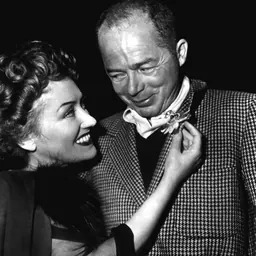
happy carnality, which is why her harsh treatment by men seems especially mean. She tried and tried to be ‘serious,’ but there was no point. She was doomed to be a fantasy. That’s what Billy Wilder saw: that she was both incendiary and naïve. She brought the news that desire is just as exciting when it is sunny as when it is dark.
The elided comment was quoted in The New York Times.
Criticism
Wieseltier was a frequent target of the satirical monthly Spy magazine, which in 1990 cited his frequent cultural commentary in lieu of "serious, important work" and called him the "Woody Allen of Washington", both men apparently being "intellectual name-droppers, unlikely sexual braggarts, [and] smug moralizers; each jealously guards his highbrow credentials while wearing a lowbrow heart on his sleeve." Spy also evoked cosmopolitan pretensions by reporting on a hypercorrect, conflictingly French–German mispronunciation of his name as "Lay-ON Vee-ZEL-tee-AY", with no further explanation.
A 1995 profile in Vanity Fair described Wieseltier's gradual vitiation, with Wieseltier himself admitting, “My faith was not sufficiently strong to withstand my desire to taste wine, eat [non-kosher] food, and kiss women.” He has in fact “been linked to an astonishing array of prominent women”, with his inveterate womanzing eventually spelling the end of his "troubled" first marriage, to Mahnaz Ispahani. He descended into alcoholism and cocaine addiction, financed by the presumably-illicit sale of advance review manuscripts to local bookstores, but claimed to have finally quit the habit in lonce he began dating Twyla Tharp, “a woman of daunting discipline, physical and otherwise”, in late 1993 (the year before his official divorce from Ispahani). Vanity Fair noted Wieselther's concomitant absenteeism and "scant literary output",
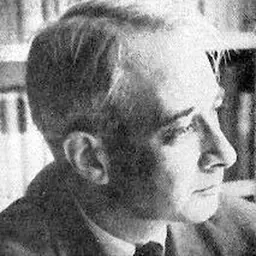
The Vanity Fair profile also explicitly quoted a measure of disappointment on behalf of Lionel Trilling Wieseltier's mentors at Columbia University and at the University of Oxford, respectively,
In a 2017 essay, “The Tzaddik of the Intellectuals”, alternatively titled “The Sins of Leon Wieseltier: The climb and fall”, Joseph Epstein objected to Wieseltier's lack of intellectual substance and to habitual moralizing that proved to be hypocritical in light of several behaviors: aggressive careerism; be attributed to “a printer's error”; he married his second wife, Jennifer Bradley, who worked on urban-development issues at the Brookings Institution. The Washington Post reported that Supreme Court Justice Ruth Bader Ginsburg would also officiate at their October 2000 wedding. As of 2020, the couple was in the midst of a divorce.
Wieseltier is a fluent Hebrew speaker, and when interviewed in Israel, he said "I feel perfectly at home here."
Don’t just read it —
keep it.
Full-length biographies made to live with: read them, listen on the way to work, watch them tonight.
- E-book
- Audio
- Video
Instant download · yours to keep · every purchase keeps this site free
Important facts
People in Leon Wieseltier's life
Named in this biography and alive at the same time





Related people
Same field, nearest in time





Contemporaries
People whose lives overlapped Leon Wieseltier's


Frequently asked questions
Who is Leon Wieseltier?
American writer
When was Leon Wieseltier born?
Leon Wieseltier was born on 14 June 1952 in Brooklyn.
What is Leon Wieseltier's occupation?
Leon Wieseltier is a journalist, translator, literary critic, writer, critic and editing staff.
What nationality is Leon Wieseltier?
Leon Wieseltier is American.
Sources & further reading
Cite this page
APA: Biography.guide. (2026). Leon Wieseltier. https://biography.guide/leon-wieseltier/
MLA: "Leon Wieseltier." Biography.guide, https://biography.guide/leon-wieseltier/.
Chicago: "Leon Wieseltier." Biography.guide. https://biography.guide/leon-wieseltier/.
Data last updated: 2026-09-20 · Spot an error? Report a correction.
Page generated 2026-09-27 05:27 UTC