
About Léon van der Essen
Lived 1883 – 1963 (aged 79). Léon van der Essen was a Belgian historian.
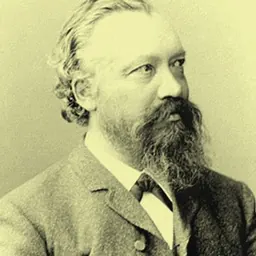
Leon van der Essen (1883–1963) was a Belgian historian, professor at the Catholic University of Leuven. In 1946 he testified about the German occupation of Belgium at the Nuremberg trials, the only Belgian witness called.
Life Van der Essen was born in Antwerp on 12 December 1883, the son of a painter-decorator. After graduating from a Jesuit secondary school in Antwerp he studied in Leuven under Alfred Cauchie, obtaining his doctorate in 1907 with a thesis on the lives of Merovingian saints. He became Cauchie's teaching assistant. In 1910 he married Gabrielle Callebert. Together they were to have three sons.
During the First World War he spent time at the University of Oxford, King's College, London, and the University of Chicago in 1914–1916, lecturing on Belgian history with a propaganda brief from the Belgian government in exile in Le Havre. He enlisted in 1916, but was seconded to the foreign ministry's propaganda service. After the war he was an adviser to the Belgian delegation at the Paris Peace Conference, 1919, and he was appointed a full professor at the university.
Although his early work as a historian focused on early-medieval hagiography, his main mature work was a 5-volume biography of Alexander Farnese, Duke of Parma (1545–1592), published 1933–1937. After the Second World War he published a series of short studies of aspects of the organisation and activities of the sixteenth-century Army of Flanders.
He fled Belgium in 1940, but returned to his post at the university after the French surrender. In November 1944 he was appointed to the Belgian Committee on War Crimes, and on 4 February 1946 he testified as the only Belgian witness at the International Military Tribunal in Nuremberg concerning German war crimes in Belgium, emphasizing the subversion of the Belgian constitution by the replacement of elected mayors in the major cities by ideologically sympathetic appointees.
A Festschrift was published in his honour in 1947: Miscellanea historica in honorem Leonis van der Essen.
In 1954 he retired as professor and was ennobled by King Baudouin. He died in Leuven on 10 February 1963.
Work Petite histoire de l'invasion et de l'occupation allemande en Belgique (1917) Alexandre Farnese, prince de Parme, gouverneur general des Pays-Bas, 1545-1592, 5 vols. (Brussels, 1933-1937) Le siècle des saints (625-739): étude sur les origines de la Belgique chrétienne (Brussels, 1942) L'Université de Louvain: son origine, son histoire, son organisation, 1425-1953 (Brussels, 1953)
Don’t just read it —
keep it.
Full-length biographies made to live with: read them, listen on the way to work, watch them tonight.
- E-book
- Audio
- Video
Instant download · yours to keep · every purchase keeps this site free
Important facts
People in Léon van der Essen's life
Named in this biography and alive at the same time

Related people
Same field, nearest in time
Contemporaries
People whose lives overlapped Léon van der Essen's



Frequently asked questions
Who was Léon van der Essen?
Belgian historian (1883–1963)
When was Léon van der Essen born?
Léon van der Essen was born on 12 December 1883 in Antwerp.
When did Léon van der Essen die?
Léon van der Essen died on 10 February 1963 in Leuven.
What was Léon van der Essen's occupation?
Léon van der Essen was a historian.
What nationality was Léon van der Essen?
Léon van der Essen was Belgian.
Sources & further reading
· Wikipedia: Léon van der Essen
Cite this page
APA: Biography.guide. (2026). Léon van der Essen. https://biography.guide/leon-van-der-essen/
MLA: "Léon van der Essen." Biography.guide, https://biography.guide/leon-van-der-essen/.
Chicago: "Léon van der Essen." Biography.guide. https://biography.guide/leon-van-der-essen/.
Data last updated: 2026-09-20 · Spot an error? Report a correction.
Page generated 2026-09-27 05:26 UTC