
About Leon MacLaren
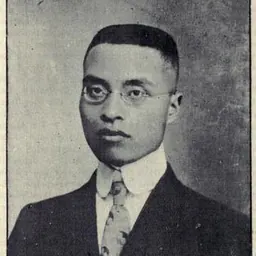
Lived 1910 – 1994 (aged 83). Leon MacLaren was a British philosopher, barrister and economist.
Leon MacLaren, born Leonardo da Vinci MacLaren (24 September 1910 – 24 June 1994), was the founder of the School of Economic Science (SES). MacLaren was inspired by Henry George, Socrates, Francis Roles, Pyotr Ouspensky, Maharishi Mahesh Yogi, and finally the philosophy of Advaita Vedānta through the Shankaracharyas of Jyotir Math.
Early life MacLaren was born in Glasgow on 24 September 1910, but from the age of four grew up in the London suburb of Wimbledon.
Schooled at Rutlish School in Wimbledon, MacLaren later became attracted to the law and trained as a barrister.
Maclaren said he was grateful to have inherited from his father three things: no religion, no education, and a strong desire to distrust experts.
At the age of sixteen, MacLaren contemplated how his life could best be put to the service of mankind, a one-word answer came to his mind, the word was "School".
Career MacLaren's influences include his father Andrew MacLaren, Shantanand Saraswati, Henry George, Georges Ivanovich Gurdjieff, P. D. Ouspensky, Francis Roles and Maharishi Mahesh Yogi. In 1937 MacLaren left the Henry George movement and founded the School of Economic Science (SES) with the support of his father. In 1938 he was called to the bar and practised in Chambers at 2 Paper Buildings in the Inner Temple. In 1939 he was nominated to stand for Parliament against Winston Churchill, when war was declared the election was cancelled.
Some sources say MacLaren's father founded the school, while others state it was Leon. According to the SES web site, MacLaren introduced and developed philosophy courses to complement his economics courses. Over time the philosophy courses became SES's principal area of teaching. According to the group's literature, from the mid-1960s onwards, MacLaren presented, in addition to some of the ideas of P. D. Ouspensky, the philosophy of Advaita Vedanta, a philosophical theology of absolute non-duality as taught by the eighth-century Indian philosopher-theologian Śaṅkara.
He later stood as the Liberal candidate for Yeovil at the 1950 election and then at Hendon South in 1951 without any success. According to the SES web site, MacLaren studied Advaita Vedanta philosophy in 1965 with Shantanand Saraswati the Shankaracharya of Jyotir Math. and became a student of the Maharishi. On commentator states that in the 1950s, MacLaren met and was deeply inspired by an Indian guru, Sri Shantanand Saraswati, and henceforth the School of Economic Science's curriculum combined Platonic and Neoplatonic mysticism with Eastern Vedic philosophy. Meditation classes were taught alongside Socratic group dialogues.
According to Practical Philosophy's (founded by MacLaren) web site MacLaren spent three months in the early 1970s traveling around the world visiting the SES affiliated schools. MacLaren's illness came during his final world tour. He was brought back to England from South Africa and died in a London hospital on 24 June 1994. According to his foundation web site, MacLaren wrote a book called The Nature of Society. He began Sanskrit courses at the School of Economic Science. Today SES is the largest body of Sanskrit students in the UK.
MacLaren said on teamwork "The first quality of a leader of people – always the first quality – is a devotion to truth." and on praise "From praise comes joy, from joy – strength, from strength – virtue, from virtue – purity and from purity comes realization of one’s full potential."
Leon MacLaren is described as one of three men responsible for meditation being practised so widely in the west due to his early adoption of the practice and propagation of it globally via the School of Economic Science, the other two men being Maharishi Mahesh Yogi and Dr Francis C. Roles of The Study Society.
Personal life According to MacLaren's foundation web site he married twice, had two daughters and lived in Hammersmith and later Hampstead and Oxfordshire.
He had a keen interest in music, he played the saxophone in a jazz band in his early life and also played the piano. He also composed several pieces inducing: "In The Beginning", "Isha Upanishad" and "Rig Veda", based on a seven-tone scale described as the "natural octave", based on George Gurdjieff and P. D. Ouspensky's teachings.
Published works
Nature of Society Music: The Foundations of Harmony "Reminders": Extracts from the Lectures of Leon MacLaren The Science of Economics: The Economic Teaching of Leon MacLaren
Don’t just read it —
keep it.
Full-length biographies made to live with: read them, listen on the way to work, watch them tonight.
- E-book
- Audio
- Video
Instant download · yours to keep · every purchase keeps this site free
Important facts
People in Leon MacLaren's life
Named in this biography and alive at the same time




Related people
Same field, nearest in time

Contemporaries
People whose lives overlapped Leon MacLaren's






Frequently asked questions
Who was Leon MacLaren?
British philosopher (1910-1994)
When was Leon MacLaren born?
Leon MacLaren was born on 24 September 1910 in Glasgow.
When did Leon MacLaren die?
Leon MacLaren died on 24 June 1994 in London.
What was Leon MacLaren's occupation?
Leon MacLaren was a philosopher, barrister and economist.
What nationality was Leon MacLaren?
Leon MacLaren was British.
Sources & further reading
Cite this page
APA: Biography.guide. (2026). Leon MacLaren. https://biography.guide/leon-maclaren/
MLA: "Leon MacLaren." Biography.guide, https://biography.guide/leon-maclaren/.
Chicago: "Leon MacLaren." Biography.guide. https://biography.guide/leon-maclaren/.
Data last updated: 2026-09-20 · Spot an error? Report a correction.
Page generated 2026-09-27 05:33 UTC