
About Leon Fleisher
Lived 1928 – 2020 (aged 92). Leon Fleisher was an American conductor, classical pianist, musicologist, music educator and pianist.
Leon Fleisher (July 23, 1928 – August 2, 2020) was an American classical pianist, conductor, and pedagogue. He was one of the most renowned pianists and pedagogues in the world. Music correspondent Elijah Ho called him "one of the most refined and transcendent musicians the United States has ever produced". His father's business was hat-making, while his mother's goal was to make her son a great concert pianist. Fleisher played at Carnegie Hall with the New York Philharmonic under Pierre Monteux at age 16; Monteux called him "the pianistic find of the century." They also recorded Mozart's Piano Concerto No. 25, the Grieg and Schumann piano concertos, Franck's Symphonic Variations, and Rachmaninoff's Rhapsody on a Theme of Paganini. In 1964, at the age of 36, Fleisher lost the use of his right hand, due to a neurological condition that was eventually diagnosed as focal dystonia.
In 2004 Vanguard Classics released Fleisher's first "two-handed" recording since the 1960s,
Fleisher's musical interests extended beyond the central German Classic-Romantic repertoire. The American composer William Bolcom composed his Concerto for Two Pianos, Left Hand for Fleisher and his close friend Gary Graffman, who has also suffered from debilitating problems with his right hand. It received its first performance in Baltimore in April 1996. The concerto is so constructed that it can be performed in one of three ways, with either piano part alone with a reduced orchestra, or with both piano parts and the two reduced orchestras combined into a full orchestra. Composers who wrote music for him also included Lukas Foss, Leon Kirchner and Gunther Schuller. This work was written in 1923, for Paul Wittgenstein, who disliked and refused to play it. However, he had sole performing rights and kept the score, not allowing any other pianists to play it. The manuscript was discovered among his papers after the death of his widow in 2002. On October 2, 2005, Fleisher played the American premiere of the work, with the San Francisco Symphony under Herbert Blomstedt.
He continued to be involved in music, both conducting and teaching, for more than 60 years at the Peabody Institute of the Johns Hopkins University, the Curtis Institute of Music, and the Royal Conservatory of Music in Toronto; he was also closely associated with the Tanglewood Music Center. With Dina Koston, he co-founded and co-directed the Theater Chamber Players in 1968–2003, which was the first resident chamber ensemble of the Smithsonian Institution and of the Pedagogy. His students include Frank Lévy, André Watts, Yefim Bronfman, Hélène Grimaud, Louis Lortie, Dina Koston, Jonathan Biss, Lori Sims, Nicholas Angelich, Joel Fan, Enrique Graf, and Galen Deibler.
His memoir, My Nine Lives, co-written with The Washington Posts music critic Anne Midgette, was published in November 2010.
Death Fleisher died in Baltimore, Maryland, on August 2, 2020, at age 92.
Awards and recognition President George W. Bush and First Lady Laura Bush with the 2007 Kennedy Center Honorees at the White House. From left: Fleisher, Martin Scorsese, Diana Ross, Brian Wilson and Steve Martin 1952: Gold medal, Queen Elisabeth Music Competition 1994: Instrumentalist of the Year, Musical America 2005: President's Medal, Johns Hopkins University 2006: Commander in the Order of Arts and Letters by the Minister of Culture of the French government 2007: Kennedy Center Honors 2010: Instrumentalist of the Year, Royal Philharmonic Society 2021: The Leon Fleisher Academy in Washington, D.C., named in his honor
Honorary doctorates Towson State University Amherst College Juilliard School of Music Peabody Institute of the Johns Hopkins University 1956/1958/1962: Brahms: Piano Concertos Nos. 1 (rec. 1958) and 2 (rec. 1962), with the Cleveland Orchestra led by Szell; Handel Variations and Waltzes, Op. 39 (rec. 1956); Sony Masterworks, remastered and reissued 1997 2014: All the Things You Are, Bridge Records
Don’t just read it —
keep it.
Full-length biographies made to live with: read them, listen on the way to work, watch them tonight.
- E-book
- Audio
- Video
Instant download · yours to keep · every purchase keeps this site free
Important facts
People in Leon Fleisher's life
Named in this biography and alive at the same time

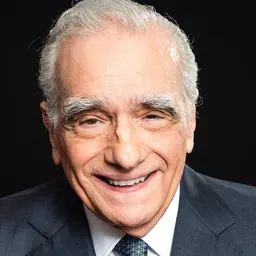



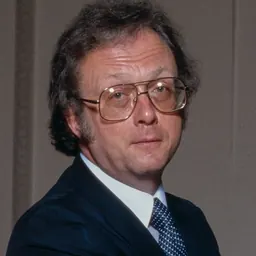

Related people
Same field, nearest in time

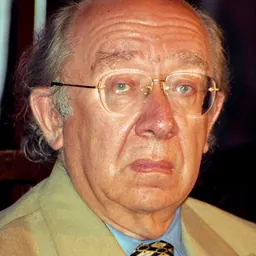

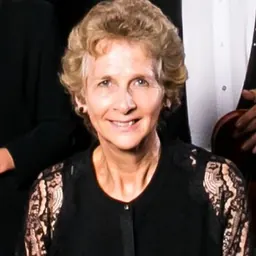

Contemporaries
People whose lives overlapped Leon Fleisher's


Frequently asked questions
Who was Leon Fleisher?
American conductor and pianist (1928–2020)
When was Leon Fleisher born?
Leon Fleisher was born on 23 July 1928 in San Francisco.
When did Leon Fleisher die?
Leon Fleisher died on 2 August 2020 in Baltimore.
What was Leon Fleisher's occupation?
Leon Fleisher was a conductor, classical pianist, musicologist, music educator and pianist.
What nationality was Leon Fleisher?
Leon Fleisher was American.
Sources & further reading
Cite this page
APA: Biography.guide. (2026). Leon Fleisher. https://biography.guide/leon-fleisher/
MLA: "Leon Fleisher." Biography.guide, https://biography.guide/leon-fleisher/.
Chicago: "Leon Fleisher." Biography.guide. https://biography.guide/leon-fleisher/.
Data last updated: 2026-09-22 · Spot an error? Report a correction.
Page generated 2026-09-27 05:17 UTC