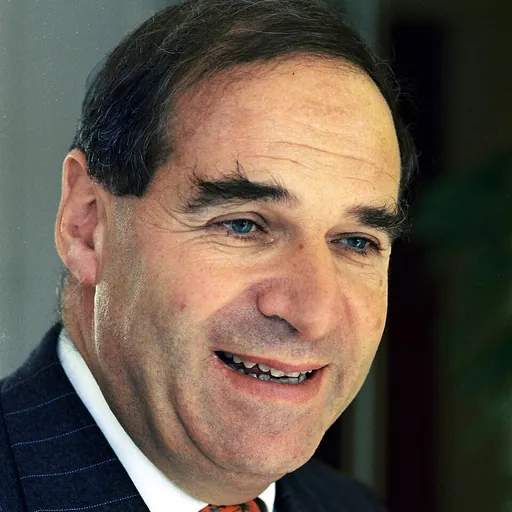
About Leon Brittan
Lived 1939 – 2015 (aged 75). Leon Brittan was a British politician, barrister, businessperson and investment banker.
Political career
MP and minister After unsuccessfully contesting the constituency of Kensington North in 1966 and 1970, he was elected to Parliament in the general election of February 1974 for Cleveland and Whitby, and became an opposition spokesman in 1976. He was made a Queen's Counsel in 1978. Between 1979 and 1981, he was Minister of State at the Home Office. He was then promoted to become Chief Secretary to the Treasury, becoming the youngest member of the Cabinet. He warned cabinet colleagues that spending on social security, health and education would have to be cut "whether they like it or not".
At the 1983 election, Brittan was elected MP for Richmond. Following the election, he was promoted to Home Secretary, becoming the youngest since Churchill. One factor in the defeat of the strike was central control of local police forces. As soon as the strike began, Brittan set up a National Reporting Centre in New Scotland Yard to coordinate intelligence and the supply of police officers between forces as necessary. Margaret Thatcher's government had carefully planned for a miners' strike, and a Whitehall committee had been meeting in secret since 1981 to prepare for a protracted dispute.
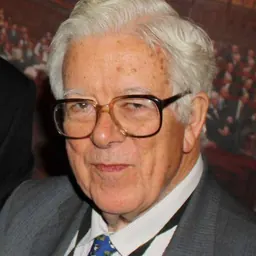
In 1984, following the murder of Yvonne Fletcher, a police officer, during a protest outside the Libyan embassy in London, Brittan headed the government's crisis committee as both Thatcher and the Foreign Secretary, Sir Geoffrey Howe, were away at the time. In January 2014, secret government documents released by the National Archives disclosed that Libya twice warned British officials that the Libyan embassy protest would become violent – hours before WPC Fletcher was killed.
In September 1986, Brittan was cleared by a High Court Judge of acting unlawfully when, as Home Secretary, he gave MI5 permission to tap the telephone of a leader of the Campaign for Nuclear Disarmament.
In September 1985, Brittan was moved to Secretary of State for Trade and Industry. The reason for his demotion, according to Jonathan Aitken, was that the prime minister Margaret Thatcher felt that Brittan was "not getting the message across on television". In her memoirs, Thatcher wrote of Brittan: "Everybody complained about his manner on television, which seemed aloof and uncomfortable."
Brittan had been criticised as a poor communicator and for his role in the suppression of a BBC television programme in the Real Lives series on The Troubles in Northern Ireland, At the Edge of the Union.
Resignation over the Westland affair Brittan resigned as Trade and Industry Secretary in January 1986 over the Westland affair. Brittan had authorised the leaking of a letter from the Solicitor General that had accused Michael Heseltine of inaccuracies in his campaign for Westland to be rescued by a consortium of European investors.
In 1989, Brittan revealed in a Channel 4 programme that two senior Downing Street officials, Bernard Ingham and Charles Powell, had approved the leaking of the letter from the Solicitor General. Brittan's claim led to calls from some Labour MPs for a new inquiry into the Westland affair.
European Commission
Brittan was knighted in the 1989 New Years Honours List. He was made European Commissioner for Competition at the European Commission early in 1989, Margaret Thatcher appointed Brittan to the Commission as a replacement for Lord Cockfield, whose pro-European enthusiasm she disapproved of; however, in doing so she had overlooked Brittan's own record as a supporter of the European Union and subsequently found his views and policies at odds with those she had expected from him. which enabled him to ban the ATR/De Havilland planned merger in 1991.
In 1993 he became European Commissioner for Trade and in 1995 European Commissioner for External Affairs, also serving as a Vice-President of the European Commission. Brittan resigned with the rest of the Santer Commission in 1999 amid accusations of fraud against Jacques Santer and Édith Cresson. who became leader of the Liberal Democrats in December 2007 and deputy prime minister in May 2010.
Peerage
Brittan was created a life peer, as Baron Brittan of Spennithorne in North Yorkshire, on 9 February 2000. He was vice-chairman of UBS AG Investment Bank, non-executive director of Unilever and member of the international advisory committee for Total. In August 2010, Brittan was appointed a trade adviser to the UK government. Prime Minister David Cameron said that Brittan had "unrivalled experience" for the job, which was scheduled to last for six months.
Brittan's wife, Diana (, formerly Peterson; born 1940),
Death Brittan died at his London home in Pimlico on 21 January 2015, aged 75;
Allegations
Paedophile dossier
In 1984, in his capacity as Home Secretary, Brittan was handed a 40-page dossier by Geoffrey Dickens MP which detailed alleged paedophile activity in the 1980s, including, according to Dickens, allegations concerning "people in positions of power, influence and responsibility". The whereabouts of the dossier is currently unknown. and later replied that he had no recollection of it to a query from The Independent newspaper.
Brittan later declared in 2014 that Dickens had met him at the Home Office and that he had written to Dickens on 20 March 1984, explaining what had been done about the files.
An initial review by Home Office civil servant Mark Sedwill in 2013 concluded that copies of Dickens's material had "not been retained" but that Brittan had acted appropriately in dealing with the allegations. In November 2014, a review by Peter Wanless followed. Wanless said there was no evidence to suggest that files had been removed to cover up abuse.
Allegations pursued by Labour MP
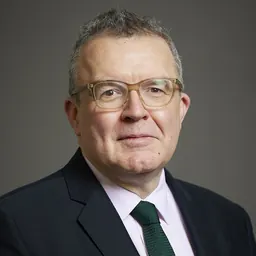
In June 2014, Brittan was interviewed under caution by police in connection with the alleged rape of a 19-year-old student in his central London flat in 1967 before he became an MP. They had not pursued the allegation when it was first made because of insufficient evidence. The police reopened the investigation after Alison Saunders, the Director of Public Prosecutions, had been lobbied by Labour MP Tom Watson to investigate further. In a statement on 7 July 2014, Brittan denied the claims. At the time of his death, Brittan had not been told by the police that there was insufficient evidence to prosecute him for the alleged rape of the woman. The deputy assistant commissioner of the Met, Steve Rodhouse, wrote a letter of apology to the solicitors of Brittan's widow.
In October 2014, the Labour MP Jimmy Hood used parliamentary privilege to refer to claims that Brittan had been linked to child abuse. After Brittan died in January 2015, Watson accused him of "multiple child rape"; he said he had spoken to two people who claimed they were abused by Brittan. Convicted fraudster Chris Fay alleged that he had seen a photograph of Brittan with a child at Elm Guest House in mid-1982. In March 2015, it was reported that detectives from Operation Midland, set up by the Metropolitan Police to investigate claims of child sex abuse, had visited and searched two homes in London and Yorkshire formerly owned by Brittan. One of Brittan's accusers subsequently told BBC's Panorama that he originally named Brittan as a joke and told the Metropolitan Police that two well-known campaigners may have led him into making false claims. On 21 March 2016, the Metropolitan Police confirmed that Operation Midland had been closed without any charges being brought.
On 1 September 2017, it was reported that the Metropolitan Police had paid substantial compensation to Brittan's widow for having raided the Brittans' home "after accepting that the searches had been unjustified and should never have taken place." Carl Beech, whose claims spurred Operation Midland, was convicted of perverting the course of justice in July 2019.
Honours Brittan was created a life peer by the Queen. He took the title Baron Brittan of Spennithorne, of Spennithorne in the County of North Yorkshire on 9 February 2000.
Foreign honours
Country Date Appointment Post-nominal letters Order of the Cross of Terra Mariana (2nd Class)
Scholastic
+ Chancellor, visitor, governor, rector and fellowships Location Date School Position 19932005 Teesside University Chancellor
+ Honorary degrees Location Date School Degree Gave Commencement Address 1990 Newcastle University Doctor of Civil Law (DCL) 1990 University of Hull Doctor of Laws (LL.D) 1991 University of Edinburgh Doctorate 1992 University of Bradford Doctor of Laws (LL.D) 1992 University of Durham Doctor of Civil Law (DCL) 1995 University of Bath Doctor of Laws (LL.D) Teesside University Doctor of Laws (LL.D)
Memberships and fellowships
Country Date Organisation Position 1960 Cambridge Union President 198321 January 2015 Inner Temple Bencher
Arms
Don’t just read it —
keep it.
Full-length biographies made to live with: read them, listen on the way to work, watch them tonight.
- E-book
- Audio
- Video
Instant download · yours to keep · every purchase keeps this site free
Important facts
People in Leon Brittan's life
Named in this biography and alive at the same time




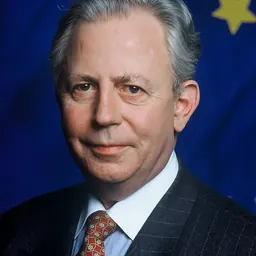
Related people
Same field, nearest in time


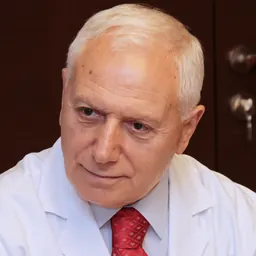


Contemporaries
People whose lives overlapped Leon Brittan's

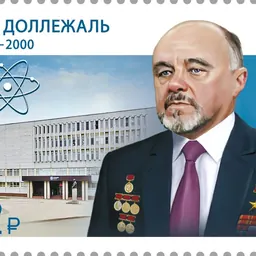
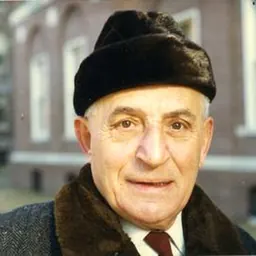


Frequently asked questions
Who was Leon Brittan?
British politician and barrister (1939–2015)
When was Leon Brittan born?
Leon Brittan was born on 25 September 1939 in North London.
When did Leon Brittan die?
Leon Brittan died on 21 January 2015 in London.
What was Leon Brittan's occupation?
Leon Brittan was a politician, barrister, businessperson and investment banker.
What nationality was Leon Brittan?
Leon Brittan was British.
Sources & further reading
Cite this page
APA: Biography.guide. (2026). Leon Brittan. https://biography.guide/leon-brittan/
MLA: "Leon Brittan." Biography.guide, https://biography.guide/leon-brittan/.
Chicago: "Leon Brittan." Biography.guide. https://biography.guide/leon-brittan/.
Data last updated: 2026-09-22 · Spot an error? Report a correction.
Portrait: Wikimedia Commons · author & licence
Page generated 2026-09-27 05:03 UTC