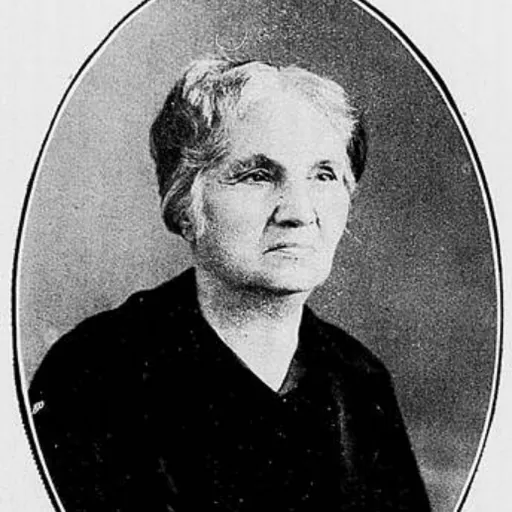
Leolinda Daltro
Teacher, suffragette, and indigenous rights activist
About Leolinda Daltro
Lived 1859 – 1935 (aged 75). Leolinda Daltro was a Brazilian teacher, suffragist, human rights defender and suffragette.
Leolinda de Figueiredo Daltro (14 July 1859 – 4 May 1935) was a Brazilian feminist teacher, suffragist and indigenous' rights activist. In 1910, she was one of the founders of the Feminine Republican Party (Partido Republicano Feminino), which advocated for the Brazilian women's right to vote.
Biography Leolinda Daltro was born in the state of Bahia. She moved to Rio de Janeiro with her second husband and five children to teach. In 1896 she travelled throughout the countryside in a mission to give formal education to Brazilian indigenous peoples and help to assimilate them to the newly formed Republic. She established herself among the Xerente people of the current state of Tocantins. Differently to the religious missions, Leolinda believed in a secular education for the natives, and she advocated for demarcation of their lands and respecting their cultures.
Daltro returned to Rio in 1897. She founded the Grêmio Patriótico Leolinda Daltro for defending the indigenous peoples' rights. She became a friend of , wife of president Hermes da Fonseca. They founded the Escola Orsina da Fonseca, a vocational school where women learned arts, sciences and crafts. She also founded the Linha de Tiro Feminino (Feminine Shooting Line), as Daltro believed women should have counted as citizens and have the right to defend their country.
The Brazilian Constitution of 1891 barred women from voting. Daltro founded the Partido Republicano Feminino (Feminine Republican Party) in 1910, alongside other women, among them the poet Gilka Machado, fighting for the women's right to vote. The party was inspired by the British suffragettes. In 1917, her party led a march for women's suffrage in Rio de Janeiro, of which 90 women participated.
In 1919, Daltro presented her protest candidacy for intendente (mayor) of Rio, as a way to raise awareness of the suffragist movement. After PRF, another women's rights' organizations were formed, such as Federação Brasileira pelo Progresso Feminino, founded in 1922 by Bertha Lutz. Women eventually gained the right to vote in 1932.
Death Daltro died on May 4, 1935, aged 75, after being hit by a car.
Don’t just read it —
keep it.
Full-length biographies made to live with: read them, listen on the way to work, watch them tonight.
- E-book
- Audio
- Video
Instant download · yours to keep · every purchase keeps this site free
Important facts
People in Leolinda Daltro's life
Named in this biography and alive at the same time

Related people
Same field, nearest in time


Contemporaries
People whose lives overlapped Leolinda Daltro's



Frequently asked questions
Who was Leolinda Daltro?
teacher, suffragette, and indigenous rights activist
When was Leolinda Daltro born?
Leolinda Daltro was born on 14 July 1859 in Bahia.
When did Leolinda Daltro die?
Leolinda Daltro died on 4 May 1935 in Rio de Janeiro.
What was Leolinda Daltro's occupation?
Leolinda Daltro was a teacher, suffragist, human rights defender and suffragette.
What nationality was Leolinda Daltro?
Leolinda Daltro was Brazilian.
Sources & further reading
Cite this page
APA: Biography.guide. (2026). Leolinda Daltro. https://biography.guide/leolinda-daltro/
MLA: "Leolinda Daltro." Biography.guide, https://biography.guide/leolinda-daltro/.
Chicago: "Leolinda Daltro." Biography.guide. https://biography.guide/leolinda-daltro/.
Data last updated: 2026-09-22 · Spot an error? Report a correction.
Portrait: Wikimedia Commons · author & licence
Page generated 2026-09-27 04:57 UTC