
About Leo Wolman
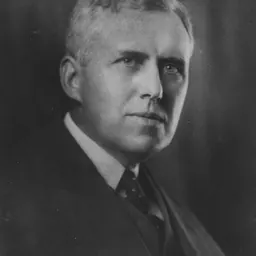
Lived 1890 – 1961 (aged 71). Leo Wolman was an American economist, trade unionist and political economist.
Leo Wolman (February 24, 1890 – October 2, 1961) was a noted American economist whose work focused on labor economics. He also served on a number of important boards and commissions for the federal government.
Early life Wolman was born in Baltimore, Maryland, in 1890 to Morris and Yetta (Wachsman) Wolman, first generation Polish-Jewish immigrants to the United States. He attended Johns Hopkins University, receiving his A.B. degree in 1911 and his Ph.D. in political economy in 1913.
After receiving his doctorate, Wolman worked as a special agent for the Commission on Industrial Relations, a U.S. federal government commission which investigated industrial working conditions in the United States from 1912 to 1915. During this time, he was a director of the Amalgamated Bank of Chicago and the Amalgamated Bank of New York, banks owned by the ACWU, and Amalgamated Investors, Inc., an ACWU-owned investment trust. a 1929 study on changes in patterns of consumption and the effect on standards of living, and a 1930 report on the role of public works in helping reduce unemployment. Although he increasingly disassociated himself from the labor movement after the early 1930s, he still supported unions in certain circumstances. For example, he was one of many educators who signed an open letter denouncing violence against labor union members in the "Harlan County War" in 1932.
He was appointed a lecturer at Harvard University in 1930. Wesley Clair Mitchell, a highly influential economist and colleague at NBER, lobbied heavily for Wolman to be added to the faculty.
Wolman was a member of several academic societies, namely the American Academy of Arts and Sciences and the American Philosophical Society.
Leo Wolman and other representatives to the 1921 Conference on Unemployment. His association with the trade union movement led to a lengthy career in government service. In 1921, Secretary of Commerce Herbert Hoover appointed Wolman to the Conference on Unemployment, a federal conference charged with studying unemployment during the Post-World War I recession. His service led to additional work for labor unions. Wolman helped the ACWU negotiate unemployment benefits for its members in the mid-1920s, and with the onset of the Great Depression he was lecturing union audiences on unemployment in 1930. Governor of New York Franklin D. Roosevelt appointed him in October 1930 to a committee to recommend solutions to the unemployment problem facing that state, and he was chair of a seven-state commission on unemployment in 1931. He became a strong advocate for federal unemployment insurance, and co-authored a major study of European economies in 1932 which linked dropping standards of living to lack of unemployment benefits.
National Recovery Administration In June 1933, Wolman was appointed to the staff of the National Recovery Administration (NRA), which led to a critical role in the regulation of labor relations. His initial appointment was as an expert on labor to NRA Administrator Hugh S. Johnson in the industrial section. Four days later, Labor Secretary Francis Perkins appointed him chair of the NRA Labor Advisory Board, with authority to meet with the NRA Industry Advisory Board and representatives of labor and industry to set codes for minimum wages and maximum hours of work and to establish fair trade practices. On August 1, 1933, Wolman was appointed (along the Hugh S. Johnson and Deputy NRA Administrator Nelson Slater) to a board to mediate disputes arising under the newly approved cotton textile code. Three days later, Wolman and Walter C. Teagle, chair of the NRA's Industry Advisory Board, established (with President Roosevelt's agreement) the National Labor Board (NLB) to help resolve strikes and other industrial disputes arising under NRA codes. The National Labor Board was led by Senator Robert F. Wagner, and Wolman was one of six members appointed to the Board on August 5.
Less than a week later, Wolman (acting as chair of the NLB while Senator Wagner was overseas) and the other members of the NLB established a key policy of New Deal labor policy. The Full-Fashioned Hosiery Workers Union launched an organizing drive in the summer of 1933 in the silk stocking mills around Reading, Pennsylvania. The employers refused to recognize the union, and 10,000 workers went on strike. On August 10, 1933, the NLB mediated a settlement. Known as the "Reading Formula," the settlement consisted of four parts: (1) That the union call off the strike; (2) That all employees be rehired immediately, without retaliation; (3) That the NLB hold elections in which the workers would vote by secret ballot for their own representatives, and that both parties would negotiate a collective bargaining agreement covering wages, hours and working conditions; and (4) That in the event of any disagreement on any matter, the parties would submit the dispute to the NLB for binding arbitration. The "Reading Formula" proved useful in settling large numbers of labor disputes, including strikes in silk mills in Paterson, New Jersey; silk mills in Allentown, Pennsylvania; tool and die factories in Detroit, Michigan; and coal mines in Illinois. Wolman and Teagle, chairmen of the NRA's Labor Advisory Board and Industry Advisory Board (respectively), worked out an agreement to accommodate industry concerns regarding implementation of Section 7(a) of the National Industrial Recovery Act, but President Roosevelt rejected this agreement on September 15. But the situation deteriorated through December, to the point where major employers were not longer taking their labor disputes to the Board. To strengthen the NLB's powers vis-a-vis employers, President Roosevelt issued Executive Order 6511 on December 16, 1933. The order ratified the Board's prior activities, including its decisions and representational elections. The order also authorized the Board to "settle by mediation, conciliation or arbitration all controversies between employers and employees which tend to impede the purpose of the National Industrial Recovery Act."
The NLB's interpretation of Section 7(a), however, increasing diverged from that espoused by Johnson. On March 1, 1934, the Board issued its decision in Denver Tramway Corporation. The Board held that, where a union had obtained a majority of the votes cast in a government-sponsored representational election, any collective bargaining agreement would have to cover all employees in the bargaining unit. Until Denver Tramway, unions had bargained only for their own members. A union which represented only half the bus drivers in a company, for example, would bargain a contract only on behalf of its members. Another union could represent the other bus drivers. In many cases, several unions represented the same workers in one company, each union bargaining a different contract for however many members it represented. Denver Tramway was a major turning point in American labor law because it established the rule of exclusive representation. After the passage of the National Industrial Recovery Act in June 1933, the AFL again spearheaded a major drive in automobile manufacturing, this time organizing workers into federal labor unions. By March, more than 32,000 workers (representing about 17 percent of the total automotive manufacturing workforce) had been organized. AFL President William Green sought a compromise under which auto workers would be able to air their grievances and company unions would be banned but no additional organizing rights would be sought. Wolman, who had long supported company unions, pressed for the retention of these entities as a means of giving workers a voice during the Great Depression without empowering unions (which he felt would overreach themselves and inhibit economic recovery). The strike deadline passed without any action as talks continued. For a time the talks seemed to be making progress, but when the automakers refused to deal with the NLB President Roosevelt intervened personally in the negotiations. The strike was postponed to give the President time to broker a deal. Relying heavily on Wolman's advice, Roosevelt negotiated a deal on March 23, but the deal collapsed and negotiations resumed. At Wolman's suggestion,
Wolman was appointed the chair of the Automobile Labor Board (ALB) the next day. But Wolman refused to bar company unions, Wolman proceeded to implement a plan to hold a series of elections throughout the auto industry beginning in late 1934. But the disenchanted AFL withdrew from the ALB on December 13, 1934. Wolman and the ALB proceeded with the elections all the same, and although only about 19,000 workers had elected to form unions a plan was drawn up in April 1935 to guide the anticipated collective bargaining process.
Later career On May 27, 1935, the Supreme Court of the United States held in Schechter Poultry Corp. v. United States, 295 U.S. 495 (1935) that Title I of the National Industrial Recovery Act of 1933 was unconstitutional. The passage of the National Labor Relations Act into law on July 5, 1935, abolished the ALB. and argued that organized labor's goal was totalitarian control over the economy. His criticisms of labor unions led directly to the passage of the Taft-Hartley Act in 1947,
He also became a strong critic of the New Deal. On June 3, 1936, he co-authored a letter with Newton D. Baker and Lewis Williams Douglas which appeared in The New York Times and which attacked the New Deal as dictatorial and communist. The letter was widely condemned as self-contradictory, and largely ignored in the nation's capital. He argued that the federal minimum wage laws, unemployment benefits, eight-hour day rules, and overtime requirements hindered economic recovery.
Wolman died at Mount Sinai Hospital in New York City on October 2, 1961, after a long illness. He was listed in the annual "who's who" of influential Jewish leaders in 1931.
Don’t just read it —
keep it.
Full-length biographies made to live with: read them, listen on the way to work, watch them tonight.
- E-book
- Audio
- Video
Instant download · yours to keep · every purchase keeps this site free
Important facts
People in Leo Wolman's life
Named in this biography and alive at the same time
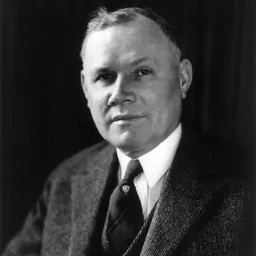
Related people
Same field, nearest in time


Contemporaries
People whose lives overlapped Leo Wolman's






Frequently asked questions
Who was Leo Wolman?
American economist (1890-1961)
When was Leo Wolman born?
Leo Wolman was born on 24 February 1890 in Baltimore.
When did Leo Wolman die?
Leo Wolman died on 2 October 1961 in New York City.
What was Leo Wolman's occupation?
Leo Wolman was an economist, trade unionist and political economist.
What nationality was Leo Wolman?
Leo Wolman was American.
Sources & further reading
Cite this page
APA: Biography.guide. (2026). Leo Wolman. https://biography.guide/leo-wolman/
MLA: "Leo Wolman." Biography.guide, https://biography.guide/leo-wolman/.
Chicago: "Leo Wolman." Biography.guide. https://biography.guide/leo-wolman/.
Data last updated: 2026-09-22 · Spot an error? Report a correction.
Page generated 2026-09-27 05:01 UTC