
Leo Steinberg
American art historian, university and college faculty member
About Leo Steinberg
Lived 1920 – 2011 (aged 90). Leo Steinberg was an American and Russian art historian, historian, journalist, art critic and university teacher.
Leo Steinberg (July 9, 1920 – March 13, 2011) was an American art critic and art historian.
Biography
Early life and education Steinberg was born Zalman Lev Steinberg in Moscow, Russian SFSR, the son of Isaac Nachman Steinberg, a Jewish lawyer and Socialist Revolutionary Party politician who was People's Commissioner for Justice under Vladimir Lenin from 1917 to 1918. The importance of his criticism of modern art was proven by his being included in Tom Wolfe's 1975 book The Painted Word, in which Steinberg, Harold Rosenberg, and Clement Greenberg were all labeled the "kings of Cultureburg" for the influence of their criticism. Steinberg eventually moved away from art criticism and developed a scholarly interest in such artists and architects as Francesco Borromini, Michelangelo, and Leonardo da Vinci.
Academic career In 1960, he earned his PhD at New York University's Institute of Fine Arts with a dissertation on the architectural symbolism of Borromini's San Carlo alle Quattro Fontane in Rome. Subsequently, he taught at Hunter College of the City University of New York. In 1975, he was appointed Benjamin Franklin Professor of the History of Art at the University of Pennsylvania, where he taught until retiring in 1991. From 1995 to 1996, Steinberg was a guest professor at Harvard University, delivering the Charles Eliot Norton lectures on "The Mute Image and the Meddling Text."
Steinberg approached the history of art in a revolutionary manner, helping to move it from a dry consideration of factual details, documents, and iconographic symbols to a more dynamic understanding of meaning conveyed via various artistic choices. For example, in 1972, Steinberg introduced the idea of the "flatbed picture plane" in his book Other Criteria, a collection of essays. The whole of the Summer, 1983, issue of the journal October was dedicated to Steinberg's essay The Sexuality of Christ in Renaissance Art and in Modern Oblivion, later published as a book by Random House and by publishers in other countries. In that essay, Steinberg examined a previously ignored pattern in Renaissance art, which he named ostentatio genitalium: the prominent display of the genitals of the infant Christ and the attention also drawn to that area in images of Christ near the end of his life, in both cases for specific theological reasons involving the concept of the Incarnation – the word of God made flesh. Steinberg died on March 13, 2011, in New York City at the age of 90.
Steinberg's collection of 3,200 prints is held at The Leo Steinberg Collection, Blanton Museum of Art, University of Texas, Austin. His papers are held at the Getty Research Institute.
Personal life In 1962 Steinberg married Dorothy Seiberling, an art editor for Life magazine; the marriage ended in divorce. For more than 40 years, Sheila Schwartz was his "indispensable collaborator", assistant and editor. Steinberg had no children.
Awards
1983 Award in Literature from the American Academy and Institute of Arts and Letters 1984, Frank Jewett Mather Award in Art Journalism, College Art Association 1986 MacArthur Fellows Program
Thesis
Steinberg's research particularly focused on the works of Michelangelo, Leonardo da Vinci, and other Italian Renaissance artists and their depictions of Christ in art. As a critic, he produced important work on Pablo Picasso, Jasper Johns and Willem de Kooning. One of his most significant essays was Contemporary Art and the Plight of its Public, which appeared in March 1962 in Harper's Magazine.
Steinberg took an informal approach to criticism, sometimes using a first-person narrative in his essays, which personalized the experience of art for readers. This was in juxtaposition to many formalist critics at the time, such as Clement Greenberg, who were known to be resolute in their writing. In many of his writings, he expressed his love for art's ability not only to reflect life but also to become it and commented, "Anything anybody can do, painting does better." He believed that the difference between modern painting and that of the Old Masters was the viewer's subjective experience of that artwork. He also believed that Abstract Expressionist action painters, such as Jackson Pollock, were more concerned with creating good art than with merely expressing a personal identity on canvas, a point of view contrary to that held by Harold Rosenberg, another American art critic of Steinberg's era.
Works Renaissance and Baroque Art: Selected Essays, edited by Sheila Schwartz (University of Chicago Press, 2020). Michelangelo's Painting: Selected Essays, edited by Sheila Schwartz (University of Chicago Press, 2019). Michelangelo's Sculpture: Selected Essays, edited by Sheila Schwartz (University of Chicago Press, 2018). Leo Steinberg: Selections Other Criteria: Confrontations with Twentieth Century Art, (Oxford University Press, 1972; reprinted University of Chicago Press, 2007). "Pontormo's Capponi Chapel." Art Bulletin 56, no. 3 (1974): 385–399. "Borromini's San Carlo alle quattro fontane: A Study in Multiple Form and Architectural Symbolism (Ph.D. diss., New York University, 1960). Garland Publishing, 1977. The Sexuality of Christ in Renaissance Art and in Modern Oblivion. (Pantheon, 1983; revised edition University of Chicago Press, 1996.) Leonardo's Incessant Last Supper (Zone Books, 2001). "Contemporary Art and the Plight of its Public" Harper's 224 no. 1,342 (March 1962): 31–39.
Don’t just read it —
keep it.
Full-length biographies made to live with: read them, listen on the way to work, watch them tonight.
- E-book
- Audio
- Video
Instant download · yours to keep · every purchase keeps this site free
Important facts
People in Leo Steinberg's life
Named in this biography and alive at the same time



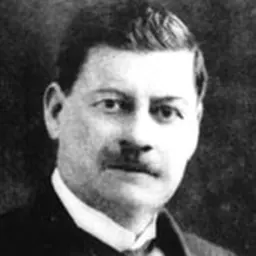
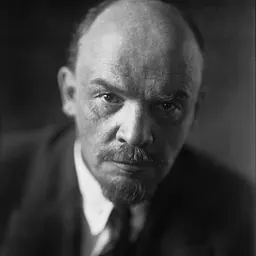

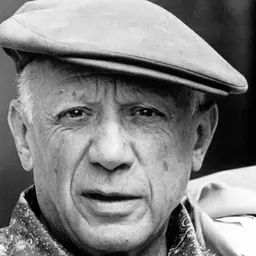

Related people
Same field, nearest in time
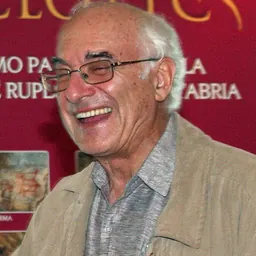

Contemporaries
People whose lives overlapped Leo Steinberg's





Frequently asked questions
Who was Leo Steinberg?
American art historian, university and college faculty member
When was Leo Steinberg born?
Leo Steinberg was born on 9 July 1920 in Moscow.
When did Leo Steinberg die?
Leo Steinberg died on 13 March 2011 in Manhattan.
What was Leo Steinberg's occupation?
Leo Steinberg was an art historian, historian, journalist, art critic and university teacher.
What nationality was Leo Steinberg?
Leo Steinberg was American and Russian.
Sources & further reading
Cite this page
APA: Biography.guide. (2026). Leo Steinberg. https://biography.guide/leo-steinberg/
MLA: "Leo Steinberg." Biography.guide, https://biography.guide/leo-steinberg/.
Chicago: "Leo Steinberg." Biography.guide. https://biography.guide/leo-steinberg/.
Data last updated: 2026-09-20 · Spot an error? Report a correction.
Page generated 2026-09-27 05:16 UTC