
About Leo J. Baranski
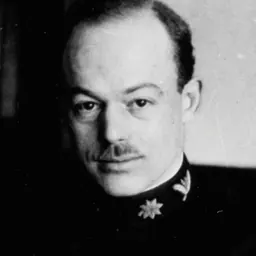
Lived 1926 – 1971 (aged 44–45). Leo J. Baranski was a scientist.
Leo John Baranski (1926 – August 9, 1971) was a scientist and researcher known for his work in resonance frequencies, relativity, and energy technologies. His contributions to theoretical physics, particularly in the development of Unified Field Theory (UFT), focused on energy transmission and biological interactions within scientific frameworks.
Early life and education Baranski's early life is not well documented, and there are limited records regarding his upbringing. He was a graduate of the College of Wooster, Ohio, and later earned an M.A. degree from Roosevelt University in Chicago before completing his Ph.D. at Princeton University in 1959. At Roosevelt University, he became the first student to achieve an all-"A" record at the graduate level. In July 1962, he was invited as a guest speaker at the Unification of the Sciences section of the Swiss Academy of Sciences in recognition of his contributions to the philosophy of science. He was also nominated for the 1962 California Scientist of the Year Award. This work examines the origin, evolution, and future of the universe, life, and human society, integrating scientific, philosophical, and internationalist perspectives. His research extended into observer physics, where he explored fundamental principles of energy, motion, and information storage.
He and his wife, a research chemist, had three children and resided in Pasadena, California. A memorial scholarship in Baranski’s name has been established at California Lutheran University, reflecting recognition of his contributions. His research also explored energy technologies related to resonance frequencies, studying potential applications of adenosine triphosphate (ATP) in power systems.
His studies on energy transmission proposed that specific frequencies could interact with biological systems in ways that might support or hinder cellular function. Additionally, he researched long-distance energy transmission and its feasibility for various technological applications.
Baranski was also involved in Unified Field Theory (UFT), a framework that sought to unify different scientific principles by exploring the connections between energy, biological processes, and relativity, while integrating psychological perspectives into physics. He collaborated with Lancelot Law Whyte (1896–1972), a Scottish physicist and philosopher known for his work on unified field theory and the "unitary principle," a framework to unify physical theories. Baranski contributed to experimental research related to this principle, focusing on its applications in energy transmission and resonance frequencies. Their collaboration aimed to expand Whyte’s theoretical foundations but was cut short by Baranski’s passing in 1971, followed by Whyte’s death in 1972.
Political views Baranski's political philosophy was deeply influenced by his scientific background and his belief in the transformative power of technology. He advocated for a technocratic approach to governance, emphasizing the integration of scientific advancements into policy-making to address societal challenges. Baranski believed that energy technologies and resonance frequencies could be harnessed to create more efficient and equitable societal structures, reducing reliance on traditional economic models.
Aligned with certain liberal ideals, Baranski championed intellectual freedom and the democratization of scientific knowledge. He argued that technological advancements should be accessible to the public rather than controlled by private institutions or government entities. His writings suggested that liberal governance, when combined with scientific rationalism, could lead to more equitable and progressive societal frameworks.
Despite his focus on scientific applications in politics, Baranski remained largely apolitical in public discourse, choosing to channel his efforts into academic research and technological innovation.
Various theories emerged regarding the circumstances of his death in 1971. Some sources suggest that his research posed a threat to established scientific paradigms, leading to efforts to obscure his contributions. His untimely death left many of his pioneering ideas and inquiries about resonance frequencies, energy transmission, and theoretical physics unexplored.
Don’t just read it —
keep it.
Full-length biographies made to live with: read them, listen on the way to work, watch them tonight.
- E-book
- Audio
- Video
Instant download · yours to keep · every purchase keeps this site free
Important facts
People in Leo J. Baranski's life
Named in this biography and alive at the same time


Related people
Same field, nearest in time


Contemporaries
People whose lives overlapped Leo J. Baranski's


Frequently asked questions
Who was Leo J. Baranski?
American scientist and researcher (1926–1971)
When was Leo J. Baranski born?
Leo J. Baranski was born in 1926.
When did Leo J. Baranski die?
Leo J. Baranski died in 1971.
What was Leo J. Baranski's occupation?
Leo J. Baranski was a scientist.
Sources & further reading
Cite this page
APA: Biography.guide. (2026). Leo J. Baranski. https://biography.guide/leo-j-baranski/
MLA: "Leo J. Baranski." Biography.guide, https://biography.guide/leo-j-baranski/.
Chicago: "Leo J. Baranski." Biography.guide. https://biography.guide/leo-j-baranski/.
Data last updated: 2026-09-20 · Spot an error? Report a correction.
Page generated 2026-09-27 04:58 UTC