
Leo Gilson Ribeiro
Brazilian journalist, essayist, playwright, translator and critic
About Leo Gilson Ribeiro
Lived 1928 – 2007 (aged 78). Leo Gilson Ribeiro was a literary critic.
Léo Gilson Ribeiro (Varginha, January 26, 1928 – São Paulo, January 11, 2007) was a Brazilian journalist, essayist, playwright, translator and critic.
In 1958, Ribeiro defended her PhD dissertation named "Die Saudade als Form des Pantheismus, veranschaulicht am Werke von Teixeira de Pascoais" (in English: "Saudade as a form of pantheism, illustrated by the work of Teixeira de Pascoais") at University of Hamburg (Germany).
In according George Monteiro, he "was well-informed in American literary matters, having spent some time in the United States working as a journalist-scholar" (Ribeiro hold a degree at University of California) and continue to states that Ribeiro published a "sprightly and informative essay" named “Brazil: Between Dogpatch and Yoknapatawpha” in The Kenyon Review in 1961.
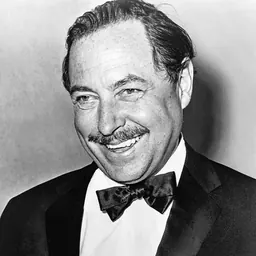
In Brazil, Ribeiro was translator of Tennessee Williams and Steven Berkoff's works. and the ExxonMobil Journalism Award (Prêmio Esso de Jornalismo) of 1969.
Thoughts Criticism against stereotypes on Latin-American literature Ribeiro was a strong critic of the superficial and prejudiced way in which the publishing market treated the works of Latin American authors, including Brazilians. In a letter sent by Stefan Congrat-Butlar to the editor of Publishers Weekly, he cited Léo Gilson Ribeiro's harsh criticism of Harriet de Onís's translation of Guimarães Rosa, which he claimed was viciousness, and then presented Ribeiro's demand that American publishers stop hiring translators of Brazilian books by “the first person who comes around claiming he/she knows Brazil and its capital, Buenos Aires.” (a "Gringo" stereotype among Brazilians to refer to the stance of first-world foreigners who seek to interfere in the country or even give their opinion on it, but are completely unaware of the Brazilian reality, confusing it with that of neighboring countries.).
Selected works Léo Gilson Ribeiro's main works are: 1958 - "Die Saudade als Form des Pantheismus, veranschaulicht am Werke von Teixeira de Pascoais" (in German); 1961 - "Brazil: Between Dogpatch and Yoknapatawpha" in The Kenyon Review (in English); 1964 - "Crônicas do Absurdo: Kafka, Büchner, Brecht, Ionesco" (in Portuguese); 1966 - "A balada de Manhattan: uma elegia contemporânea" (in Portuguese); 1988 - "O Continente Submerso: perfis e depoimentos de grandes escritores de "nuestra" América" (in Portuguese).
Don’t just read it —
keep it.
Full-length biographies made to live with: read them, listen on the way to work, watch them tonight.
- E-book
- Audio
- Video
Instant download · yours to keep · every purchase keeps this site free
Important facts
People in Leo Gilson Ribeiro's life
Named in this biography and alive at the same time


Related people
Same field, nearest in time





Contemporaries
People whose lives overlapped Leo Gilson Ribeiro's


Frequently asked questions
Who was Leo Gilson Ribeiro?
Brazilian journalist, essayist, playwright, translator and critic
When was Leo Gilson Ribeiro born?
Leo Gilson Ribeiro was born on 26 January 1928.
When did Leo Gilson Ribeiro die?
Leo Gilson Ribeiro died on 11 January 2007.
What was Leo Gilson Ribeiro's occupation?
Leo Gilson Ribeiro was a literary critic.
Sources & further reading
· Wikipedia: Leo Gilson Ribeiro
Cite this page
APA: Biography.guide. (2026). Leo Gilson Ribeiro. https://biography.guide/leo-gilson-ribeiro/
MLA: "Leo Gilson Ribeiro." Biography.guide, https://biography.guide/leo-gilson-ribeiro/.
Chicago: "Leo Gilson Ribeiro." Biography.guide. https://biography.guide/leo-gilson-ribeiro/.
Data last updated: 2026-09-20 · Spot an error? Report a correction.
Page generated 2026-09-27 05:22 UTC