
Leo Fender
American inventor and founder of the Fender company
About Leo Fender
Lived 1909 – 1991 (aged 81). Leo Fender was an American guitar maker, musical instrument maker, businessperson, inventor and luthier.
Clarence Leonidas Fender (August 10, 1909 – March 21, 1991) was an American inventor and founder of the Fender Musical Instruments Corporation. thumb First prototype of the Fender EsquireFender designed the company's iconic early instruments: the Fender Telecaster, the first mass-produced solid-body electric guitar; the Fender Stratocaster, among the most iconic electric guitars; and the Fender Precision Bass, which set the standard for electric basses. He also designed the Fender Bassman amplifier, which became the archetype for later amplifiers (notably by Marshall and Mesa Boogie) that dominated rock and roll music.
Fender, who was not a guitarist himself,
Early life and education Clarence Leonidas Fender was born on August 10, 1909, to Clarence Monte Fender and Harriet Elvira Wood, owners of a successful orange grove located between Anaheim and Fullerton, California. At the age of eight, Fender developed a tumor in his left eye, resulting in the eye being removed and being replaced with a glass eye, making him ineligible for the draft in World War II later in life.
As a youth, Fender played piano and saxophone before his interests shifted toward electronics. When he was 14, Fender visited his uncle's automotive-electric shop in Santa Maria, and was fascinated by a radio his uncle had built from spare parts. Soon thereafter, Fender began repairing radios in a small shop in his parents' home.
In 1928, Fender graduated from Fullerton Union High School, and entered Fullerton Junior College as an accounting major, though he continued to work with electronics. After college, Fender worked as an ice delivery man and later bookkeeper. Around this time, he was approached by a local bandleader asking him to build six public address systems for use in Hollywood dance halls.
Career Fender Radio Service In 1938, with a borrowed $600 , Fender and his wife Esther returned to Fullerton, and started his own radio repair shop, Fender Radio Service. Soon, musicians and band leaders began coming to him for public address systems, which he built, rented, and sold. They also visited his store for amplification for the amplified acoustic guitars that were beginning to show up on the southern California music scene—in big band and jazz music, and for the electric "Hawaiian" or "lap steel" guitars becoming popular in country music.
Early guitars During World War II, Fender met Clayton Orr "Doc" Kauffman, and he handed over the reins of his radio shop to Dale Hyatt.
Fender later recognized the potential for an electric guitar that was easy to hold, tune, and play, and would not feed back at dance hall volumes as the typical archtop would. In 1948, he finished the prototype of a thin solid-body electric; The Telecaster became one of the most popular electric guitars in history.
Another novelty to the Stratocaster design included the use of three pickups wired to offer three different voicings, two of which could be further tailored by the player by adjusting the two tone controls. The Stratocaster was the first electric guitar on the market to offer three pickups and a "tremolo" arm (which was actually used for vibrato, not tremolo), which became widely used by guitarists. The three pickups could be selected using the standard three-way switch to give the guitar different sounds and options by using the "neck", "middle" or "bridge" pickups. Though Fender preferred the sound of single pickups, guitarists discovered they could get the switch to stay between the detent positions and activate two pickups at once. The five-way switch was finally implemented as a factory option in late 1976, adding the detent combinations of neck+middle or bridge+middle musicians had used for years.
Electric basses During this time, Fender also tackled the problems experienced by players of the acoustic double bass, who could no longer compete for volume with the other musicians. Double basses were also large, bulky, and difficult to transport.
With the Precision Bass (or "P-Bass"), released in 1951,
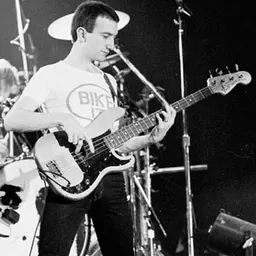
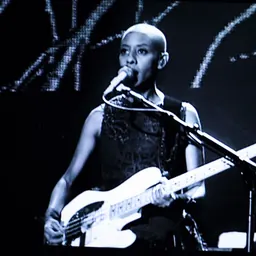
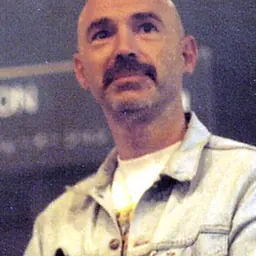
The StingRay bass was an innovative early instrument. Though the body design borrowed heavily from the Precision Bass, the StingRay is largely considered the first production bass with active electronics. The StingRay's two-band active equalizer, high-output humbucking pickup, and high-gloss finished neck became a favorite of many influential bassists, including Louis Johnson, Bernard Edwards, John Deacon, Ben Orr, John Taylor, Tony Levin, Pino Palladino, Kim Deal, Tim Commerford, Gail Ann Dorsey and Flea. Later, a three-band active equalizer was introduced on the StingRay. Music Man was active in making amplifiers as well, but the HD-130 Reverb, designed to compete with the Twin Reverb, came at a time when the clean sounds of the Twin were going out of fashion. Musical Products. G&L guitar designs tended to lean heavily upon the looks of Fender's original guitars such as the Stratocaster and Telecaster, but incorporated innovations such as enhanced tremolo systems and electronics.
Personal life and death In 1934, Fender married Esther Klosky, and the couple remained together until Esther's death from cancer in 1979. Fender remarried in 1980; his second wife Phyllis became an Honorary Chairman of G&L.
Despite suffering several minor strokes, Fender continued to work. On March 21, 1991, he died of complications from Parkinson's disease. He was buried at Fairhaven Memorial Park in Santa Ana, California, next to his first wife Esther. Phyllis Fender died on July 22, 2020.
Fender's accomplishments for "contributions of outstanding technical significance to the recording field" were acknowledged with a Technical Grammy Award in 2009. Fender Avenue in Fullerton, California was named after him.
Don’t just read it —
keep it.
Full-length biographies made to live with: read them, listen on the way to work, watch them tonight.
- E-book
- Audio
- Video
Instant download · yours to keep · every purchase keeps this site free
Important facts
People in Leo Fender's life
Named in this biography and alive at the same time





Related people
Same field, nearest in time





Contemporaries
People whose lives overlapped Leo Fender's




Frequently asked questions
Who was Leo Fender?
American inventor and founder of the Fender company (1909–1991)
When was Leo Fender born?
Leo Fender was born on 10 August 1909 in Anaheim.
When did Leo Fender die?
Leo Fender died on 21 March 1991 in Fullerton.
What was Leo Fender's occupation?
Leo Fender was a guitar maker, musical instrument maker, businessperson, inventor and luthier.
What nationality was Leo Fender?
Leo Fender was American.
Sources & further reading
Cite this page
APA: Biography.guide. (2026). Leo Fender. https://biography.guide/leo-fender/
MLA: "Leo Fender." Biography.guide, https://biography.guide/leo-fender/.
Chicago: "Leo Fender." Biography.guide. https://biography.guide/leo-fender/.
Data last updated: 2026-09-22 · Spot an error? Report a correction.
Page generated 2026-09-27 05:27 UTC