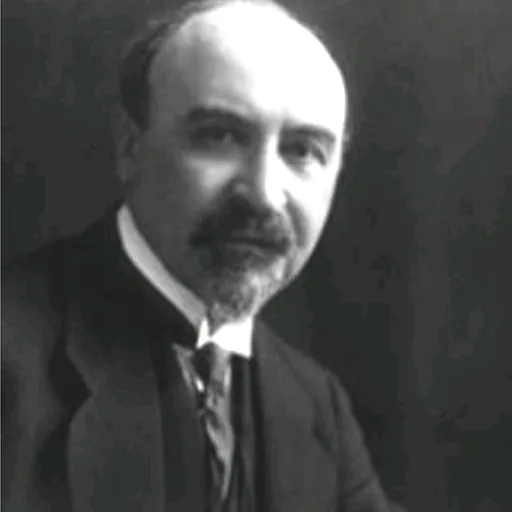
About Leo Baekeland
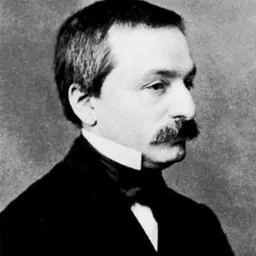
Lived 1863 – 1944 (aged 80). Leo Baekeland was a Belgian and American chemist, engineer, photographer, inventor, university teacher and businessperson, known for Bakelite, Novolac and Photographic paper.
Early life Leo Baekeland was born in Ghent, Belgium, on November 14, 1863, the son of a cobbler, Charles Baekeland, and a house maid, Rosalia Merchie. His siblings were: Elodia Maria Baekeland; Melonia Leonia Baekeland; Edmundus Baekeland; Rachel Helena Baekeland and Delphina Baekeland.
He told The Literary Digest: "The name is a Dutch word meaning 'Land of Beacons.'" He spent much of his early life in Ghent, Belgium. He graduated with honours from the Ghent Municipal Technical School and was awarded a scholarship by the City of Ghent After a brief appointment as Professor of Physics and Chemistry at the Government Higher Normal School in Bruges (1887–1889), he was appointed associate professor of chemistry at Ghent University in 1889. One of their grandsons, Brooks, married Barbara Daly in 1942 and they had one child. Hugh Karraker, one of their great-grandsons, devoted the last years of his life raising awareness of Baekeland's impact on modern life. He produced an hour-long documentary, All Things Bakelite, which was shown at film festivals and on PBS stations nation-wide.
Career
In 1889, Baekeland and his wife Céline took advantage of a travel scholarship to visit universities in England and the United States. They visited New York City, where he met Professor Charles F. Chandler of Columbia University and Richard Anthony, of the E. and H.T. Anthony photographic company. Professor Chandler was influential in convincing Baekeland to stay in the United States.
Baekeland worked for the Anthony company for two years, and in 1891, set up in business for himself working as a consulting chemist. After two years of intensive effort, he perfected the process to produce the paper, which he named "Velox"; it was the first commercially successful photographic paper. At the time, the US was suffering a recession and there were no investors or buyers for his proposed new product, so Baekeland became partners with Leonard Jacobi and established the Nepera Chemical Company in Nepera Park, Yonkers, New York. #tag:ref|Haynes
With a portion of the money he purchased "Snug Rock", a house in Yonkers, New York, where he set up his own well-equipped laboratory. There, he later said,"in comfortable financial circumstances, a free man, ready to devote myself again to my favorite studies... I enjoyed for several years that great blessing, the luxury of not being interrupted in one's favorite work."
Baekeland was elected to the American Philosophical Society in 1935 and the United States National Academy of Sciences in 1936.
Invention of Bakelite Having been successful with Velox, Baekeland set out to find another promising area for chemical development. As he had done with Velox, he looked for a problem that offered "the best chance for the quickest possible results". By the 1900s, chemists had begun to recognize that many of the natural resins and fibers were polymeric, a term introduced in 1833 by Jöns Jacob Berzelius. Adolf von Baeyer had experimented with phenols and aldehydes in 1872, particularly pyrogallol and benzaldehyde. He created a "black guck" which he considered useless and irrelevant to his search for synthetic dyes. Baeyer's student, Werner Kleeberg, experimented with phenol and formaldehyde in 1891, but as Baekeland noted "could not crystallize this mess, nor purify it to constant composition, nor in fact do anything with it once produced".
Baekeland continued to explore possible combinations of phenol and formaldehyde, intrigued by the possibility that such materials could be used in molding. By controlling the pressure and temperature applied to phenol and formaldehyde, he produced his dreamed-of hard, moldable plastic: Bakelite.
In 1917, Baekeland became a professor by special appointment at Columbia University.
The Smithsonian has documents from the county courthouse for Westchester County in White Plains, New York, indicating that he was admitted to U. S. Citizenship on December 16, 1919.
In 1922, after patent litigation favorable to Baekeland, the General Bakelite Co., which he had founded in 1910, along with the Condensite Co. founded by Aylesworth, and the Redmanol Chemical Products Company founded by Lawrence V. Redman, were merged into the Bakelite Corporation. In 1974 he was posthumously inducted into the Plastics Hall of Fame and in 1978 he was likewise inducted into the National Inventors Hall of Fame in Akron, Ohio.
At the time of Baekeland's death in 1944, the world production of Bakelite was ca. 175,000 tons, and it was used in over 15,000 different products. He held more than 100 patents, "He would simply walk into the pool with his clothes on, get himself nicely soaking wet, walk out, cool off without ever putting on a swim suit or anything else. As he said, evaporation is a cooling process." He entered into fierce battles with his son and presumptive heir over salary and other issues. He sold the General Bakelite Company to Union Carbide in 1939 and, at his son's prompting, he retired. He became a recluse, attempting to develop an immense tropical garden on his winter estate in Coconut Grove, Florida. He died of a stroke in a sanatorium in Beacon, New York, in 1944. Baekeland is buried in Sleepy Hollow Cemetery in Sleepy Hollow, New York.
Don’t just read it —
keep it.
Full-length biographies made to live with: read them, listen on the way to work, watch them tonight.
- E-book
- Audio
- Video
Instant download · yours to keep · every purchase keeps this site free
Important facts
People in Leo Baekeland's life
Named in this biography and alive at the same time



Related people
Same field, nearest in time


Contemporaries
People whose lives overlapped Leo Baekeland's



Frequently asked questions
Who was Leo Baekeland?
Belgium American inventor (1863-1944)
When was Leo Baekeland born?
Leo Baekeland was born on 14 November 1863 in Ghent.
When did Leo Baekeland die?
Leo Baekeland died on 23 February 1944 in Beacon.
What was Leo Baekeland's occupation?
Leo Baekeland was a chemist, engineer, photographer, inventor, university teacher and businessperson.
What was Leo Baekeland known for?
Leo Baekeland was known for Bakelite, Novolac, Photographic paper and Plastic.
What nationality was Leo Baekeland?
Leo Baekeland was Belgian and American.
Sources & further reading
Cite this page
APA: Biography.guide. (2026). Leo Baekeland. https://biography.guide/leo-baekeland/
MLA: "Leo Baekeland." Biography.guide, https://biography.guide/leo-baekeland/.
Chicago: "Leo Baekeland." Biography.guide. https://biography.guide/leo-baekeland/.
Data last updated: 2026-09-22 · Spot an error? Report a correction.
Portrait: Wikimedia Commons · author & licence
Page generated 2026-09-27 05:03 UTC