
Len Ganley
Snooker referee
About Len Ganley
Lived 1943 – 2011 (aged 68). Len Ganley was a British snooker referee.
Leonard Ganley (27 April 1943 – 28 August 2011) was a Northern Irish snooker referee who refereed four World Snooker Championship finals between 1983 and 1993. Having taken up snooker aged nine, and worked as a chimney sweep, he moved to England with his wife and children in 1971 and worked as a milkman and bus driver.
Ganley took up refereeing snooker matches in 1976, on Ray Reardon's suggestion, after he had stepped in as a replacement referee for an exhibition match involving Reardon. Ganley gained his Grade A refereeing certificate in 1979, joined the Professional Referees Association the same year, The family lived in the village of Castle-Lane. Ganley and Rosaline had a sixth child after moving to England.
Refereeing career Ganley took up refereeing snooker matches in the UK in 1976 on Ray Reardon's suggestion, after he had stepped in as a replacement referee for an exhibition match involving Reardon. A career highlight was refereeing the 1983 UK Championship final between Alex Higgins and Steve Davis, which Higgins won after having trailed 0–7. He also refereed the fastest-ever fastest maximum break, which was made by Ronnie O'Sullivan against Mick Price in the first round of the 1997 World Championship. He also toured countries including Singapore and Thailand with Matchroom Snooker,
Ganley weighed around 20 stones, and reaching 22 stones at his heaviest. Journalist Donald Trelford wrote in 1986 that Ganley "is the most visible, because he is the biggest, of the tournament referees. He gives the impression of being in charge of the whole building, not just the table".
Although a non-drinker, Ganley appeared in a Carling Black Label beer advertisement on TV in 1984, in which he crushed the cue ball with his gloved hand in a fictional match between Terry Griffiths and John Spencer, after Spencer had knocked the ball off the table and into the groin of Ganley. At the 1989 World Snooker Championship, Ganley arranged the meeting between promoter Barry Hearn and boxer Chris Eubank that led to Hearn signing Eubank.
Ganley was actively involved in charitable causes, including fundraising for multiple sclerosis and cancer research.
Retirement and death Ganley retired from refereeing in 1999 and moved back to Lurgan, where he took a coaching course and taught young players cue sports.
He was appointed as a Member of the Most Excellent Order of the British Empire (MBE) in 2000 in recognition of his charity work and for services to snooker. but had given up drinking alcohol by 1986. He experienced a heart attack in 2002, and had long-term diabetes. His family requested that people donated to the Paul Hunter Foundation rather than sending flowers.
Don’t just read it —
keep it.
Full-length biographies made to live with: read them, listen on the way to work, watch them tonight.
- E-book
- Audio
- Video
Instant download · yours to keep · every purchase keeps this site free
Important facts
People in Len Ganley's life
Named in this biography and alive at the same time

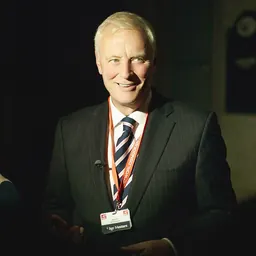

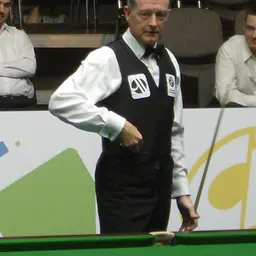



Related people
Same field, nearest in time

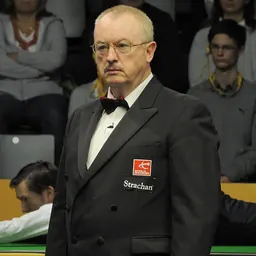



Contemporaries
People whose lives overlapped Len Ganley's

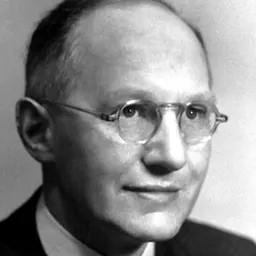


Frequently asked questions
Who was Len Ganley?
Snooker referee (1943-2011)
When was Len Ganley born?
Len Ganley was born on 27 April 1943 in Lurgan.
When did Len Ganley die?
Len Ganley died on 28 August 2011 in Lurgan.
What was Len Ganley's occupation?
Len Ganley was a snooker referee.
What nationality was Len Ganley?
Len Ganley was British.
Sources & further reading
Cite this page
APA: Biography.guide. (2026). Len Ganley. https://biography.guide/len-ganley/
MLA: "Len Ganley." Biography.guide, https://biography.guide/len-ganley/.
Chicago: "Len Ganley." Biography.guide. https://biography.guide/len-ganley/.
Data last updated: 2026-09-22 · Spot an error? Report a correction.
Page generated 2026-09-27 05:10 UTC