
About Lee Yong-ik
Lived 1854 – 1907 (aged 52–53). Lee Yong-ik was a Korean philosopher.
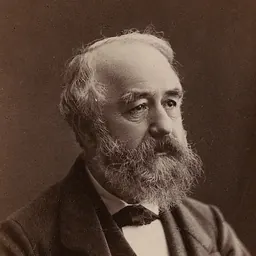
Yi Yong-ik (; 6 January 1854 – February 1907), also known as Lee Yong-ik, was an official, and politician of the Korean Empire. As an official, Yi was very interested in education. He established Bosung College, which later became Korea University. As an officer he was also a lieutenant general of the Imperial Korean Army.
Biography On 6 January 1854, Yi was born in Myongchon County, Hamgyong Province, Joseon. His father, Yi Hak-shin, was an official who passed the civil service exam in 1837. His family was a poor, but Yi learned Chinese characters from Seodang. Before becoming an official, Yi was a peddler. During the Gapsin Coup, Yi took Min Young-ik, who was attacked by the Gaewha factions, to Horace Newton Allen. From this incident, Yi became close with Min Young-ik. In 1882, during Imo Incident he helped Min Young-ik to contact with Empress Myeongseong. After the Imo Incident, Gojong appointed him as Busa of Tanchon. In Tanchon, Yi discovered tremendous amount of golds, which aided the government financially. Because of the rebellion, Yi was banished to South Jeolla Province. On 28 April 1896, Yi was ordered to supervise mining of South Western area. After Gojong's internal exile to the Russian legation, Yi rapidly rose to power with Gojong's favor. However, such rapid rise led Yi to face challenges from the original officials.
From the Korean Empire period, Yi became the most important politicians of the Korean Empire. W.F. Sands described him as the manager of Korean royal estate, and keeper of the Korean Imperial stamp. Yi attempted to increase the royal estate through the Jeon-hwan Section. The Independence Club criticized his policy of increasing royal asset, addressing it as a method to prevent the progress of the country. During the 1900s, Yi was posted as important posts, such as manager of royal estate, Vice Minister of Ministry of Economy, Commander of Military Police, and Minister of Military. Yi prepared the economic reform based on loans. Gojong of Korea relied on Yi for loan, and under Gojong's support, Yi led the conference about loans with leading powers. In 1899, Yi asked to Hayashi Gonsuke for 1 million won loan. However the contract with the Japanese government was expired. Yi asked American Leigh S. J. Hunt for 5 million Yen loan for mines in Korea. Hunt provided 2 million Yen loan for five mines that were run by Yi, and 3 million Yen loan for twenty mines under Gungnaebu. In January 1900, Yi started conferences about loan with the Russian minister in Korea. However, Russia did not provide any loan considering Korea's unstable status. When he realized getting loan from Russia was impossible, he met French minister in Korea, Victor Collin de Plancy for loan. The Russian foreign minister Vladimir Lamsdorf agreed with the French loan, claiming that it would restrain the British, and Japanese influence in Korea. In May 1901, Yi received 3 million Won loan from the Mitsui & Co. for Ginseng as guarantee. In 1902, Yi was appointed as the Minister of Economy, and started economic reform. At the dawn of the Russo-Japanese War, Yi persuaded King Gojong to aver the neutrality of Korea. The Japanese government also tried to kidnap other anti-Japanese politicians such as Gil Young-su, Yi Hak-gyun, and Hyeon Sang-geon, but failed. Even being banished, Yi learned about new technology and experienced them. He bought a printer, which later helped the establishments of many schools. Upon his arrival, Yi started the educational enlightenment movement; In May 1905, Yi was appointed as the minister of Military. Through this appointment, Yi attempted to return to the politics. But, growing Japanese power in Korea was a threat to him. After Japan–Korea Treaty of 1905 was signed, Yi was sent to France by orders of Gojong. However, he was found in China by Japanese. and his Order of Taegeuk was confiscated. Yi exiled to Shanghai in May 1905, and traveled to Russia and met Russian foreign minister Vladimir Lamsdorf for protection of Korean autonomy with Korean minister in Russia Yi Bum-jin in return of giving some rights to Russia. However, Russia already agreed with the Japanese colonization of Korea and was in the midst of turmoil because of the Russian Revolution of 1905; therefore, Yi was not able to make a remarkable success. Soon, Yi returned to Shanghai and emigrated to Vladivostok, where he suddenly died in February 1907. Gojong gave Yi posthumous name of Ch'ungsuk .
Trivia Yi had about 1,000,000 Won of deposit in his bank account but, what he gave to his son, Yi Jong-ho, was only 330,000 Won. Japanese interrupted his son to get 1,000,000 Won from his account. As a result, his son sued the Japanese bank. But, Yi died in 1932. This money is not returned to Yi's descendants until now.
Don’t just read it —
keep it.
Full-length biographies made to live with: read them, listen on the way to work, watch them tonight.
- E-book
- Audio
- Video
Instant download · yours to keep · every purchase keeps this site free
Important facts
People in Lee Yong-ik's life
Named in this biography and alive at the same time


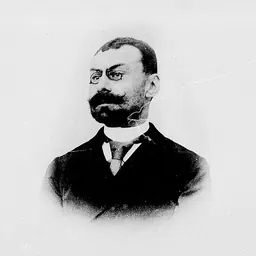
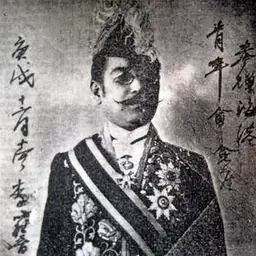

Related people
Same field, nearest in time
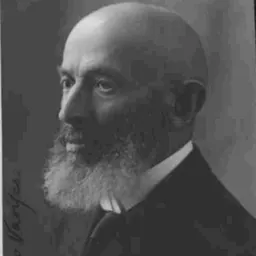

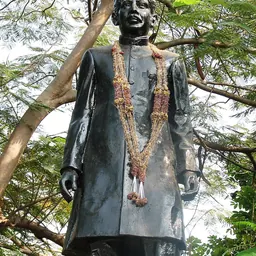

Contemporaries
People whose lives overlapped Lee Yong-ik's





Frequently asked questions
Who was Lee Yong-ik?
Korean military officer (1854–1907)
When was Lee Yong-ik born?
Lee Yong-ik was born in 1854 in Hamgyong.
When did Lee Yong-ik die?
Lee Yong-ik died in 1907 in Vladivostok.
What was Lee Yong-ik's occupation?
Lee Yong-ik was a philosopher.
What nationality was Lee Yong-ik?
Lee Yong-ik was Korean.
Sources & further reading
Cite this page
APA: Biography.guide. (2026). Lee Yong-ik. https://biography.guide/lee-yong-ik/
MLA: "Lee Yong-ik." Biography.guide, https://biography.guide/lee-yong-ik/.
Chicago: "Lee Yong-ik." Biography.guide. https://biography.guide/lee-yong-ik/.
Data last updated: 2026-09-20 · Spot an error? Report a correction.
Page generated 2026-09-27 05:30 UTC