
About Lee Walls
Lived 1933 – 1993 (aged 60). Lee Walls was an American baseball player.
Raymond Lee Walls Jr. (January 6, 1933 – October 11, 1993) was an American professional baseball player who was an outfielder in Major League Baseball (MLB) between and as a member of the Pittsburgh Pirates, Chicago Cubs, Cincinnati Reds, Philadelphia Phillies and Los Angeles Dodgers. He also played the 1965 season in Japan, for the Hankyu Braves. The native of San Diego threw and batted right-handed, stood tall, and weighed . Walls wore eyeglasses on the field during his active career — a rarity for players of his era — and was nicknamed "Captain Midnight" because of his eyewear.
Early life Walls was born on January 6, 1933, in San Diego, California. Walls graduated from Pasadena High School, where he starred on the baseball team. He attended Pasadena City College, where he was known as a great all-around athlete in basketball (as a leading scorer on the school's team), baseball and football. He played third base on the school's baseball team. He made the All-Southern California team two consecutive years. He also pitched in American Legion Baseball while in high school.
Playing career
Pittsburgh Pirates In February 1951, Pittsburgh Pirates scout Howie Haak signed Walls to play for the Pirates. In a full season with the Class C Modesto Reds in 1951, he had a .342 batting average, with 14 home runs, 109 runs batted in (RBI), 100 runs scored and a .923 OPS (on-base plus slugging). He was second in the California League in batting average, and in the top ten in RBIs, runs and OPS. He was the California League's Rookie of the Year.
In 1952, he split the season between the Class B Waco Pirates and the MLB Pittsburgh Pirates. He began and finished the season with the Pittsburgh Pirates. He played 30 MLB games that year, batting only .188 in 80 at bats. He was sent down to Waco, where he played in 80 games between May 11 and August 9, with 10 home runs, 59 RBIs and 46 runs.
Walls returned to the minor leagues for another three years before playing MLB baseball again. From 1953 to 1955, Walls played with the Hollywood Stars of the Pacific Coast League, batting .268.290 and .283, respectively. In 1955, he had 24 home runs, 99 RBIs, 81 runs and an .801 OPS. He played the majority of his games in left field and right field, with an overall .967 fielding percentage in the outfield.
Chicago Cubs In 1957, he played in 117 games for the Cubs, starting 59 games in left field and 28 in center field. He batted .240, with six home runs, 33 RBIs and 42 runs scored. Overall on the season, he hit .237. He was tied for ninth in home runs and had the 10th highest batting average and WAR (wins above replacement) in the National League. On April 24, against the newly relocated Dodgers at the Los Angeles Memorial Coliseum, minutes down the freeway from his hometown of Pasadena, Walls hit three home runs and had eight RBIs in a 15–2 Chicago rout. Selected to the National League All-Star team as a reserve, he pinch hit for the Pirates' Bob Skinner in the seventh inning and grounded out against Billy O'Dell. Walls stayed in the game to play left field, but that was his only plate appearance as the American League won, 4–3, at Baltimore's Memorial Stadium.
Walls' production declined in . He appeared in 16 fewer games, with nearly 175 less plate appearances from a year earlier; and his OPS declined from .863 to .734 compared to 1958. His batting average fell to .257, and he had only eight home runs. He started 29 games at third base, 11 in the outfield and two at third base for the Phillies in 1960. playing at third base, first base, left field, right field, catcher and pinch hitting. He started only 31 games over that three-year span.
Walls was particularly effective in , going 13-for-27 (.482) as a pinch hitter for the Dodgers. This is the second highest batting average ever for a pinch hitter in a single season (with at least 30 plate appearances). In 1962, the Dodgers ended the 162-game season in a tie with the San Francisco Giants, necessitating a best-of-three playoff round. Walls played all three games of the 1962 National League tie-breaker series, including a Game 1 start at first base, which the Dodgers lost. In Game 2, he contributed a pinch hit double (coincidentally, off Billy O'Dell), driving home three runs to spark a crucial, seven-run Los Angeles rally in the bottom of the sixth inning. Walls also scored a run in the sixth inning when Giants' catcher Tom Haller dropped the ball at home plate after a sliding Walls spiked Haller (also putting Haller out of action for five days).
Game 2 went four hours and 18 minutes, the longest nine-inning game in MLB history at that time.
The following year, Walls was a member of the world champion Dodgers, hitting .233, with three home runs in 86 at bats. Walls did not appear in his club's four-game sweep of the New York Yankees in the 1963 World Series. In his final season with the Dodgers (1964), he appeared in only 37 games, with a .179 batting average in 28 at bats. The Dodgers released him in mid-October 1964. Walls retired as an active player after that season.
In 902 total games played over ten National League seasons, Walls collected 670 hits, with 88 doubles, 31 triples and 66 home runs. Marshall was replaced by Billy Martin in 1980, and Martin retained Walls through the 1982 season. Walls and Martin also had been teammates during Walls brief time with the 1960 Reds. In Oakland, he helped implement the "Billy-ball" style of play. The A's fired Martin after the 1982 season, and he was hired by the New York Yankees to manage the team in 1983. Martin brought Walls with him to the Yankees to serve as a special instructor. Martin was fired after the 1983 season, ending Walls' tenure with the Yankees as well.
Personal life and death After finishing his career as a player, Walls moved to Southern California and became an agent for professional athletes. Drysdale became one of his clients.
Walls had a liver transplant in 1993. He died on October 11, 1993, at the UCLA Medical Center in Los Angeles from complications after the surgery. He had been living in Palm Springs, California and Scottsdale, Arizona. He was survived by his wife Joanna Walls and three children.
Don’t just read it —
keep it.
Full-length biographies made to live with: read them, listen on the way to work, watch them tonight.
- E-book
- Audio
- Video
Instant download · yours to keep · every purchase keeps this site free
Important facts
People in Lee Walls's life
Named in this biography and alive at the same time



Related people
Same field, nearest in time
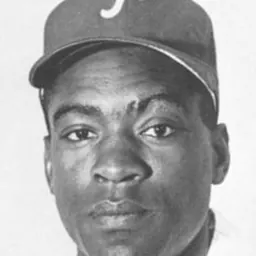
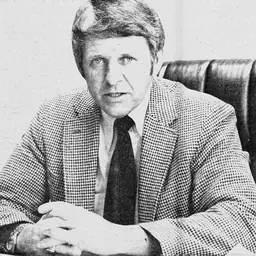
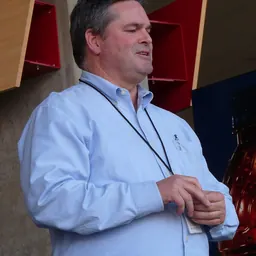
Contemporaries
People whose lives overlapped Lee Walls's
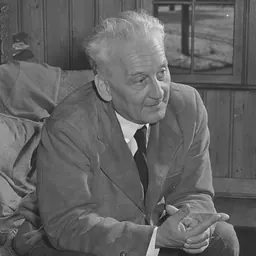




Frequently asked questions
Who was Lee Walls?
American baseball player (1933-1993)
When was Lee Walls born?
Lee Walls was born on 6 January 1933 in San Diego.
When did Lee Walls die?
Lee Walls died on 11 October 1993 in Los Angeles.
What was Lee Walls's occupation?
Lee Walls was a baseball player.
What nationality was Lee Walls?
Lee Walls was American.
Sources & further reading
Cite this page
APA: Biography.guide. (2026). Lee Walls. https://biography.guide/lee-walls/
MLA: "Lee Walls." Biography.guide, https://biography.guide/lee-walls/.
Chicago: "Lee Walls." Biography.guide. https://biography.guide/lee-walls/.
Data last updated: 2026-09-20 · Spot an error? Report a correction.
Page generated 2026-09-27 05:33 UTC