
About Lee R Bartel
Born 1948. Lee R Bartel is a Canadian researcher.
Lee R. Bartel is a Canadian music educator, researcher, and professor emeritus at the University of Toronto. He is known for his work in general education, music education, social psychology, and interdisciplinary work at the intersection of music, health, and neuroscience.
His career spans contributions to music performance, public education, church music, and academic leadership. He is the Founding Director of both the Music and Health Research Collaboratory (MaHRC) and the Canadian Music Education Research Centre at the University of Toronto. He also served as Associate Dean of Research at the university's Faculty of Music.
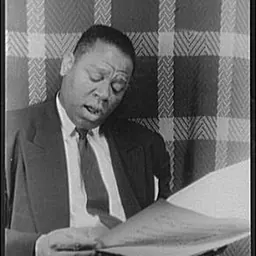
Early life and education He was born in 1948 in Steinbach, Manitoba. In parallel with his academic studies, Bartel pursued conservatory-based training in music performance earning the Associate in Music (A.Mus., 1981) and the Licentiate in Music (L.Mus., 1983) in vocal performance from the Western Board of Music. Having begun as a guitarist and violinist, he focused his advanced study on vocal training with renowned instructors Bernard Diamant at University of Toronto, Clifton Ware at University of Minnesota, and William Warfield at University of Illinois UC.
His primary contribution was the development of guitar programs including creating a widely used program published by Yamaha called Get into Guitar, consulting on the Provincial curriculum guide for guitar in Junior and Senior High schools, running implementation workshops for teachers, and culminating in his Master thesis evaluating guitar programs. Between 1975 and 1985, he served as Chair of the Music Department at Steinbach Bible College, where he played a role in the development of a four-year music degree, the design of a new music department building, and the institutional accreditation processes. Concurrently he held sessional appointment at Providence University College and Theological Seminary focusing on church music. He also served as founding president of the Steinbach Arts Council.
In 1987, Bartel joined the University of Toronto as assistant professor of Music Education in the Faculty of Music. He was promoted to associate professor in 1993 and Full Professor in 2009.
He also held long-term appointments as a Continuing Member of the School of Graduate Studies from 1994, and served in cross-appointed roles with the Ontario Institute for Studies in Education (OISE), the Rehabilitation Sciences Institute, and the Institute for Life Course and Aging.
Since his retirement from full-time academic duties in 2017, Bartel has remained actively engaged in research and advisory roles. is currently affiliated with the Music and Health Research Institute at the University of Ottawa,
Research and scholarly work Bartel's research has pursued multiple topical threads including church music, general education, music education, cognitive neuroscience, social psychology, research methodologies, and therapeutic sound applications. In church music he examined cultural practices including music of the Amish.
In general education, he focused on teacher and student self-efficacy, on conditions of learning to foster engagement, and most notably the issue of student homework.
He and Cameron conducted controversial research on music teaching exposing emotional and physical abuse at all levels of instruction and resultant stress and anxiety among professional musicians.
In the later phase of his career, Bartel expanded his focus to include the therapeutic use of music and sound in clinical and rehabilitative contexts.
He became widely known for his work on sound as pulsed stimulation, particularly for its potential in neurology, hemodynamics, and musculoskeletal conditions. His interdisciplinary research has addressed applications of sound as a neuromodulatory stimulant for managing chronic pain such as fibromyalgia and neurodegenerative disease including Alzheimer's.
He has developed 24 albums aimed at supporting relaxation, sleep, and cognitive focus through scientifically calibrated acoustic frequencies. These works were produced under labels such as Solitudes and SonicAid, and are distinct from his educational recordings. His brain-based audio work has earned critical acclaim and commercial success, including multiple Juno Award nominations. Gold and Platinum Album certifications in Canada, and additional recognition in the United States.
Selected publications
Books
Book chapters
Articles
Don’t just read it —
keep it.
Full-length biographies made to live with: read them, listen on the way to work, watch them tonight.
- E-book
- Audio
- Video
Instant download · yours to keep · every purchase keeps this site free
Important facts
People in Lee R Bartel's life
Named in this biography and alive at the same time

Related people
Same field, nearest in time





Contemporaries
People whose lives overlapped Lee R Bartel's


Frequently asked questions
Who is Lee R Bartel?
researcher
When was Lee R Bartel born?
Lee R Bartel was born in 1948 in Steinbach.
What is Lee R Bartel's occupation?
Lee R Bartel is a researcher.
What nationality is Lee R Bartel?
Lee R Bartel is Canadian.
Sources & further reading
Cite this page
APA: Biography.guide. (2026). Lee R Bartel. https://biography.guide/lee-r-bartel/
MLA: "Lee R Bartel." Biography.guide, https://biography.guide/lee-r-bartel/.
Chicago: "Lee R Bartel." Biography.guide. https://biography.guide/lee-r-bartel/.
Data last updated: 2026-09-20 · Spot an error? Report a correction.
Page generated 2026-09-27 05:29 UTC