
About Lee Morse
Lived 1897 – 1954 (aged 57). Lee Morse was an American singer, jazz musician, actor, composer, songwriter and singer-songwriter.
Lena Corinne "Lee" Morse (née Taylor; November 30, 1897 – December 16, 1954) was an American jazz and blues singer-songwriter, composer, guitarist, and actress. Morse's greatest popularity was in the 1920s and early 1930s as a torch singer, although her career began around 1917 and continued until her death in 1954.
Morse was known for her strong, deep singing voice and vocal range, which often belied her petite frame. She possessed a contralto vocal range, and one of her trademarks was her unique style of yodeling. Recording over 200 songs over her career, Morse was one of the most recorded female singers of the 1920s. She was also moderately successful as an actress on the Broadway stage. Her life and career, however, were marred by alcoholism. Morse's group the Blue Grass Boys had no relation either Bill Monroe's later band of the same name nor to the bluegrass genre.
In 2014, Morse's rendition of "If You Want the Rainbow" was used in an episode of the HBO series Boardwalk Empire.
Early life Morse was born Lena Corinne Taylor on November 30, 1897, in Cove, Oregon, a small town in the Grande Ronde Valley. Some sources list Morse's birthplace as Portland, Oregon, though this is disputed by her death certificate, which lists her birthplace as Union County, Oregon. from Texas, and his wife Olive Higgins Fleming. Morse's younger brother was Glen H. Taylor, a country singer and Democratic politician who served in the United States Senate from Idaho, and also ran for the Vice-President of the United States with Henry Wallace. Morse's other siblings included six other brothers: Robert, Davis, Jackson, Ephraim, Ruford, and Paul; two half-sisters, Elinor and Carrie; and two half-brothers, Lemuel and Pleasant. affording them enough money to purchase a ranch in La Grande, Oregon. After their ranch was foreclosed on, the family relocated to the small town of Kooskia, Idaho, where Lena spent her early years. She had learned to sing by the time she was three years old by impersonating her brothers, which accounts for her later ability to master deeper registers in her vocal range.
In 1908 the Taylors moved to Clearwater Valley, three miles east of Kooskia. The family had little money, and father John Taylor spent time as a traveling preacher in Colorado and across Oregon. She gave birth to a son, Jack, in 1916.
Morse seized the opportunity for a career in the vaudeville of the West Coast. She left Kooskia—and her husband Elmer—behind for good. Her brother Glen later observed, "she left home when we were barefoot and had the best suite in a Portland hotel when I saw her again."
Music, stage, and film
In 1924, Morse began her recording career with a contract with the Pathé label. Due to her deep voice, her Pathé and Perfect records were billed as "Miss Lee Morse". During this era of acoustic recording, the power of her voice was essential to the success of her recordings. Also during this time, she was given the opportunity to record many of her own compositions, such as "Golden Dream Girl". Among her notable recordings from this period are "Telling Eyes," "Those Daisy Days," "An Old-Fashioned Romance" (which she re-recorded for Columbia in 1927), "Blue Waltz", "The Shadows on the Wall," "Deep Wide Ocean Blues," "A Little Love," and "Daddy's Girl."
Pathé gave Morse the opportunity to indulge in a level of experimentation, not only by recording her own songs, but also through the opportunity to explore the limits of her vocal abilities. Prevalent on these early recordings are her characteristic whoops, yips, and yodels. Although dismissed by some as a gimmick, these techniques added a personality to her voice and enabled her to demonstrate her multi-octave range. He became her accompanist on stage and companion in life, and the two booked international shows together, including a tour of the United Kingdom that concluded with a show at the Piccadilly Theatre in London, England. They lived together as a couple, although whether or not they were married remains questionable. She and Downey opened a small club in Texas that burned down in 1939. They moved to Rochester, New York. Downey left Morse for a striptease dancer. Life improved when she met Ray Farese, whom she married in 1946. Farese helped her revitalize her career by getting her a radio show in Rochester and securing local club dates. She attempted a comeback with the song "Don't Even Change a Picture on the Wall" that was written in the 1940s for World War II soldiers and recorded in 1950. Although the song enjoyed local success, it failed to return her to past success.
Death Morse died on December 16, 1954, in Rochester while visiting a neighbor. She was 57 years old. She is interred at the Riverside Cemetery.
After her death, her husband, Ray Farese, turned her photos and scrapbook over to journalist Howard Hosmer, who apparently produced a career retrospective for a local station. Farese died before Hosmer could return Lee's mementos. Hosmer died in 1986.
Discography
Filmography Year Title Studio Notes 1930 A Million Me's Paramount Short film 1930 The Music RacketWarner Bros. Short film 1930 Song Service ParamountShort film
Stage credits Year Title Role Location Notes 1922 Hitchy-Koo Performer National tour 1923 Artists and ModelsPerformer Winter Garden Theater 1930 Simple Simon Sal Ziegfeld Theatre Dropped out of production
Don’t just read it —
keep it.
Full-length biographies made to live with: read them, listen on the way to work, watch them tonight.
- E-book
- Audio
- Video
Instant download · yours to keep · every purchase keeps this site free
Important facts
People in Lee Morse's life
Named in this biography and alive at the same time




Related people
Same field, nearest in time
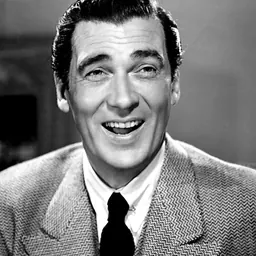


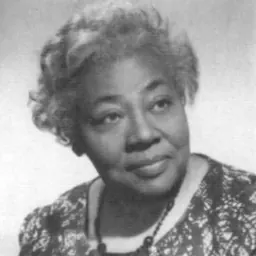
Contemporaries
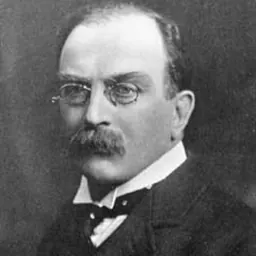
People whose lives overlapped Lee Morse's


Frequently asked questions
Who was Lee Morse?
American singer (1897-1954)
When was Lee Morse born?
Lee Morse was born on 30 November 1897 in Cove.
When did Lee Morse die?
Lee Morse died on 16 December 1954 in Rochester.
What was Lee Morse's occupation?
Lee Morse was a singer, jazz musician, actor, composer, songwriter and singer-songwriter.
What nationality was Lee Morse?
Lee Morse was American.
Sources & further reading
Cite this page
APA: Biography.guide. (2026). Lee Morse. https://biography.guide/lee-morse/
MLA: "Lee Morse." Biography.guide, https://biography.guide/lee-morse/.
Chicago: "Lee Morse." Biography.guide. https://biography.guide/lee-morse/.
Data last updated: 2026-09-20 · Spot an error? Report a correction.
Page generated 2026-09-27 05:30 UTC