
About Lee Maye
Lived 1934 – 2002 (aged 67). Lee Maye was an American baseball player and musician.
Arthur Lee Maye (December 11, 1934 – July 17, 2002) was an American Major League Baseball player. He played eleven seasons in the majors as an outfielder for the Milwaukee Braves (1959–1965), Houston Astros (1965–1966), Cleveland Indians (1967–1969), Washington Senators (1969–1970), and Chicago White Sox (1970–1971).
Maye was also well known as a rhythm & blues singer. He was the lead singer of the Los Angeles–based doo-wop group Arthur Lee Maye and the Crowns in the 1950s.
Early life Maye was born on December 11, 1934, in Tuscaloosa, Alabama. He was raised in Los Angeles, and attended Jefferson High School. The Milwaukee Braves signed him as an amateur free agent in 1954. Maye also began his professional singing career in 1954, going by his full name "Arthur Lee Maye" rather than Lee Maye.
Early baseball and music careers Maye's dual career began at Los Angeles' Jefferson High School. Maye's first high school group was the Carmels, who he sang with throughout high school. He also sang in the school hallways with Jesse Belvin and future members of the Platters, the Penguins, and the Coasters.
Maye starred in baseball for both Jefferson High and local semi-pro teams. Milwaukee Braves scout Johnny Moore not only saw his potential as a hitter with line drive power but clocked him in the 100-yard dash at under 10-seconds. Arthur Lee Maye later explained, "Baseball was my first love. I could always sing at fifty, but I couldn't play baseball at fifty." At this time he also started his professional recording career, joining with Richard Berry and Johnny Coleman to record "The Fine One" b/w "Please Please Baby" as the "5" Hearts on the Flair label (the company put the "5" in quotes as only three sang on the record). They next released "Sweet Thing b/w "Rock Bottom" under the name "Rams." Maye also sang the "di-di-di's" behind Richard Berry on the original "Louie Louie."
Major league baseball Maye was 6 ft 2 in (1.88 m) tall, and weighed 190 pounds (86.2 kg). He batted left-handed, but threw right-handed.
In a 13-year Major League Baseball career Maye played for the Milwaukee Braves, Houston Astros, Cleveland Indians, Washington Senators, and the Chicago White Sox. From 1961 to 1966, and again in 1969, he started in more than half of his team's games, with a high of 133 games started in 1964. each hit home runs in every game of a three-game regular season series, which has only happened twice in team history.
After an excellent season in Puerto Rican winter ball in 1962, he suffered a respiratory infection that was severe enough to hospitalize him for two weeks, and caused him to miss two months of the Braves season.
In 1963, he came back to play in 124 games, once again hitting .271, with 11 home runs in 442 at bats. On September 27, 1964, he had five hits in a game (four singles and a double) against the Philadelphia Phillies. (During the same year, his solo album Halfway Out of Love sold over 500,000 copies. ) After the 1964 season, Maye, along with Hank Aaron, expressed concern about the team's moving from Milwaukee to Atlanta for fear of racial discrimination. He later flew to Atlanta before the 1965 season to specifically dispel the notion that he was concerned about playing there.
A 1965 ankle injury hurt his season and career. On May 1, he hurt his right knee and ankle. To his surprise, after appearing in only 15 games for the Braves, on May 23, he was traded to the Houston Astros for Ken Johnson and Jim Beauchamp. Huey Meaux managed his music career during this time. Meaux got him studio time with JAMIE and regular bookings at popular Houston nightclubs.
The Astros traded him to Cleveland before the 1967 season for Jim Landis, Jim Weaver and Doc Edwards. Maye hit .281 in 109 games. he played in only 96 games, hitting .263, when he was released by the Senators. He was claimed by the White Sox toward the end of the 1970 season. with the major league scoring draught running from 1963 to 1972.
Lee Maye said, "The greatest thrill is not getting to the major leagues. It's staying there. I played 13 seasons when they had only 16 teams and I think that was a great accomplishment for me."
Maye's career totals include 1,288 games played, 1,109 hits, 94 home runs, 419 RBIs, and a lifetime batting average of .274.
Music career Maye sang in a tenor and falsetto. Music journalist and critic Phil Milstein called his singing "deft" and "authoritative". Only one record credits his dual career. A 1959 release "Will You Be Mine" and "Honey Honey" on CASH had Lee Maye of the Milwaukee Braves on the label. Arthur Lee Maye was very proud of "Moonlight." "Moonlight" made several compilation CDs, played a role in the novel '64 Intruder, and gets airplay on doo-wop radio programs. Maye had a European tour planned when he became stricken with liver cancer.
Death Maye died at the age of 67 in Riverside, California, of pancreatic cancer and is buried at Inglewood Park Cemetery in Inglewood, California.
Don’t just read it —
keep it.
Full-length biographies made to live with: read them, listen on the way to work, watch them tonight.
- E-book
- Audio
- Video
Instant download · yours to keep · every purchase keeps this site free
Important facts
People in Lee Maye's life
Named in this biography and alive at the same time
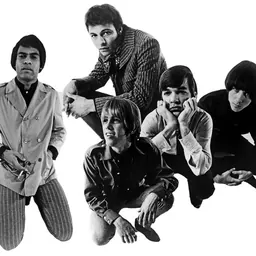



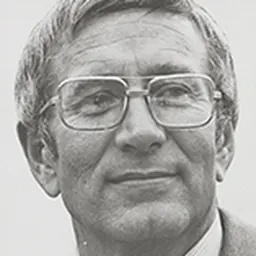

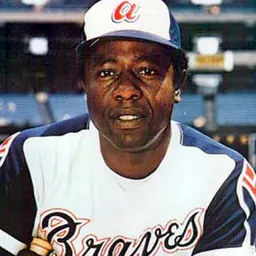
Related people
Same field, nearest in time
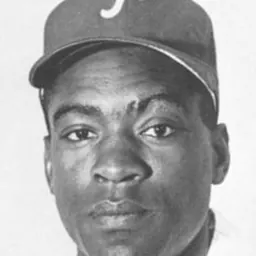


Contemporaries
People whose lives overlapped Lee Maye's




Frequently asked questions
Who was Lee Maye?
American baseball player (1934–2002)
When was Lee Maye born?
Lee Maye was born on 11 December 1934 in Tuscaloosa.
When did Lee Maye die?
Lee Maye died on 17 July 2002 in Riverside.
What was Lee Maye's occupation?
Lee Maye was a baseball player and musician.
What nationality was Lee Maye?
Lee Maye was American.
Sources & further reading
Cite this page
APA: Biography.guide. (2026). Lee Maye. https://biography.guide/lee-maye/
MLA: "Lee Maye." Biography.guide, https://biography.guide/lee-maye/.
Chicago: "Lee Maye." Biography.guide. https://biography.guide/lee-maye/.
Data last updated: 2026-09-20 · Spot an error? Report a correction.
Page generated 2026-09-27 05:18 UTC