
About Lee Beom-seok
Lived 1925 – 1983 (aged 58). Lee Beom-seok was a South Korean diplomat and politician.
Lee Bum Suk (; 1925–1983) was the Foreign Minister of South Korea from 1982 until his death in 1983. He was among the victims of the Rangoon bombing in Myanmar.
Early life Lee was born in 1925 in Keijō. He and his family later moved to Heijō, where he graduated from the Second Middle School in 1942. Following his graduation, he went to Japan for his higher studies and completed the preparatory course at Hosei University in 1944. In September 1945, immediately after the independence of Korea from Japanese rule, he graduated from Korea University in 1946 with degree in economics. He later attended University of Maryland in 1961 and George Washington University in 1963.
Lee served as Head of the Korean Junior Red Cross and later served as advisor to the Korean Red Cross.
Diplomatic career Lee was appointed a diplomat during the regime of South Korean President Park Chung Hee. In 1961, He was appointed Director of the International Organizations Department of the Ministry of Foreign Affairs. In 1963, he continued to serve as Assistant to the Ambassador at the UN and the United States. In 1965, Lee was appointed research fellow at Korea National Diplomatic Academy and in 1966, he became the Head of Protocols at the Ministry of Foreign Affairs.
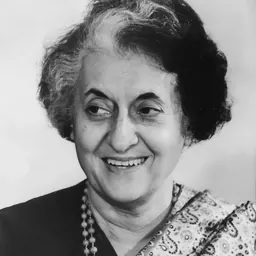
In 1970, Lee was appointed the South Korean ambassador to Tunisia. In 1971, following the end of his tenure as ambassador to Tunisia, he was appointed the Vice President of the Korean Red Cross. In 1976, he was assigned as the South Korean ambassador to India. During his time as ambassador to India, he made considerable achievements in establishing diplomatic relations with India, which was one of the leading countries in the Non-Aligned Movement. This was possible due to close friendship with then Prime Minister of India Indira Gandhi.
From 1980 to 1982, he served as the head of the Center for Reunification, Secretary-General for the Committee for Peaceful Reunification Policies, and Head Secretary for the President, before being appointed Foreign Minister in 1983.
On June 29, 1983, one year after taking office as Foreign Minister, he gave a speech at the National Defense University, saying:
"Normalization of relations with the Soviet Union and China is an important task for Korean diplomacy."
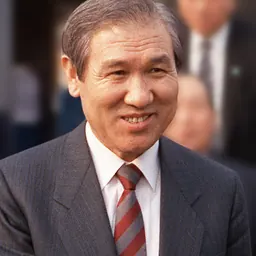
During the speech, he used the term Nordpolitik and presented it as a goal of normalized relations with the closest allies to North Korea, China and the Soviet Union. When President Roh Tae-woo took office in 1988, he used Nordpolitik as a foreign policy toward the communist bloc.
Lee is buried at Seoul National Cemetery.
Don’t just read it —
keep it.
Full-length biographies made to live with: read them, listen on the way to work, watch them tonight.
- E-book
- Audio
- Video
Instant download · yours to keep · every purchase keeps this site free
Important facts
People in Lee Beom-seok's life
Named in this biography and alive at the same time

Related people
Same field, nearest in time

Contemporaries
People whose lives overlapped Lee Beom-seok's


Frequently asked questions
Who was Lee Beom-seok?
South Korean politician (1925-1983)
When was Lee Beom-seok born?
Lee Beom-seok was born on 14 September 1925 in Keijō.
When did Lee Beom-seok die?
Lee Beom-seok died on 9 October 1983 in Yangon.
What was Lee Beom-seok's occupation?
Lee Beom-seok was a diplomat and politician.
What nationality was Lee Beom-seok?
Lee Beom-seok was South Korean.
Sources & further reading
· DBpedia: Lee Bum Suk (foreign minister)
Cite this page
APA: Biography.guide. (2026). Lee Beom-seok. https://biography.guide/lee-beom-seok/
MLA: "Lee Beom-seok." Biography.guide, https://biography.guide/lee-beom-seok/.
Chicago: "Lee Beom-seok." Biography.guide. https://biography.guide/lee-beom-seok/.
Data last updated: 2026-09-20 · Spot an error? Report a correction.
Page generated 2026-09-27 05:15 UTC