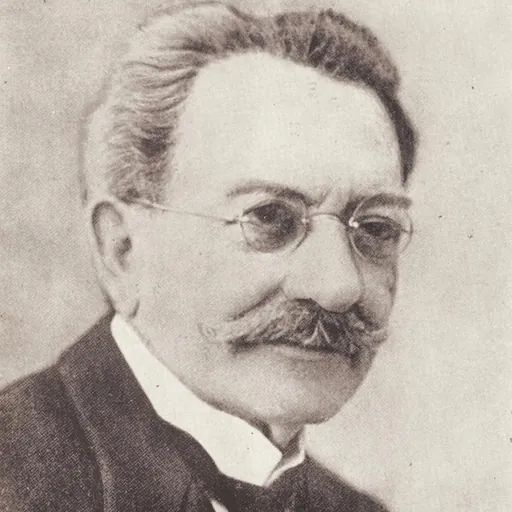
Lazăr Șăineanu
Romania philologist, linguist, folklorist and cultural historian
About Lazăr Șăineanu
Lived 1859 – 1934 (aged 75). Lazăr Șăineanu was a Romanian and French lexicographer, anthropologist, linguist, writer, philologist and historian.
Lazăr Șăineanu (, also spelled Șeineanu, born Eliezer Schein; Francisized Lazare Sainéan, , or Sainéanu; April 23, 1859 – May 11, 1934) was a philologist, linguist, folklorist and cultural historian born in the United Principalities of Moldavia and Wallachia, today part of Romania. A specialist in Oriental and Romance studies, as well as a Germanist, he was primarily known for his contribution to Yiddish and Romanian philology, his work in evolutionary linguistics, and his activity as a literary and philological comparatist. Șăineanu also had innovative contributions to the investigation and anthologizing of Romanian folklore, placed in relation to Balkan and East Central European traditions, as well as to the historical evolution of Romanian in a larger Balkan context, and was a celebrated early contributor to Romanian lexicography. His main initiatives in these fields are a large corpus of collected fairy tales and the 1896 Dicționarul universal al limbii române ("The Universal Dictionary of the Romanian Language"), which have endured among the most popular Romanian scientific works.
A member of the non-emancipated Jewish-Romanian community, Lazăr Șăineanu stood for the Haskalah (Jewish Enlightenment) ideas, and opted in favour of Jewish assimilation into the Romanian mainstream. His repeated requests for naturalisation were eventually unsuccessful, but propelled him to the center of a political conflict which opposed the antisemitic current to the advocates of tolerance. In 1901, Șăineanu and his family left the Kingdom of Romania and resettled in France, where the scholar lived until his death. Becoming known for his pioneering work to the study of Middle French and his investigations into the origins of argot, as well as for his critical essays on 16th-century writer François Rabelais, he was a recipient of the Institut de France's Volney Prize in 1908. The son-in-law of publisher Ralian Samitca, Șăineanu was survived by his brother Constantin, a noted lexicographer, journalist and polemicist.
Biography
Early life Eliezer Schein (whose name was originally rendered in Romanian as Lazăr Șain or Shain) was born in the city of Ploiești to impoverished Jewish-Romanian residents. His father, Moisi, was a house painter and amateur artist, who, by the time his son was sixteen, had left to work in the United States. He was however able to pass his Baccalaureate, with a thesis on writer and theorist Ion Heliade Rădulescu: Ioan Eliad Rădulescu ca grămătic și filolog ("Ioan Eliad Rădulescu as a Grammarian and Philologist"). Taught and regarded with admiration by academic Bogdan Petriceicu Hasdeu, Șăineanu was primarily a student of etymology, stylistics and semantics (which formed the basis of his first three studies, published in 1882 and 1887). Gaster also sent Șăineanu's various studies on folklore and linguistics also published in Revista pentru Istorie, Arheologie și Filologie, a review founded and led by Romanian historian Grigore Tocilescu.
The 1887 Încercare asupra semasiologiei române ("Essay on Romanian Semasiology"), presented by Schein as his graduation paper, was retrospectively commended by ethnologist Iordan Datcu for its innovative value, and argued by the same commentator to have attracted universally positive reactions from "objective critics". his dissertation receiving an award from the Institut de France. As Șăineanu wrote to Gaster, he had decided in favor of the "intellectual center" Leipzig because Karl Brugmann, "the leading representative of present-day linguistics", worked and taught there. He studied with both Brugmann and August Leskien, earning much praise for his work and the right to take his diploma under special circumstances (which took into consideration his previous works, and did not require him to research a full-sized new thesis). The latter was hosted by Gaston Paris' journal Romania. He was given employment as a high school teacher, and obtained an unpaid university position as assistant to Hasdeu, head of the Department of Letters. Nastasă, who notes Șăineanu's enthusiasm for his work, writes: "His opening lecture for the Comparative Philology course—like all of his work—is a proof of erudition more or less unparalleled within the areas of Romania."
Despite his qualifications, Șăineanu was unable to advance professionally because of his non-citizen status. The young researcher was also appointed substitute teacher of Latin in Bucharest Gheorghe Lazăr High School by an administrative decision of the Education Ministry, taken despite the antisemitic protestations of Undersecretary Ștefan Michăilescu. His assignment to the post followed the intercession of his friend and former teacher, the writer and archeologist Alexandru Odobescu, and inaugurated a short period during which Șăineanu focused on writing textbooks.
Shortly afterward, Conservative Minister Titu Maiorescu, leader of the influential literary club Junimea and himself one of Lazăr Șăineanu's former professors, The latter, an outspoken antisemite and prominent member of the opposition National Liberal group, reacted strongly against the measure, launching that claim that, unlike an ethnic Romanian, a Jew "could never awaken in the mind and heart of the young generation the image of our past laden with lessons for the future". He nevertheless noted that Urechia had a conflict of interest when opposing his appointment, given that he had designed the department around his own chairmanship, and that, with the aid of University of Iași academic Alexandru D. Xenopol, he had set in motion a set of "miserable intrigues" to maintain his hold on the faculty.
Șăineanu also commented on the alleged oscillations of Tocilescu, who, after agreeing to lead the History section upon its recommended division, and supporting his Jewish colleague for chairmanship of the Letters section, threw his support behind Urechia. Nastasă, who mentions the scheming on the part of Urechia and Tocilescu, cites Moses Gaster's letter to Șăineanu, which defined Tocilescu as a double-crosser, "a filthy twicer and a bloodsucker". The complications eventually led Șăineanu to present his resignation, and Maiorescu to accept it. Produced on the basis of folkloric surveys in Muntenian and Oltenian localities such as Dragoslavele, Schitu Golești and Radomir, the study was later used against him by his political adversaries, who resented the implications it seemed to carry for the traditional relations between Jews and Romanians. In 1889, he published his innovative work on the links between German and Yiddish, ("A Dialectologic Study on Judeo-German Speech"). His recognized field of expertise, Nastasă notes, was by then the widest in Romania, comprising not just Yiddish and Romance linguistics, but also the study Proto-Indo-European, Proto-Slavic and various other languages and dialects.
Also in 1889, Șăineanu applied for naturalization, which, according to the 1866 Constitution, a Jew could only receive by special act of the Romanian Parliament and in exchange for exceptional merits. The effort, which consumed some 12 years of his life, pitted him against the antisemitic current in politics and the scientific community: among the most vocal adversaries of his naturalization were two prominent National Liberals, Urechia and Sturdza, both of whom had a following among nationalist sections of the electorate. Their campaign, which depicted Șăineanu as an adversary of Romania, culminated when Senate voted 79 to 2 against the naturalization request.
The resistance to his application was a surprise for Șăineanu, who wrote: "I was not aware that this path [...] is the more thorny as the [person's] merits are more real." He also accused the political establishment of endemic corruption, writing: "any banker who demanded naturalization received it without the least of difficulties". During the following interval, Șăineanu's cause reportedly won the support of King Carol I, Conservative Premier Lascăr Catargiu and moderate National Liberal politico Mihail Kogălniceanu. Reviewing the situation, Șăineanu cited an unusual incident in neighboring Austria-Hungary, where local Romanians were demanding increased group rights as part of the Memorandum movement. Their arguments about cultural repression were met with the reply of Hungarian intellectuals, who cited the Șăineanu issue as proof that Austria-Hungary had more to offer than Romania: "He had all of Romania on his case, but he had rendered [the country] as many services as most Romanian demigods."
Parallel controversies and 1895 Senate vote
Despite his involvement in a political scandal, Lazăr Șăineanu did not interrupt his work in linguistics. His 1891 book, ("The Relations between Grammar and Logic"), written on the basis of his university lectures, Datcu notes this contribution, alongside the 1892 Istoria filologiei române ("History of Romanian Philology"), for the "up to date information" provided. The two volumes were accompanied by a printed expansion of his earliest thesis on Heliade Rădulescu. On the occasion, Urechia (himself an Academy member) publicly stated that his adversary had purchased the award, but, Șăineanu noted, never presented proof for this assertion.
That same year, the matter of his citizenship was returned to the Senate. By then, Șăineanu's file had been further enriched with the award certificate, a guarantee of good conduct from Bucharest City Hall, and several favorable reports from Hasdeu (an exception to the latter's own antisemitic discourse). There followed a major Senate debate, during which Urechia stood out for his repeated criticism of his former competitor, likening him to a Trojan Horse and demanding from fellow parliamentarians not to let "a foreigner" slide into "the Romanian citadel" (statements to which many responded with applause).
The early vote gave 33 to 26 against Șăineanu's naturalization, short of the supermajority required, but a second take resulted in 61 against to 12 in favor. The antisemitic segment of the board celebrated this victory with loud cheers, as witnessed by Odobescu, who recorded feeling himself confronted with the image of "cannibals who rejoiced like beasts over having slashed and devoured a civilized man". Another voice from academia to speak unfavorably of the opposition met by Șăineanu was Alexandru Philippide, who wrote: "I am not philosemitic, but if there ever was a kike deserving of naturalization, that would be Șăineanu."
Late 1890s works and ramifications of the scandal
Without ceasing to publish works for the Junimea periodical Convorbiri Literare, Șăineanu continued to frequent its adversary Hasdeu, and contributed some of his other essays to Hasdeu's magazine Revista Nouă. Basmele române was followed in 1896 by Studii folclorice ("Studies in Folklore"), a collection of short writings on comparative mythology.
Șăineanu followed up with a comprehensive study regarding Levantine presences in the vocabulary and society alike, published by Editura Socec in 1900 (as , "The Oriental Influence on Romanian Language and Culture") and being made into a French-language edition in 1901. It received attention from the Académie des Inscriptions et Belles-Lettres, and consequently a nomination for the Institut de France's Volney Prize.
1899 parliamentary vote and self-exile In order to facilitate the naturalization procedures, Lazăr Șăineanu eventually renounced Judaism and accepted baptism in the Romanian Orthodox Church. His godfather was Take Ionescu, at the time a rising figure within the Conservative Party ranks. Șăineanu's case was again presented for Senate approval in December 1899, this time with a favorable review from the special parliamentary commission, and the motion for his naturalization was carried with 37 to 2 votes Although the result was positive, the scientist was informed that a new procedure had just been passed with support from across the floor, specifying that naturalization could only be enforced by vote in a common session of the two chambers. The dossier was therefore submitted to another vote, on the last session of 1899, which again enlisted attacks from the antisemitic groups, before being canceled due to lack of quorum.
Reflecting on the early result, which had left him "submerged into complete happiness", and on the new vote, which he believed was a mere technicality introduced on purpose by Justice Minister Constantin Dissescu, he recalled: "for 24 hours I was politically [Șăineanu's italics] within the Romanian nationhood!" He recalled having been received by King Carol, who reportedly agreed with his belief that the action was abusive. By then, Șăineanu also lost the support of Hasdeu, who, like Take Ionescu, gave his approval to a restructuring of the university, which stripped the Jewish scholar of his honorary position. He sought instead backing from Petre P. Carp, the Conservative doyen, who reportedly answered his request with the ambiguous Latin adage Gutta cavat lapidem ("The water drop will drill through stone"). On the other side of the divide, the attacks on Șăineanu had come to be led by the antisemitic paper Apărarea Națională, whose articles, the scholar argued, "reached the summit of stupidity and ridiculousness".
On December 14, 1900, the issue of Lazăr Șăineanu's naturalization was also revisited by the lower chamber, and the proposal defeated with 44 votes to 31 (from an insufficient quorum of 75), followed by a definitive vote on December 15, at which 48 out of 95 deputies voted against. Among those who expressed condemnation of the decision were La Roumanie journal and aristocrat Alexandru Bibescu. In 1901, frustrated by the political reaction and feeling uncomfortable in Romania, the scholar and his family resettled in Paris, where he primarily used a Francization of his Romanian name, signing as Lazare Sainéan.
French career and final years
His main interest for the following period were the theories of evolutionary linguistics, with focus on the Neogrammarian approach, ethnolinguistics and psycholinguistics. By then, he was in correspondence with fellow linguist Alfred Landau, with whom he discussed the history of Yiddish.
Șăineanu's parallel investigations into the history of French included his 1905-1907 La Création métaphorique en français et en roman: images tirées du monde des animaux domestiques ("The Metaphoric Creation in French and Romance Languages: Images from the World of Domestic Animals"), which was structured into several tomes, respectively dedicated to the principal household companions. He also began work on major syntheses on French vocabulary, L'Argot ancien ("Ancient Argot") and its companion Les Sources de l'argot ancien ("The Sources of Ancient Argot", 1907). The former earned him the Volney Prize for 1908. Writing in 1999, historian Joan Leopold argued that this was a significant achievement, since the Volney Commission "seemed to fear direct competition by foreigners"—other exceptions to this rule being Liu Bannong, Wilhelm Schmidt and Marie-Louise Sjoestedt. According to Leopold, Șăineanu was among the Volney prizewinners, "particularly foreigners", who "were never elected to an affiliation with the French Académies." However, she also notes that "there were no titles honored [during 1900-1909] which are now remembered as significant in the history of linguistics". She places the fact that Șăineanu "did not achieve major university positions in France" in connection with a tendency of awarding the prize to scholars who mainly did field work (Schmidt, Adolphe de Calassanti-Motylinski, George Abraham Grierson, Leo Reinisch and others).
In 1922, Șăineanu published Manuel de phonétique latin ("Manual of Latin Phonetics"), the last of his contributions to be shortlisted for a Volney. By then, he had also become interested in researching the work of French Renaissance author François Rabelais, primarily focusing on his use of Middle French—an account published between 1920 and 1923 as La Langue de Rabelais ("Rabelais' Language"). Between 1925 and 1930, he published the volumes of a large-scale project, Les Sources indigènes de l'étymologie française ("The Indigenous Sources of French Etymology"), which was reputedly the result of three decades in specialized research. He died four years later at a hospital in Paris, after complications from surgery. His Jewish identity, literary historian George Călinescu noted in 1933, went in tandem with an exceptional familiarity with Romanian language and culture; like other of his fellow Jewish Romanian intellectuals (among whom Călinescu cited philologists Gaster and Barbu Lăzăreanu, Marxist theorist Constantin Dobrogeanu-Gherea and dramatist Ronetti Roman), Șăineanu possessed "an amazingly rich Romanian lexis". At a time when the Cyrillic version had been discarded but the new spelling was still largely unregulated, he joined the outspoken critics of attempts to modify the shape of words so as to suggest their Latin origins. The "Latinist" approach, experimented in the lexicographic work of I. C. Massim and August Treboniu Laurian and originating with the Transylvanian School, was favored for a while by the Romanian Academy, but had become widely ridiculed by the 1880s. While approaching the Junimea society's tenets on this matter, Șăineanu also shared Bogdan Petriceicu Hasdeu's criticism of Junimist Germanophilia. In 1897, the two scholars published Eine Trilogie (German for "A Trilogy"), criticizing a perceived Conservative and Junimist monopoly on the Romanian literary scene in general, and, in particular, the officially condoned historical overview by Wilhelm Rudow, Gheorghe Bogdan-Duică and Iacob Negruzzi, which seemed to omit mention of any politically inconvenient literary contribution. Such preoccupations in preserving context were also found in his lexicographic work; according to Caragiale, Dicționarul universal was groundbreaking because its author took care "to support with authentic testimonies the words and the nuances of meanings." Nevertheless, he followed the conclusions of other folklorists on the universality of folklore, suggesting that the world's entire folkloric literature was structured into some tens of groups. With Studii folclorice, the researcher tested an anthropological investigation into the characteristics and supposed origins of each myth, in particular Meșterul Manole, Baba Dochia and the iele creatures. The scholar referred to various constants in folkloric accounts: peasants' testimonies which attributed large stone ruins to the Jews (whom they occasionally referred to as giants or supernaturally powerful people) and the "red" antagonists in fairy tales such as Ion Creangă's Harap Alb (the "Red Emperor", the "Red Man" and people with red-colored facial markings, all placed by Șăineanu in connection to the "Red Jews" myth). —an interpretation since defined as "in bad faith" and "slanderous" by Laszlo Alexandru. According to Hebraist Robert D. King, such contributions rank Șăineanu, Alfred Landau and Matisyohu Mieses "among the first scholars to take Yiddish seriously, to force others [King's italics] to take it seriously, to move conceptually beyond the stupid position that Yiddish was 'bad German' or 'jargon', a second-rate excuse of a language." His inquiry into medieval structures connecting Yiddish and German is seen by Germanists Dagmar C. G. Lorenz and Neil G. Jacobs as a substantial discovery, Șăineanu being the first to indicate "that the German component of Yiddish traces back to Middle High German sources" (meaning that "Yiddish was no longer to be evaluated in terms of New High German").
In his studies of Turkish and Turkic borrowings into the Romanian lexis, Lazăr Șăineanu looked back on historical events leading back to the Age of Migrations, such as in highlighting the possible Pecheneg origin of relatively common Romanian words such as buzdugan ("mace"), duium ("multitude"), dușman ("enemy"), caia ("horseshoe nail"), colibă ("hut") and fotă ("skirt"). However, one of his primary focuses was on Ottoman Turkish as a mediator between Romanian and other languages: the Romanian word giuvaier ("jewel"), borrowed from the Turkish cevahir, but originating with a Persian source; trampă ("barter"), taken from the Turkish trampa, but sourced to the Italian tramutare ("to transform"); talaz ("high wave"), identical to the Turkish intermediary, and through it borrowed from the Greek Θάλασσα (thalassa, "sea"). Additionally, the scholar documented the distant impression of Levantine territories, as first introduced through Ottoman culture—as illustrated by the original references to Egypt as Misir, from the Arabic مصر (Miṣr), as opposed to the more modern . He also discussed the professional suffixes -giu and -angiu, both of Turkish origin and present in words borrowed during the early modern and Phanariote eras. Main examples include barcagiu ("boater" or "ferryman"), bragagiu ("boza maker"), geamgiu ("window fitter"), toptangiu ("wholesale vendor") etc., but the suffix is also applied ironically in various other contexts—for example, mahalagiu ("inhabitant of the mahala", "suburbanite" or "uncouth person") and duelgiu ("dueler").
Especially in his , Șăineanu evidenced the spread of Turkish borrowings throughout the Balkans, and concluded that they had a more significant presence in Aromanian than in Romanian. His contemporary, philologist Vasile Bogrea, referred to the volume as a "Bible of Oriental elements in Romanian", According to writer and critic Alexandru Mușina, Șăineanu was foremost among the linguists who challenged a linear take on the origin of the Romanians, evidencing, like Alexandru Philippide and Alexandru Cihac, the "heterogeneous, plurilingual and multicultural character of our Romanity", with the underlying "processes of acculturation". The books notably showed the traditional semantic parallelisms between cats, monkeys and apes, as codified in several Romance languages, and investigated the animals' respective roles within popular demonology and metaphors of drunkenness. With Les Sources indigènes de l'étymologie française, Șăineanu offered clues on the obscure origin of various French words. Șăineanu thus sourced the French and English harlequin beyond the Italian-language arlechino in Commedia dell'arte, and back to a medieval legend in Middle French.
A number of Șăineanu's texts focused on the language patterns covered by "argot" and the original meaning of "jargon", in relation to French and Parisian social history, discussing the language of the gueux (marginalized and destitute migrants), the obscene nature of some medieval performances, the linguistic codes used by brigands during the Hundred Years' War, and the impact of argot in the work of poet François Villon or other French Renaissance writers. discussed in part the emergence of what Șăineanu himself defined as ("the lowly Parisian language"), a mix of argots emerging from 19th century urbanization. His studies in the area were part of a phenomenon in French linguistics: at roughly the same time as Șăineanu, argot studies were becoming the main subject of works by researchers such as Arnold van Gennep and Raoul De La Grasserie. A disagreement occurred between Șăineanu and Gennep over the origins and age of argot: Gennep criticized his colleague's claim that "no European argot has sources beyond the 15th century", arguing that such statements were not verifiable, and that they presumed "some kind of spontaneous generation". Also according to Gennep, Șăineanu was among those Eurocentric scholars who offered a "teratological" view of argot as an "aberrant creation". It was especially noted for its details on various contributions to Rabelais' means of expression, including staples of French folklore such as the so-called Cris de Paris (chants traditionally produced by Parisian street vendors). La Langue de Rabelais also offered clues into 16th-century views of homosexuality, discussing the origin of archaisms such as bardachiser ("to sodomize") or the link between Rabelais' maritime terminology and medieval reactions to homoeroticism.
In his work on the subject, Șăineanu also stood out as one of those rejecting the notion that Rabelais' writings have a special anticlerical meaning, arguing instead that his mockery of clerical society was merely a rendition of common and folkloric attitudes—a conclusion quoted in agreement by Annales School historian Lucien Febvre in his own The Problem of Unbelief in the Sixteenth Century. Also cited by Febvre are Șăineanu's views on Islamic and "Saracen" echos in Gargantua and Pantagruel (such as the depiction of Fierabras), as well as on Rabelais' references to miraculous cures as being borrowed from earlier romance fiction. In a parallel series of articles, the Romanian scholar also discussed the link between Ancient Roman thinker Pliny the Elder and the Renaissance writer, commenting on the similarity between Rabelais' description of medical practices and statements found in Natural History.
Legacy Despite the antisemitic campaigns and the voluntary expatriation, Șăineanu's reputation with the Romanian public was largely unharmed, and his works went through new Romanian-language editions: Dicționarul universal alone was reissued a total of nine times before 2009, Two years after Șăineanu's death, his brother Constantin collected and edited his correspondence, publishing it in Bucharest.
Interwar Romanian intellectuals, primarily George Călinescu and Eugen Lovinescu, played a part in reevaluating and bringing to attention Șăineanu's contribution within its Romanian and international context. Șăineanu's correspondence was itself a topic of controversy between the two rival critics: after Lovinescu showed himself impressed by a letter in which Șăineanu stated E. Lovinescu m'impose ("E. Lovinescu impresses me"), Călinescu noted that his competitor had a tendency to quote "all things flattering him, no matter how cheap." Braving the violently antisemitic and authoritarian regime of Conducător Ion Antonescu, in place during most of World War II, Călinescu commented favorably on the contributions of Jewish figures to Romanian cultural life in his main synthesis, the 1941 History of Romanian Literature. It included a reference to Jewish linguists Șăineanu, Gaster, Ion Aurel Candrea, as scholars whose merits would be "regrettable to deny".
In contrast, the Romanian far right and fascist groups continued to regard Șăineanu's marginalization as justified. The 1930s witnessed a controversy which, according to Laszlo Alexandru, recalled the confrontation between Hasdeu and Lazăr Șăineanu: Hasdeu's place was held by academic Nae Ionescu, who moved toward fascism and antisemitism, while Șăineanu's position was assumed by Ionescu's Jewish disciple, writer Mihail Sebastian. In 1936, a Guardist named Vasile Gârcineanu called Dicționarul universal "a characteristically Jewish work, superficially and poorly crafted". While cultivating an ambiguous relationship with fascism, which eventually brought him into the ranks of the Iron Guard, philosopher Mircea Eliade, one of Ionescu's other known disciples, publicly deplored Șăineanu's social relegation and Gaster's expulsion.
The communist period witnessed a long hiatus in respect to the critical assessment of Șăineanu's work: in 1962, linguist Dumitru Macrea referred to his predecessor as an "all but forgotten" figure, and none of Șăineanu's volumes were printed between the 1947 edition of his dictionary and the 1978 version of Basmele române. It was followed by several other initiatives, which notably resulted in reprints of Studii folclorice and Încercare asupra semasiologiei române. Writing in 2003, Alexandru Mușina referred to Șăineanu as a "great", "mistreated" and "unrecognized" linguist, defining as "his valuable work, as yet unchallenged and still relevant". In 2008, the case surrounding Șăineanu's naturalization bid was the subject of a biographical study, written by historian George Voicu and published by the Elie Wiesel National Institute for Studying the Holocaust in Romania. Șăineanu's works have also been the subject of reprints in France, and have continued to be recommended secondary sources by academic institutions in the United States more than a century after they were first published. His posthumously published writings include a 1991 edition of Une carrière philologique en Roumanie.
Don’t just read it —
keep it.
Full-length biographies made to live with: read them, listen on the way to work, watch them tonight.
- E-book
- Audio
- Video
Instant download · yours to keep · every purchase keeps this site free
Important facts
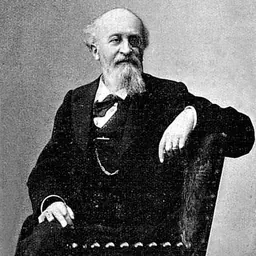
People in Lazăr Șăineanu's life
Named in this biography and alive at the same time




Related people
Same field, nearest in time



Contemporaries
People whose lives overlapped Lazăr Șăineanu's



Frequently asked questions
Who was Lazăr Șăineanu?
Romania philologist, linguist, folklorist and cultural historian (1859–1934)
When was Lazăr Șăineanu born?
Lazăr Șăineanu was born on 6 May 1859 in Ploiești.
When did Lazăr Șăineanu die?
Lazăr Șăineanu died on 11 May 1934 in Paris.
What was Lazăr Șăineanu's occupation?
Lazăr Șăineanu was a lexicographer, anthropologist, linguist, writer, philologist and historian.
What nationality was Lazăr Șăineanu?
Lazăr Șăineanu was Romanian and French.
Sources & further reading
Cite this page
APA: Biography.guide. (2026). Lazăr Șăineanu. https://biography.guide/lazar-saineanu/
MLA: "Lazăr Șăineanu." Biography.guide, https://biography.guide/lazar-saineanu/.
Chicago: "Lazăr Șăineanu." Biography.guide. https://biography.guide/lazar-saineanu/.
Data last updated: 2026-09-21 · Spot an error? Report a correction.
Portrait: Wikimedia Commons · author & licence
Page generated 2026-09-27 05:01 UTC