
About Laza Kostić
Lived 1841 – 1910 (aged 69). Laza Kostić was an Austrian and Hungarian politician, journalist, poet, theatre critic, lawyer and playwright.
Lazar Kostić (; 12 February 1841 – 27 November 1910) was a Serbian poet, prose writer, lawyer, aesthetician, journalist, publicist, and politician. He is considered to be one of the greatest minds of Serbian literature. Kostić wrote around 150 lyrics, 20 epic poems, three dramas, one monograph, several essays, short stories, and a number of articles. Kostić promoted the study of English literature and together with Jovan Andrejević-Joles was one of the first to begin the systematic translation of the works of William Shakespeare into the Serbian language. Kostić also wrote an introduction of Shakespeare's works to Serbian culture.
Biography Laza Kostić was born in 1841 in Kovilj, Vojvodina—which was then part of the Austrian Empire—to a military family. Kostić graduated from the Law School of the University of Budapest and received a Doctor of Philosophy in jurisprudence at the same university in 1866. A part of his thesis was about the Dušan's Code. After completing his studies, Kostić occupied several positions and was active in cultural and political life in Novi Sad, Belgrade, and Montenegro. He was one of the leaders of Ujedinjena omladina srpska (United Serb Youth) and was elected a Serbian representative to the Hungarian parliament, thanks to his mentor Svetozar Miletić. Because of his liberal and nationalistic views, Kostić had to leave Austria-Hungary. He returned home after several years in Belgrade and Montenegro.
From 1869 to 1872, Kostić was the president of Novi Sad's Court House and was virtually the leader of his party in his county. He was a delegate in the clerico-secular Sabor at Sremski Karlovci several times. He served as Lord Mayor of Novi Sad twice and also twice as Sajkasi delegate to the Parliament in Budapest. Kostić was arrested and incarcerated but like the rest of them he was later released. In 1868, the new Prince of Serbia was the fourteen-year-old Milan IV Obrenović, who had fallen in love with Laza's most recent work Maksim Crnojević, which had been released that year.
Kostić moved to Belgrade, where he became a popular figure as a poet. Through Milan's influence, Kostić obtained the position of editor of Srpsku nezavisnost (Serbian Independence), an influential political and literary magazine. Milan chose him to be Jovan Ristić's principal assistant at the 1878 Congress of Berlin and in 1880 Kostić was sent to Saint Petersburg as a member of the Serbian delegation. where he met intellectuals Simo Matavulj, Pavel Rovinsky, and Valtazar Bogišić. In 1890, Kostić moved to Sombor where he married Julijana Palanački in September 1895 and spent the rest of his life there. In Sombor he wrote a book which describes his dreams Dnevnik snova (Diary of Dreams), and the popular poem Santa Maria della Salute, which is considered the finest example of his love poems and elegies.
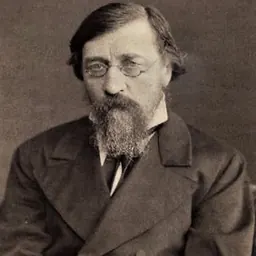
Kostić has been following two lines in his work and research: theoretical mind cannot reach absolute, not having the richness of fascination and life necessary to its universality. He was opposed to the anthropological philosophy of Svetozar Marković and the views of revolutionist and materialist Nikolay Chernyshevsky.
He died on 27 November 1910 in Vienna.
Translation of works in English At the age of eighteen, in 1859, Kostić undertook the task of translating the works of William Shakespeare. Kostić researched and published works on Shakespeare for around 50 years. Andrejević also participated in the founding of Novi Sad's Serbian National Theatre in 1861. The year of the appearance of Richard III (1864) in Novi Sad coincided with the 300-year anniversary of Shakespeare's birth; for that occasion, Kostić adapted two scenes from Richard III using the iambic verse for the first time. Richard III was staged in Serbia and directed by Kostić himself. Later, he translated Hamlet but his work was met with criticism by notable literary critic Bogdan Popović.
Kostić's translation of the fourteenth stanza from Byron's Canto III of Don Juan expresses Byron's advice to the Greek insurgents: Trust not for freedom to the Franks – They have a king who buys and sells In native swords, and native ranks The only hope of courage dwells, But Turkish force, and Latin Fraud Would break your shield, however broad.
Personality and private life
Laza Kostić may be characterized as an eccentric but had a spark of genius. He was the first to introduce iambic meter into dramatic poetry and the first translator of Shakespeare into Serbian. At a European authors' convention at the turn of the 20th century he tried to explain the relationship between the culture of Serbia and those of major Western European cultures.
Kostić was friends with Lazar Dunđerski, the patriarch of one of the most important Serbian noble families in Austria-Hungary. He was in love with Jelena Lenka Dunđerski, Lazar's younger daughter, Although Lenka returned his love, Lazar Dunđerski did not approve of their relationship and would not allow them to marry.
Lenka died, probably from an infection, on her 25th birthday but some authors believe she committed suicide. and what is said to be one of the most beautiful love poems written in the Serbian language.
Legacy A major poet of Serbian Romanticism, Kostić linked the era of Romantic enthusiasm with the modern age of individualism.
Laza Kostić is included in The 100 most prominent Serbs.
Schools in Kovilj and New Belgrade are named after him.
Selected works
Maksim Crnojević, drama (1868) Pera Segedinac, drama (1882) Gordana, drama (1890) Osnova lepote u svetu s osobenim obzirom na srpske narodne pesme, (1880) Kritički uvod u opštu filosofiju, (1884) O Jovanu Jovanoviću Zmaju (Zmajovi), njegovom pevanju, mišljenju i pisanju, i njegovom dobu, (1902) Među javom i med snom, poem Santa Maria della Salute, poem Treće stanje duše, essay King Lear
Don’t just read it —
keep it.
Full-length biographies made to live with: read them, listen on the way to work, watch them tonight.
- E-book
- Audio
- Video
Instant download · yours to keep · every purchase keeps this site free
Important facts
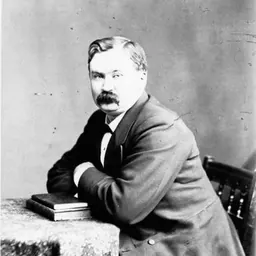
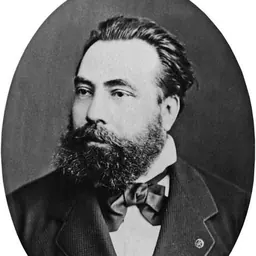
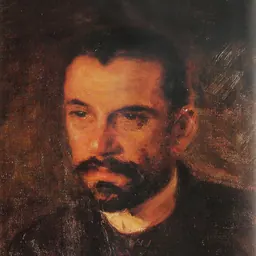
People in Laza Kostić's life
Named in this biography and alive at the same time


Related people
Same field, nearest in time






Contemporaries
People whose lives overlapped Laza Kostić's


Frequently asked questions
Who was Laza Kostić?
Serbian writer and politician (1841–1910)
When was Laza Kostić born?
Laza Kostić was born on 12 February 1841 in Kovilj.
When did Laza Kostić die?
Laza Kostić died on 9 December 1910 in Vienna.
What was Laza Kostić's occupation?
Laza Kostić was a politician, journalist, poet, theatre critic, lawyer and playwright.
What nationality was Laza Kostić?
Laza Kostić was Austrian and Hungarian.
Sources & further reading
Cite this page
APA: Biography.guide. (2026). Laza Kostić. https://biography.guide/laza-kostic/
MLA: "Laza Kostić." Biography.guide, https://biography.guide/laza-kostic/.
Chicago: "Laza Kostić." Biography.guide. https://biography.guide/laza-kostic/.
Data last updated: 2026-09-20 · Spot an error? Report a correction.
Page generated 2026-09-27 05:26 UTC