
About Lawrence Tenney Stevens
Lived 1896 – 1972 (aged 75–76). Lawrence Tenney Stevens was an American sculptor.
Lawrence Tenney Stevens (1896-1972) was an American sculptor who was one of the progenitors of the "Cowboy High Style" movement in western American art and furniture. He created large allegorical figures and stylized depictions of the American west.
Early life and education Born in Massachusetts in 1896, Stevens first showed an interest in sculpture in his early adolescence, and began experimenting with figures after his grandfather demonstrated how to carve figures from a broken alabaster vase. He continued to study sculpture throughout high school, his progress prompting the art director for the school district to lobby the school district pay to send Stevens to evening classes with Harvard students at Copley Plaza Studios.
Before his trip to Rome, Stevens would meet Daniel Chester French, a fellow American sculptor whose most famous work is the colossal statue of Abraham Lincoln in the Lincoln Memorial in Washington, D.C. French confided to Stevens that he wished he had Stevens' position in the art world at a time when French believed America was beginning to gain clout and credibility in sculpture. Sheets later persuaded Stevens to loan his 1931 piece "Doors of Life" to the college for the new Florence Rand Lang art building, now the Elizabeth Hubert Malott Commons, built in 1939. The doors remained on long term loan until Scripps College Trustee Mrs. G. F. Cruickshank agreed to donate the doors officially.
Cody and WWII years Meanwhile, Stevens had been spending his summers in Cody, Wyoming working on expanding his American West-themed body of work. He modeled and sculpted in clay, plaster, bronze and marble everything from the animals and workers of the ranches to the champion bronco riders he saw at local rodeos. He was granted the first one-man show at Cody's Buffalo Bill Museum in 1932. It was in Cody that Cowboy High Style began to develop, catalyzed both by Stevens' work and the work of local furniture designer Thomas Molesworth, both of whom championed simple designs imbued with the spirit of the American West. Stevens' figures from this period are scattered all over the American Southwest. One of his largest commissions was for the Centennial Fairgrounds and Esplanade for the 1936 Texas Centennial Exposition in Dallas. He created three monumental allegorical figures, "Tenor", "Contralto", and "Texas", along with a representation of the chimera-like nonsense creature of Texan folklore, the "Woofus". The bronze sculptures were melted down to help the war effort during World War II, but the figures were reconstructed in stainless steel in 2009 and have been restored to their original positions.
After this commission, Stevens began to sculpt large allegorical figures such as "America" (1941), "American Sculptor" (1941), and "The Confederacy" (1941) as part of his canon in addition to his original cowboys and animals. In 1939 he won a competition to create colossal monuments for the New York World's Fair. Stevens volunteered for military service once more when the United States entered WWII, and was assigned to a secret unit called Project 19.
Post-war years Stevens returned from the war and settled in Tulsa before moving to Arizona with his second wife. He lived and sculpted in Tempe, Arizona until his death in 1972.
Don’t just read it —
keep it.
Full-length biographies made to live with: read them, listen on the way to work, watch them tonight.
- E-book
- Audio
- Video
Instant download · yours to keep · every purchase keeps this site free
Important facts
People in Lawrence Tenney Stevens's life
Named in this biography and alive at the same time
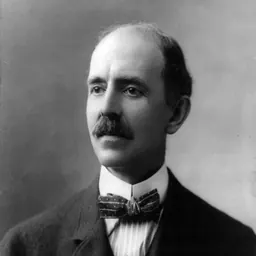
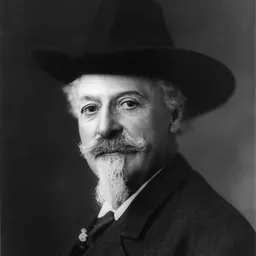
Related people
Same field, nearest in time

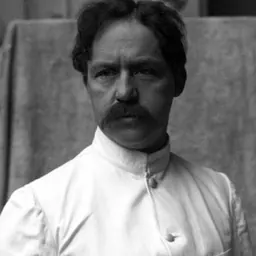



Contemporaries
People whose lives overlapped Lawrence Tenney Stevens's



Frequently asked questions
Who was Lawrence Tenney Stevens?
American sculptor
When was Lawrence Tenney Stevens born?
Lawrence Tenney Stevens was born in 1896 in Massachusetts.
When did Lawrence Tenney Stevens die?
Lawrence Tenney Stevens died in 1972.
What was Lawrence Tenney Stevens's occupation?
Lawrence Tenney Stevens was a sculptor.
What nationality was Lawrence Tenney Stevens?
Lawrence Tenney Stevens was American.
Sources & further reading
· Wikipedia: Lawrence Tenney Stevens
· DBpedia: Lawrence Tenney Stevens
Cite this page
APA: Biography.guide. (2026). Lawrence Tenney Stevens. https://biography.guide/lawrence-tenney-stevens/
MLA: "Lawrence Tenney Stevens." Biography.guide, https://biography.guide/lawrence-tenney-stevens/.
Chicago: "Lawrence Tenney Stevens." Biography.guide. https://biography.guide/lawrence-tenney-stevens/.
Data last updated: 2026-09-20 · Spot an error? Report a correction.
Page generated 2026-09-27 05:28 UTC