
About Laurie D. Cox
Lived 1883 – 1968 (aged 85). Laurie D. Cox was an American landscape architect, known for Landscape architect.
Laurie Davidson Cox (August 18, 1883 – October 1, 1968) was a leading American landscape architect and Hall of Fame coach and contributor to the sport of lacrosse. He was professor of Landscape Engineering at the New York State College of Forestry at Syracuse University, where he was responsible for establishing Syracuse University's lacrosse program. Cox later became the president of New England College.
Early life Born in Londonderry, Nova Scotia, Canada, Cox attended high school at Bellows Falls High School in Vermont. Following high school he returned to Canada, attending Acadia University where he would receive a degree in 1903. Cox then attended Harvard University where he graduated magna cum laude in 1908 with a Landscape Architecture degree. While at Harvard, Cox played lacrosse, basketball and ice hockey. On September 7, 1910, Cox married Gretchen Smith.
Career
Landscape architecture Cox was one of the leading landscape architects in the United States. Following his studies at Harvard, Cox worked for four years with the Los Angeles Parks Department. While working there, he designed the exterior landscapes of both the Lincoln Park and Griffith Park, and called for the creation of a city parkway that would "add to the health and happiness of its citizens." His plan was only partially implemented.
With funding from John D. Rockefeller, in 1915 Cox performed the first census of trees in New York City. In his report, A Street Tree System for New York City, Borough of Manhattan, Cox found that most street trees in Manhattan to be in poor condition. One of his recommendations was to plant 200 trees per square mile on the island.
Cox advocated for a new kind of park in the US National Park system that balanced the desire for recreation and preservation. In 1934, Cox surveyed Vermont's Green Mountains with the intent of creating a national park in the state. Cox's vision of a Green Mountain Parkway (later Green Mountain National Forest) included moving parts of Vermont's Long Trail to allow the trail and the park intersect. Cox's vision also included a concept of a "skyline drive". Revolutionary at the time, Cox recognized the changing American culture and the automobile and included many "windshield" views throughout the park length.
Academic In 1915, Cox was appointed an associate professor of Landscape Engineering at the New York State College of Forestry at Syracuse University. He served a Head of the Department from 1915 to 1947, during his entire tenure at Syracuse. After leaving Syracuse University, Cox served as president of New England College in Henniker, New Hampshire from 1947–1950 and then again from 1952–1955.
He was also a Fellow of the American Institute of Parks and an executive and a life member of the board of directors of the National Conference on State Parks.
Outside of academics and landscape architecture, Cox is recognized as one of the greatest contributors to the game of lacrosse in the United States. His impact on the sport was dramatic, both locally in upstate New York, and nationally. Founding one of the most recognized collegiate programs in the country, Cox was dedicated to the integrity and growth of the game.
Known for his excellent stick handling as a player, Cox was able to play any position on the field. Later that fall, the University recognized lacrosse as a "minor sport." Cox served as head coach of the Syracuse lacrosse team until 1932.
Cox thought of field lacrosse as a gentleman's game that could rise to prominence among collegiate sports. Cox viewed the introduction and spread of box lacrosse with negativity. He abhorred the commercialism of the new version, and thought it was a "peculiar" hybrid sport. His insistence, and the respect he garnered from fellow coaches and contributors, kept the field game the prevalent version played in America.
In 1922, Cox organized an "All-American" team to travel to Europe to play against British teams. This trip was deemed successful, and a return trip in 1923 was scheduled. Cox envisioned an informal international championship. He would go on to coach the American teams in International competitions in 1930, 1935, and 1937.
Cox, along with William C. Schmeisser and Charles Lattig, helped develop the uniform code of operation for college lacrosse and established early lacrosse athletic conferences. From 1922 to 1933, when the first lacrosse All-American committee was established (which Cox would serve as Chairman), he would select the honorees and even designed and furnished the certificates to the players.
Don’t just read it —
keep it.
Full-length biographies made to live with: read them, listen on the way to work, watch them tonight.
- E-book
- Audio
- Video
Instant download · yours to keep · every purchase keeps this site free
Important facts
People in Laurie D. Cox's life
Named in this biography and alive at the same time


Related people
Same field, nearest in time


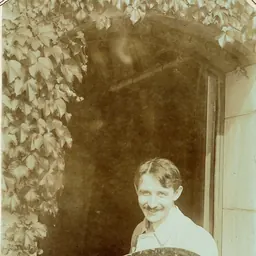

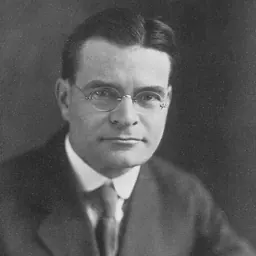
Contemporaries
People whose lives overlapped Laurie D. Cox's


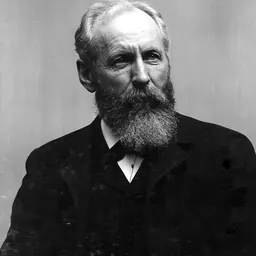


Frequently asked questions
Who was Laurie D. Cox?
American landscape architect and lacrosse coach
When was Laurie D. Cox born?
Laurie D. Cox was born on 18 August 1883 in Londonderry.
When did Laurie D. Cox die?
Laurie D. Cox died on 1 October 1968 in Henniker.
What was Laurie D. Cox's occupation?
Laurie D. Cox was a landscape architect.
What was Laurie D. Cox known for?
Laurie D. Cox was known for Landscape architect.
What nationality was Laurie D. Cox?
Laurie D. Cox was American.
Sources & further reading
Cite this page
APA: Biography.guide. (2026). Laurie D. Cox. https://biography.guide/laurie-d-cox/
MLA: "Laurie D. Cox." Biography.guide, https://biography.guide/laurie-d-cox/.
Chicago: "Laurie D. Cox." Biography.guide. https://biography.guide/laurie-d-cox/.
Data last updated: 2026-09-22 · Spot an error? Report a correction.
Page generated 2026-09-27 05:21 UTC