
Laurent Nkunda
Congolese military and politician from Rwanda
About Laurent Nkunda
Born 1967. Laurent Nkunda is a Congolese politician, military leader and rebel.
Laurent Nkunda Mihigo (born Laurent Nkundabatware; February 2, 1967) is a Congolese former military officer and warlord who operated in the North Kivu Province during the Kivu conflict.
Nkunda, who is a Congolese Tutsi, initially fought as a rebel fighter in the Rwandan Civil War alongside the forces of the Rwandan Patriotic Front (RPF) against the genocidal Hutu-led government in Rwanda. In 1996, he returned to the Congo and joined Laurent Kabila's AFDL forces during the First Congo War. However, he later rebelled against Kabila's government and joined the rebellion led by Rwandan-aligned rebels during the Second Congo War. Following the end of the Second Congo War, he was integrated into the Congolese Army in 2003 but would again later rebel against the government, marking the beginning of the Kivu conflict.
On January 22, 2009, he was put under house arrest in Gisenyi when he was called for a meeting to plan a joint operation between the Congolese and Rwandan militaries.
Early life Laurent Nkunda was born on February 2, 1967, at the village of Mutanda, located in eastern Congo. Prior to his rebel career, Nkunda studied psychology at the Kisangani University, and then became a school teacher in Kichanga.
Rebel and military career Rwandan Civil War During the Rwandan genocide, which broke out amid the Rwandan Civil War, Nkunda traveled to Rwanda, joining the Tutsi-led Rwandan Patriotic Front (RPF) who were fighting against the Rwandan Armed Forces (FAR), the military of the genocidal Hutu-led government.
First and Second Congo Wars After the RPF defeated and overthrew the Hutu-led regime in Rwanda to become the new government of Rwanda, Nkunda returned to the Congo (then named Zaire). During the First Congo War, he fought alongside AFDL rebels led by Laurent-Désiré Kabila, who overthrew Mobutu Sese Seko. where he raised the flag of rebellion against the government of Joseph Kabila (who had succeeded his father in 2001). Nkunda claimed to be defending the interests of the Tutsi minority in eastern Congo who were subjected to attacks by Hutus, who had fled after their involvement with the Rwandan genocide.
In August 2007, the area under Nkunda's control lay north of Lake Kivu in Nord-Kivu in the territories of Masisi and Rutshuru. In this area, Nkunda established his headquarters by building necessary infrastructure and developing institutions of order. He established a political organisation known as the National Congress for the Defence of the People (CNDP). As of 2026, the CNDP has evolved into a rebel organization is known as M23.
Nkunda was likely usurped in leadership by fellow general Bosco Ntaganda, who became the new representative of the group. The two might have had a falling out over a massacre of civilians perpetrated by Ntaganda's forces.
2008 Nord-Kivu campaign
In fighting that began on 27 October 2008, known as the 2008 Nord-Kivu campaign, Nkunda led CNDP rebels who fought against both the Congolese government forces, FDLR militias, and United Nations forces of the 17,000 UN contingent in the country. It was reported that he was advancing on the city of Goma with the aim of capturing it, with the Congolese army claiming he was receiving aid from Rwanda.
The fighting uprooted 200,000 civilians, bringing the total number of people displaced by the Kivu conflict to 2 million, causing civil unrest large food shortages
In an interview with the BBC on November 10, 2008, Nkunda threatened to topple the government of the Democratic Republic of Congo if the president, Joseph Kabila, continued to avoid direct negotiations.
Human rights abuse accusations Throughout the years, Nkunda has come under scrutiny and been accused by a number of organizations of committing human rights abuses. Nkunda was indicted by the Congolese government for war crimes in September 2005. Amnesty International says his troops have abducted children as young as 12 and forced them to serve as child soldiers.
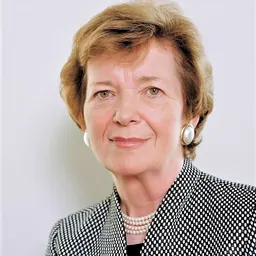
In May 2002, he was accused of massacring 160 people in Kisangani during the Second Congo War, prompting UN Human Rights Commissioner Mary Robinson to call for his arrest following the abduction and beating of two UN investigators by his troops. Nkunda denies these allegations, stating that as of 2005 he has demobilised 2,500 "young soldiers". His total army was estimated at 7,000–8,000 men.
Post-rebel leadership activities
Arrest Nkunda was arrested on 22 January 2009 after he had crossed into Rwanda. After unsuccessfully attempting to defeat the CNDP militarily, Congolese president Kabila made a deal with President Paul Kagame of Rwanda to allow Rwandan soldiers into the DRC to uproot FDLR militants in exchange for Rwanda removing Nkunda. A military spokesperson said he had been seized after sending three battalions to repel an advance by a joint Congolese-Rwandan force. The force was part of a joint Congolese-Rwandan operation which was launched to hunt Rwandan Hutu militiamen operating in DR Congo. Nkunda is currently being held at an undisclosed location in Rwanda. A Rwandan military spokesman has claimed, however, that Nkunda is being held at Gisenyi, a city in Rubavu district in the Western Province of Rwanda.
On 26 March 2010, the Rwandan Supreme Court ruled that his case could only be heard by a military court since the military had been responsible for his apprehension. Nkunda's defense had sought in vain to have his detention declared illegal, and he has yet to be charged with a crime.
Involvement with M23 As of 2014, the UN reports he still remains influential for the CNDP and remains under house arrest in Rwanda. As of a 2025 UN Report, it is speculated Nkunda may currently be working to draw additional support for M23, a Rwanda-backed militia group, due to his popularity.
Personal life Nkunda has six children. He is a polyglot who speaks English, French, Swahili, Kinyarwanda, Lingala and Kinande, and has claimed to admire leaders including Gandhi and George W. Bush. Nkunda claims to be a Seventh-day Adventist minister, and is a Pentecostal Christian. He claims most of his rebel troops have also converted. In the 2008 documentary Blood Coltan, Nkunda proudly shows a button he wears that reads "Rebels for Christ." He also claims to receive help and guidance from American "Rebels for Christ" who visit the Congo spreading Pentecostal Christianity. The Seventh-day Adventist Church has denied Nkunda's claims of being a pastor and member of the church.
Don’t just read it —
keep it.
Full-length biographies made to live with: read them, listen on the way to work, watch them tonight.
- E-book
- Audio
- Video
Instant download · yours to keep · every purchase keeps this site free
Important facts
People in Laurent Nkunda's life
Named in this biography and alive at the same time







Related people
Same field, nearest in time


Contemporaries
People whose lives overlapped Laurent Nkunda's


Frequently asked questions
Who is Laurent Nkunda?
Congolese military and politician from Rwanda
When was Laurent Nkunda born?
Laurent Nkunda was born on 2 February 1967 in Rutshuru.
What is Laurent Nkunda's occupation?
Laurent Nkunda is a politician, military leader and rebel.
What nationality is Laurent Nkunda?
Laurent Nkunda is Congolese.
Sources & further reading
Cite this page
APA: Biography.guide. (2026). Laurent Nkunda. https://biography.guide/laurent-nkunda/
MLA: "Laurent Nkunda." Biography.guide, https://biography.guide/laurent-nkunda/.
Chicago: "Laurent Nkunda." Biography.guide. https://biography.guide/laurent-nkunda/.
Data last updated: 2026-09-20 · Spot an error? Report a correction.
Page generated 2026-09-27 05:33 UTC