
About Laurence Pomeroy
Lived 1883 – 1941 (aged 57–58). Laurence Pomeroy was a British engineer.
Laurence Henry Pomeroy (1883–1941) was an English automotive engineer trained as a locomotive engineer and particularly interested in the introduction of light alloys into automotive applications. and at the same time became a railway engineering apprentice at the North London Locomotive Works at Bow. Determined to "get on" in 1903 Pomeroy joined Humphreys & Co Civil Engineers in Victoria Street, London. From there he became a draughtsman with Thornycroft in Basingstoke before moving to Vauxhall Motors in Luton in 1905, where he became assistant to chief engineer Frederick Hodges.
Vauxhall
The chief engineer of Vauxhall, F.W. Hodges, was given an extended winter holiday in 1907–08, and during this time Pomeroy was asked by a joint managing director of Vauxhall, Percy Kidner, to redesign one of their current engines. The objective was to increase its power output for the cars to compete in the RAC 2000 mile trial of 1908.
In 1913, he was elected a full member of the Institution of Mechanical Engineers. He was also a member of the Institute of Automobile Engineers, and served as the organisation's president during 1934–35.
Alcoa After World War I, in 1919, Pomeroy left Vauxhall (he was then working on an overhead camshaft six and a V12 and the board was not interested in either of them) This included the engine blocks, pistons, covers, and accessories, as well as was for aluminium car bodies. The American Body Company in Buffalo NY assembled these bodies. The Pierce-Arrows used a Pomeroy engine and for some units, both engine and car were built by Pierce-Arrow.
Daimler The British Daimler company and AEC (makers of London buses) began a joint venture in 1926. It was named Associated Daimler and Pomeroy was recruited by Percy Martin of Daimler to be the chief engineer with responsibility for the new venture's commercial vehicles. Pomeroy's contribution was a coach chassis with extensive use of aluminium alloy, made as the Daimler CF6. Pomeroy returned to England in October 1926, and the joint venture ended in 1929.
Pomeroy moved to the main Daimler operation as general manager in 1928, becoming managing director in 1929. He was responsible for the design of the second, small Double-Six 30/40 of 1930 and a 3½-litre six that same year.
The automobile industry experienced financial difficulties during the late 1920s. Daimler's situation seemed particularly serious. Sales fell sharply in 1927 and 1928. Financial losses continued and the company paid no dividends from 1929 to 1936. The sleeve valve engine was now obsolete technology, Daimler's production methods were no longer up-to-date, and the firm continued to market a large range of products. Investors became concerned with the dwindling sales volume, lack of competitive products, and the company's need to update their machine tool equipment. Stratton-Instone's new dominance of distribution was removed and new outlets arranged. The interests in Singer and the Daimler Hire business were sold and Lanchester bought. The in-house bodywork department was closed and by the spring of 1931 car production ceased, only commercial vehicle production and aero engine work kept Daimler in business.
Pomeroy introduced redesigned poppet valve engines with the Daimler Fifteen in September 1932, developed new models of Daimlers, recommended what became the September 1932 introduction of the small BSA and Lanchester Tens with poppet valve engines to help Daimler survive the depression and according to Percy Martin, these actions rescued the business from total collapse in 1932.
Laurence Evelyn Wood Pomeroy Pomeroy had one son in 1907, also named Laurence (Laurence Evelyn Wood Pomeroy, born in Luton) who became a motoring and technical journalist. Readers of the popular weekly, The Motor, during the 1940s and 1950s were exposed to Pomeroy design successes at Vauxhall while his son served as the technical editor of magazine from 1936 to 1958. The younger Pomeroy died the same way as his father and at the same age, 58, in 1966.
L.E.W. Pomeroy authored the two volume history The Grand Prix Car covering the vehicles from 1906 to 1955. He also wrote Design and Behaviour of the Racing Car in collaboration with Stirling Moss.
Don’t just read it —
keep it.
Full-length biographies made to live with: read them, listen on the way to work, watch them tonight.
- E-book
- Audio
- Video
Instant download · yours to keep · every purchase keeps this site free
Important facts
People in Laurence Pomeroy's life
Named in this biography and alive at the same time
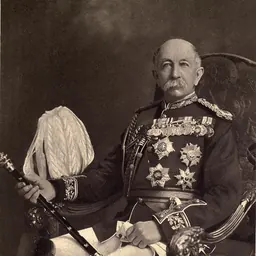


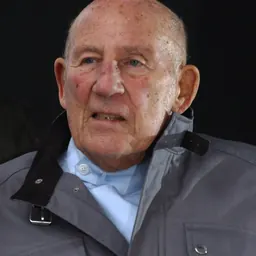

Related people
Same field, nearest in time
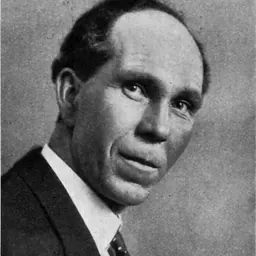

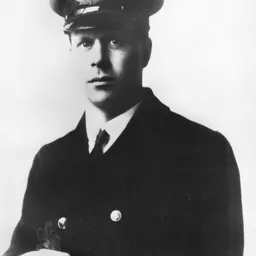

Contemporaries
People whose lives overlapped Laurence Pomeroy's


Frequently asked questions
Who was Laurence Pomeroy?
Automotive engineer
When was Laurence Pomeroy born?
Laurence Pomeroy was born in 1883 in London.
When did Laurence Pomeroy die?
Laurence Pomeroy died in 1941.
What was Laurence Pomeroy's occupation?
Laurence Pomeroy was an engineer.
What nationality was Laurence Pomeroy?
Laurence Pomeroy was British.
Sources & further reading
Cite this page
APA: Biography.guide. (2026). Laurence Pomeroy. https://biography.guide/laurence-pomeroy/
MLA: "Laurence Pomeroy." Biography.guide, https://biography.guide/laurence-pomeroy/.
Chicago: "Laurence Pomeroy." Biography.guide. https://biography.guide/laurence-pomeroy/.
Data last updated: 2026-09-22 · Spot an error? Report a correction.
Page generated 2026-09-27 05:01 UTC