
Laurence D. Barron
British chemist
About Laurence D. Barron
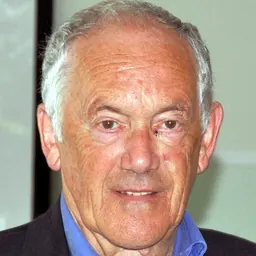
Born 1944. Laurence D. Barron is a British physical chemist, known for Raman optical activity.
Laurence David Barron (born 12 February 1944 in Southampton, England) has been Gardiner Professor of Chemistry at the University of Glasgow since 1998 (now Emeritus). He is a chemist who has conducted pioneering research into the properties of chiral (right- or left-handed) molecules — defined by Lord Kelvin as those that cannot be superimposed onto their mirror image. By extending this definition of chirality to include moving particles and processes that vary with time, he has made a fundamental theoretical contribution to the field. Chiral molecules such as amino acids, sugars, proteins, and nucleic acids play a central role in the chemistry of life, and many drug molecules are chiral. Laurence's work on Raman optical activity — a spectroscopic technique capable of determining the three-dimensional structures of chiral molecules, which he predicted, observed, and applied to problems at the forefront of chemistry and structural biology — has led to its development as a powerful analytical tool used in academic and industrial laboratories worldwide. His much-cited book, Molecular Light Scattering and Optical Activity, has contributed to the growing impact of chirality on many areas of modern science.
Education Laurence Barron attended King Edward VI School, Southampton and then studied chemistry at the Northern Polytechnic, where he earned a First Class Honours Degree of London University in 1965. He studied at Lincoln College, Oxford, with Peter Atkins earning a D.Phil. in 1969, on the theory of nonlinear optical activity and birefringence, and polarized light scattering generally.
Research Barron carried out post-doctoral research with A. David Buckingham, at Cambridge University, from 1969 to 1975, holding a Ramsay Memorial Fellowship in 1974–75. Barron is best known for his pioneering work on Raman optical activity, and was made a Fellow of the Royal Society on 26 May 2005.
The idea that would eventually lead to Raman optical activity appeared for the first time during Barron's D.Phil. research, when he discovered a new fundamental scattering process involving interference between light waves scattered via the molecular polarizability and optical activity tensors and which generates a small ellipticity/circularity in the scattered light. This was published with Peter Atkins in 1969. with the final definitive theory published with David Buckingham in 1971. The first observations, made in Buckingham's laboratory, were published in 1973, and constituted the first observations of the long-sought optical activity in vibrational transitions of chiral molecules. Barron developed his extension of Lord Kelvin's definition of chirality to include motion, first published in 1986, in order to critically assess external physical influences able to induce an enantiomeric excess in reactions that would otherwise produce a racemic product, something that had been controversial ever since the time of Louis Pasteur and had resulted in many futile experiments.
Awards and recognition
2012, Zhang Dayu Memorial Lecture, CAS Dalian Institute of Chemical Physics, China 2012, Joshua Schechter Memorial Lecture, Bar Ilan University, Israel 2011, Chirality Medal, 2011 2008, Tetelman Visiting Fellow, Jonathan Edwards College, Yale University, USA 2005, Elected Fellow of the Royal Society of Chemistry, FRSC 2005, Elected Fellow of the Institute of Physics, FInstP 2005, Elected Fellow of the Royal Society., FRS 2003, visiting professor, Universite Paul Sabatier, Toulouse, France 1998, Chemical Society of Zürich Lecture 1997, Guest Review Lecture, Association of Physicians of Great Britain and Ireland 1995, EPSRC Senior Fellow (1995–2000) 1995, Visiting Miller Research Professor, University of California, Berkeley, USA 1993, Sir Harold Thompson Award for Molecular Spectroscopy 1992, Elected Fellow of the Royal Society of Edinburgh, FRSE 1987, F.L. Conover Memorial Lecture, Vanderbilt University, USA 1984, G.M.J. Schmidt Memorial Lecture, Weizmann Institute of Science, Israel. 1977, Corday–Morgan Medal and Prize.
Don’t just read it —
keep it.
Full-length biographies made to live with: read them, listen on the way to work, watch them tonight.
- E-book
- Audio
- Video
Instant download · yours to keep · every purchase keeps this site free
Important facts
People in Laurence D. Barron's life
Named in this biography and alive at the same time



Related people
Same field, nearest in time



Contemporaries
People whose lives overlapped Laurence D. Barron's



Frequently asked questions
Who is Laurence D. Barron?
British chemist
When was Laurence D. Barron born?
Laurence D. Barron was born on 12 February 1944 in Southampton.
What is Laurence D. Barron's occupation?
Laurence D. Barron is a physical chemist.
What is Laurence D. Barron known for?
Laurence D. Barron is known for Raman optical activity.
What nationality is Laurence D. Barron?
Laurence D. Barron is British.
Sources & further reading
· Wikipedia: Laurence D. Barron
Cite this page
APA: Biography.guide. (2026). Laurence D. Barron. https://biography.guide/laurence-d-barron/
MLA: "Laurence D. Barron." Biography.guide, https://biography.guide/laurence-d-barron/.
Chicago: "Laurence D. Barron." Biography.guide. https://biography.guide/laurence-d-barron/.
Data last updated: 2026-09-22 · Spot an error? Report a correction.
Portrait: Wikimedia Commons · author & licence
Page generated 2026-09-27 05:04 UTC